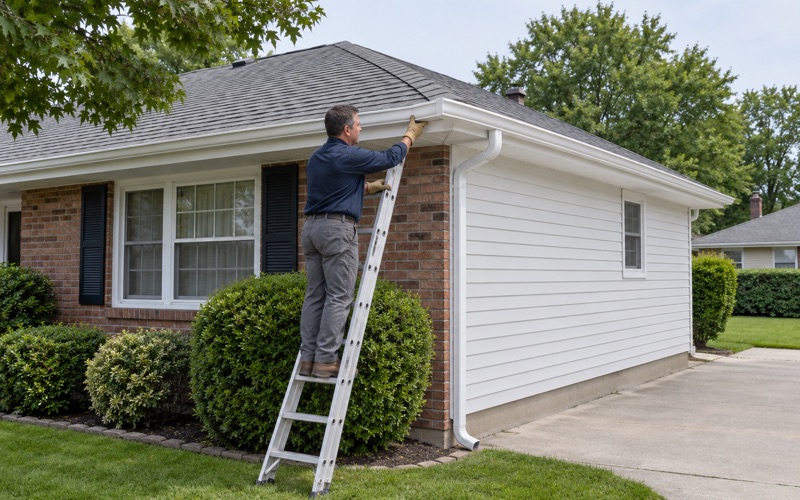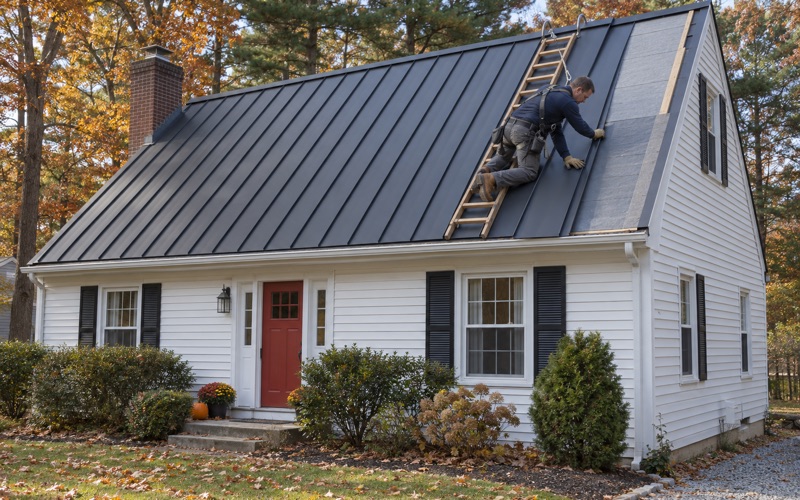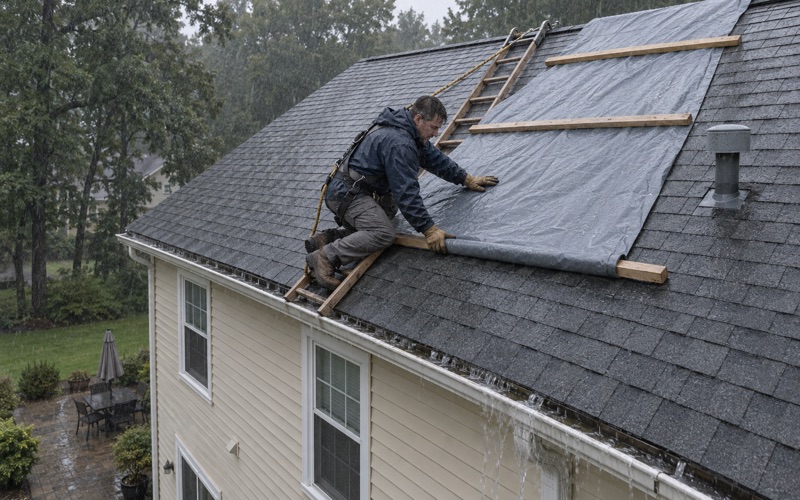
Old Bridge Roofing offers roofing in Asbury Park backed by more than 20 years in the trade, and the work here comes in two kinds. Some jobs come from owners of a house or a two-family who decide everything themselves. Others come from a condominium board or a property manager weighing a roof that sits over dozens of owners at once.
Both kinds of job start the same way with us. We look at the roof from the attic as well as from the outside, so a leak is traced to the point where water actually enters before any price is written. Then we tell you plainly whether a repair will hold, and only after that do we talk about replacement.
When a replacement is the right answer, our written scope breaks tear-off, decking, underlayment, flashing, ventilation and gutters into separate lines. That matters for a homeowner comparing two bids, and it matters even more for a board that has to show its members why one proposal costs more than another.
Asbury Park’s New Waterfront Buildings and the Asbury Ocean Club
Where the Newest Roofs Are
Much of the city’s housing is older, but many of the newest roofs in Asbury Park sit on large buildings rather than houses. The Census Bureau’s 2024 five-year American Community Survey counts 1,415 of the city’s 8,681 housing units, or 16.3 percent, as built in 2000 or later. It also places 1,714 units, 19.7 percent, in buildings of 50 or more units.
Those two figures describe a waterfront redevelopment story more than a subdivision story. Owners occupy 284 of the units in buildings of 50 or more and another 139 in buildings of 20 to 49 units. For those owners, a roof is something they share with neighbors, usually paid for through an association budget instead of a personal checking account.
The Asbury Ocean Club
The best-known of the new buildings is the Asbury Ocean Club, a 17-story building by the New York developer iStar on the oceanfront site of the failed Ezperanza condominium project. A July 2018 report described 130 condominiums above a 54-room hotel, with Handel Architects among the designers, and said the building was slated for completion in 2019.
The same report put iStar’s holdings in the city at a $300 million, 35-acre portfolio, which gives a sense of how much of the city’s waterfront was being reshaped at once. We have not inspected the roof of the Asbury Ocean Club or any other named building here, and we make no claim about what is on top of them.
Why a Large Building Changes the Conversation
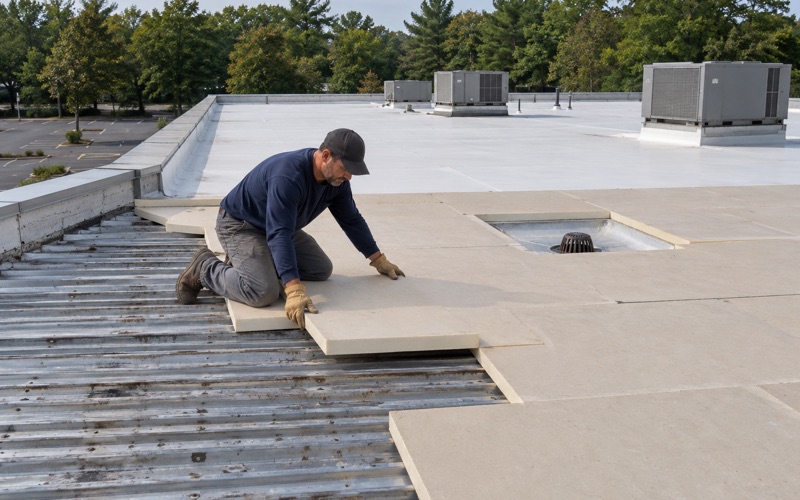
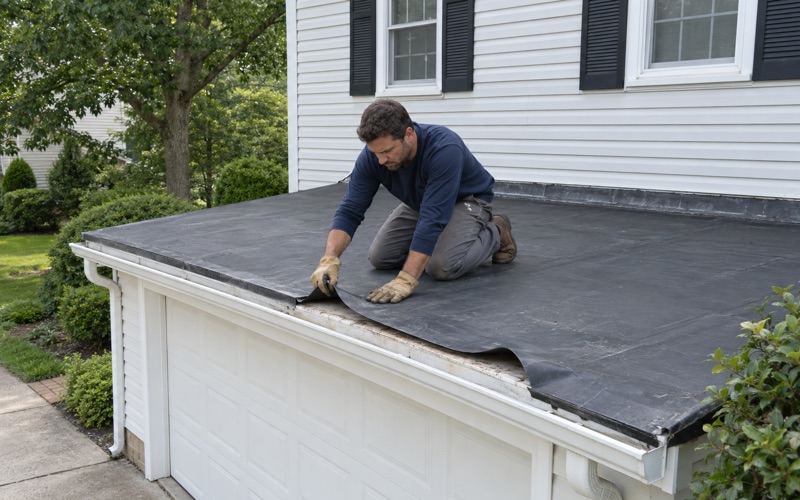
A tall, mixed-use condominium building is not roofed the way a house is. Buildings like it typically carry a low-slope commercial system such as a TPO or PVC single-ply membrane, EPDM rubber, or torch-down modified bitumen, with drains, curbs and rooftop equipment woven through it. The decision about when to replace it usually rests with an association rather than with any one owner.
Height and open water matter too. The ASCE 7-10 wind standard assigns Exposure D where flat, unobstructed ground or water prevails upwind for more than 5,000 feet or 20 times the building height, and extends it to sites within 600 feet or 20 times the height of that condition. Which edition and exposure New Jersey applies to a given oceanfront lot is for the building’s design professionals to confirm.
Looking for roofing closer to Springfield Township? See Roofing in Springfield Township.
Whose Roof Is It in a Condominium
The Common Element Question
In a condominium, the roof over the units is normally a common element, maintained and replaced by the association rather than by the individual owners beneath it. That is the usual arrangement, not a universal one. Each building’s master deed and bylaws decide it, and we have not read the master deed for any Asbury Park building, so we never assume.
This is why, in every townhouse, condominium or 55+ community we work in, we check who holds the roof against the association’s own documents before we write an estimate. An owner who calls us about a stain on a top-floor ceiling may find the repair is the board’s to authorize and pay for, and knowing that first saves everyone a wasted visit.
Limited common elements add another wrinkle. A roof deck or terrace used by only one unit may be assigned to that owner for some costs while the waterproofing underneath stays with the association. Where the documents split responsibility that way, we price each share separately so the owner and the board each see what they are paying for.
When a Unit Owner Calls First
Leaks in multi-unit buildings often get reported by the owner who sees the water, not by the manager who controls the budget. We are glad to take that call. We trace the leak from inside where we can reach it, write up what we find, and hand that report to the owner so it can go straight to the association or its management company.
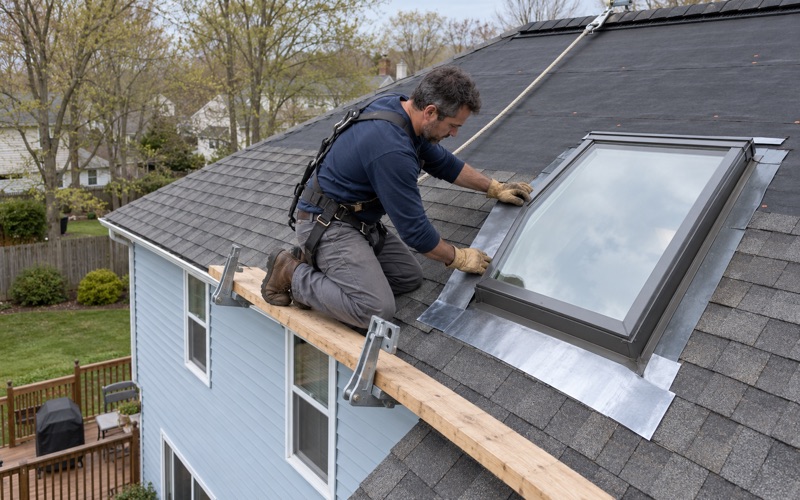
The source of a leak in a large building is frequently not directly above the stain. Water can travel along a deck, a parapet or a drain line before it shows up indoors. Tracing it carefully before pricing anything keeps a board from paying for a broad repair when a single failed flashing detail or pipe boot was the actual entry point.
Smaller Associations and Attached Homes
Not every association building is a high-rise. Smaller condominium buildings and attached rows share the same question of who owns the roof, often with a pitched shingle roof running across several units. On those, a re-roof done one unit at a time can leave mismatched shingles and weak seams, so we encourage boards to plan the whole run together when the budget allows.
Commercial Re-Roofs on Multi-Unit Buildings
Where Ordinary Maintenance Ends
New Jersey treats replacing the roof covering on a detached one- or two-family dwelling as ordinary maintenance under N.J.A.C. 5:23-2.7, so no permit, inspection or notice is needed for that work. That exemption stops at those houses. A condominium building, an attached row or any larger multi-unit building falls outside it, and its re-roof is construction work handled through the local enforcing agency.
In Asbury Park that agency is the Construction Department at 1 Municipal Plaza, 2nd Floor North, open Monday through Friday from 7:30 a.m. to 4 p.m. and reachable at 732-502-5722. Inspection requests can be made online through the Spatial Data Logic portal. We build the permit and inspection steps into a multi-unit schedule from the first meeting with a board.
Under New Jersey’s rehabilitation subcode, N.J.A.C. 5:23-6, a new covering is not laid over a roof that already carries two or more layers; that roof is torn off to the deck first. We confirm the layer count at the first visit, because an extra layer changes both the labor and the disposal cost in the written scope.
Planning a Re-Roof Over Occupied Units
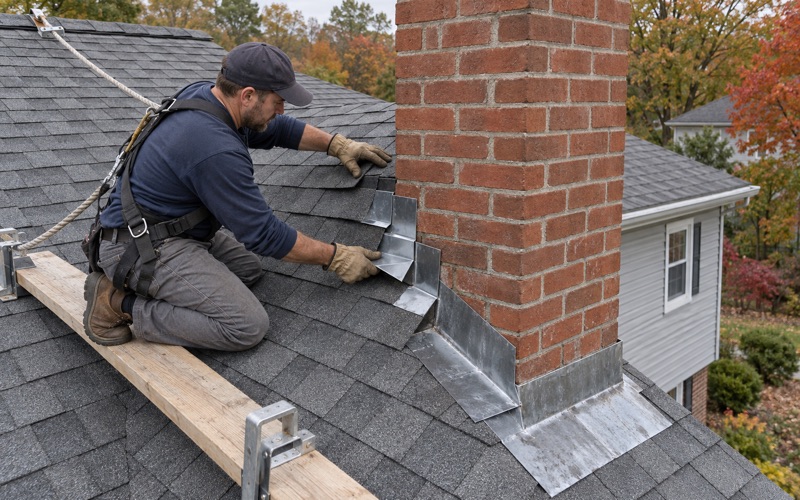
A re-roof over occupied units has to be staged around the people living below. We plan where materials are lifted, how the roof is kept watertight overnight, and how entrances and parking stay clear. Fall protection is planned for every open edge, and the drains and rooftop equipment are mapped before the first section is opened.
Decking surprises are where large budgets drift. When damaged decking turns up after the old roof is off, we photograph it and show it to the board or manager before replacing it, at a per-sheet price already set in the contract. Flashing at walls, curbs and penetrations is replaced with the new roof rather than reused under it.
Drainage and Ventilation
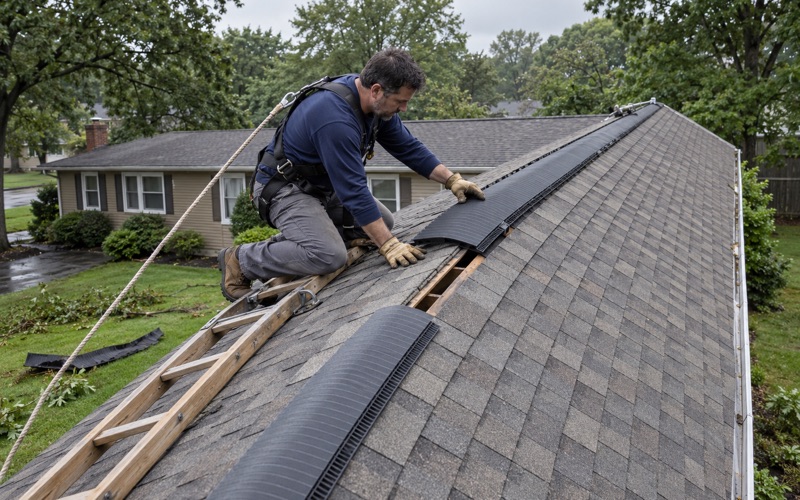
Gutters, leaders and roof drains are sized and pitched as part of the roof work, so water is carried off the building rather than toward its foundation. On pitched sections we check attic ventilation on every replacement, because a roof that cannot breathe ages from the underside regardless of how good the new shingles are.
Warranties and Planning When a Board Owns the Roof
Lifetime Warranties and Association Buildings
Shingle makers’ lifetime warranties are written for single-family detached homes owned by individuals. GAF, for example, limits its lifetime coverage that way and offers condominium and homeowner association buildings a 40-year warranty instead. A board comparing proposals should read the warranty terms that actually apply to an association-owned building, not the headline in a homeowner brochure.
Commercial membranes carry their own manufacturer warranties, with terms that depend on the system, the thickness and the installation details. Whatever the product, we list the warranty terms that apply to the specific building in the written proposal, so the board knows what it is buying and the next board inherits a clear record.
Building the Roof Into the Reserve Plan
A homeowner can decide on a new roof in a weekend. A board usually cannot. Replacement has to be planned against reserves, approved at meetings, and sometimes funded by assessment, so the useful question is not only whether the roof leaks today but how many good years it has left and what it will cost when those years run out.
We give boards and managers a straight answer on whether repair will carry the roof for now, along with a written condition report they can file and share with owners. When a unit or a house is sold, the seller can hand that kind of report to the buyer’s inspector, which answers a question buyers often ask.
Rooftop solar belongs in the same plan. Where panels sit on a roof due for replacement, we schedule their removal and reinstallation as part of the job from the start, so the board is not surprised by a separate contractor’s calendar on the day the crew arrives.
Contracts, Claims and Cleanup
Our contracts follow New Jersey’s home improvement rules, including the three-day cancellation notice. If a storm damages an association roof, we photograph and write up the damage for the association’s own claim and will meet the insurance adjuster on site when the board asks. At the end of each workday we clean up the grounds and gutters and run a magnet sweep for stray nails.
Whether the roof is over one family or over a hundred units, the process stays the same: find the real source of the problem, be honest about repair, write the scope line by line, and leave a record the next owner or the next board can use. That is how we approach roofing in Asbury Park.
- 20+ Years in Business
- Attic Checked on Every Leak
- Itemized Written Scopes