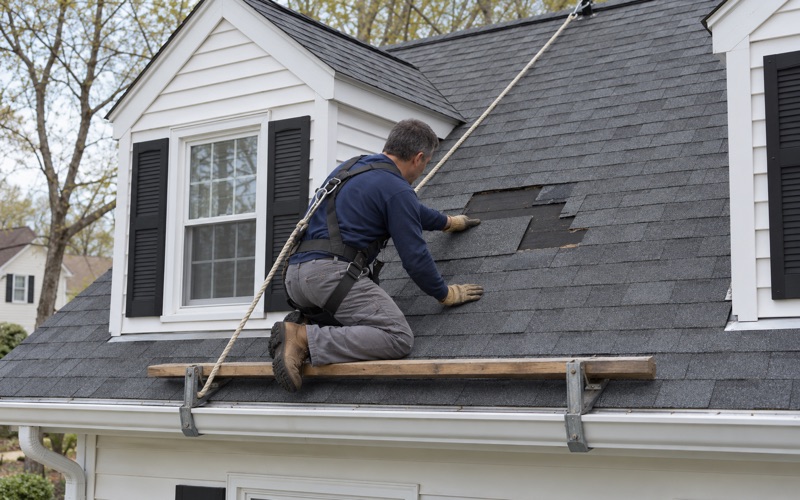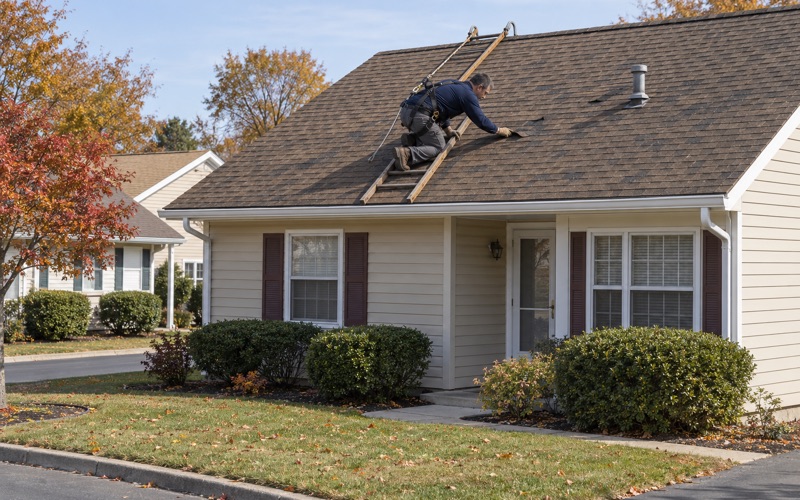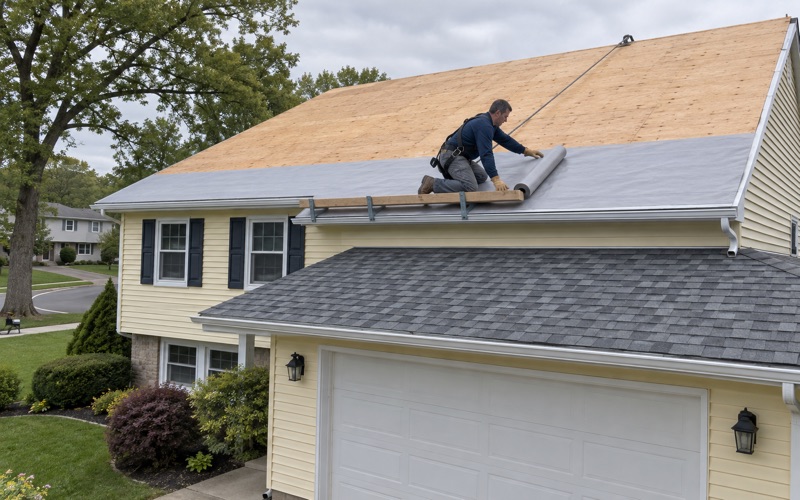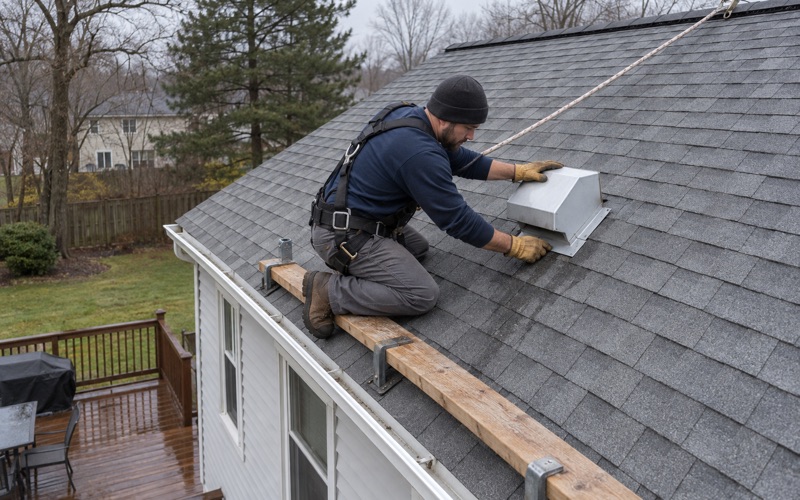
Old Bridge Roofing has spent more than 20 years on roofing in Berkeley Heights and the rest of central New Jersey, and the jobs here often start at the edge of the roof rather than the middle. Shingles come off and go back on the same way they do anywhere. What changes the plan is the painted wood around them: fascia, rake boards, soffits and trim on houses old enough to predate the federal lead-paint ban.
Before we price anything, we tell you plainly whether the roof can be repaired, and a leak call always includes a trip into the attic so the water is traced to its real entry point. When replacement is the answer, our written scope breaks tear-off, decking, underlayment, flashing, ventilation and gutters into separate lines. That makes it easy to set our number beside another contractor’s and see where the two actually differ.
On an older house, we also ask early whether the trim has been tested for lead, because the answer shapes how the crew sets up, what it costs and how long the work takes. The sections below explain where that question comes from and what it means for your project.
Roof Work on Berkeley Heights Houses Built Before 1978
Berkeley Heights is largely a town of owner-occupied houses with some age on them. The Census Bureau’s American Community Survey five-year estimates for 2024 count 4,502 of 4,825 occupied homes in the township as owner-occupied, or 93.3%. The same survey places 2,886 of its 4,905 housing units, 58.8%, in buildings put up before 1970, and every one of those is older than 1978.
Berkeley Heights is a Union County township bordering Morris and Somerset counties, and its housing runs from detached houses on ordinary suburban lots to the wooded Free Acres community on the Watchung line, where residents own their houses but lease the land from an association. Across all of those settings, the age of the painted trim shapes a roof plan more than the street address does.
A Postwar Building Boom
Much of that stock went up fast. The township counted 3,466 residents in 1950, 8,721 in 1960 and 13,078 by 1970, and the survey’s two largest age groups are units built in the 1950s, 1,453 of them, and the 1960s, 1,053 more. Before that growth, it was described as a sleepy farming and resort community.
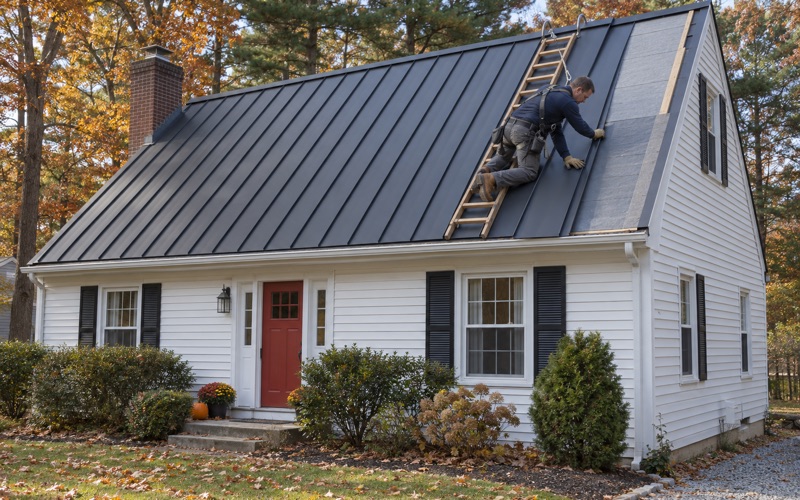
Houses from those decades commonly have wood fascia boards, boxed soffits and painted rake trim, all of which a roof crew handles. Painted trim on a house that age has often been recoated more than once, and older coats can sit under newer ones. Whether any particular house still carries lead-based paint is something only a test can tell, which is why we raise the question at the estimate.
Who the Federal Rule Covers
The EPA Renovation, Repair and Painting Rule applies to renovations performed for compensation in target housing, meaning homes built before 1978. Owner-occupied houses are included; living in the home yourself does not take a paid contractor’s job out of the rule. The rule is written around paid work, so it is a hired contractor’s job that it governs.
In New Jersey, that rule is enforced by EPA itself. The state has not applied for authorization to run the program, according to the New Jersey Department of Community Affairs, so the federal agency’s Region 2 office is the enforcing authority for a job in Union County rather than a state or township office.
Looking for roofing closer to Asbury Park? See Asbury Park Roofing.
Fascia, Soffits and Trim: Where a Roof Job Meets Lead Paint
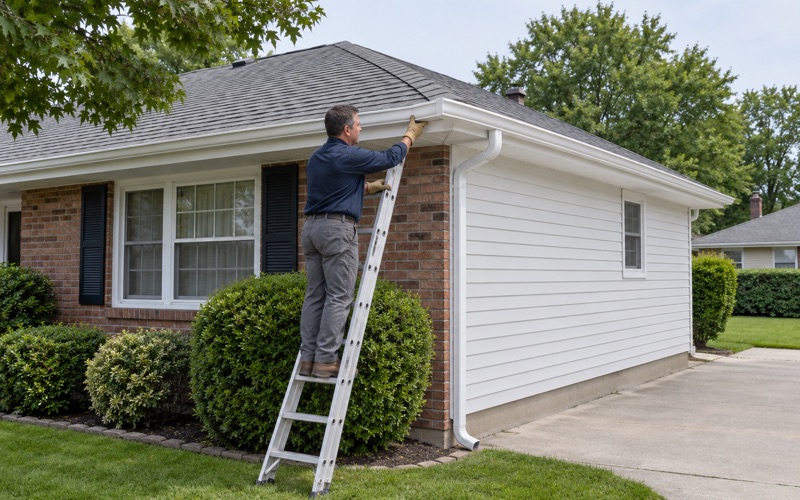
Asphalt shingles are not a painted surface, and tearing them off does not by itself bring a job under the lead rule. The painted parts of a roof project are usually at the perimeter: the fascia board the gutter hangs on, the rake boards along the gable ends, the soffit panels under the eaves and the trim that ties them together.
When the Edge Gets Disturbed
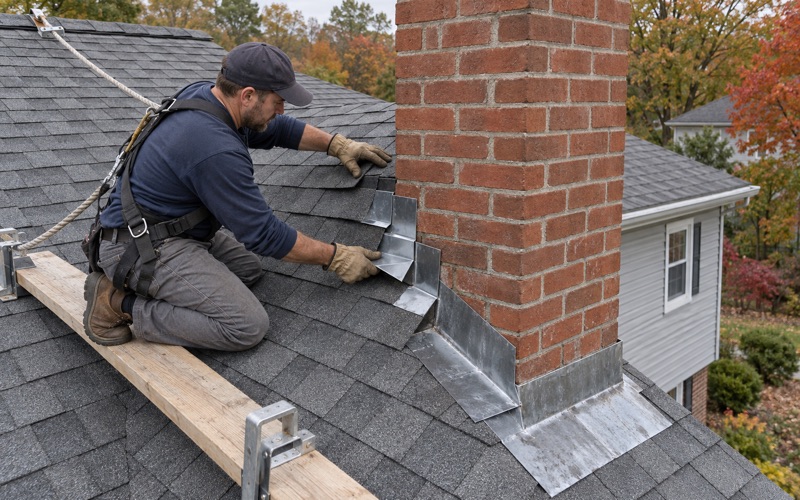
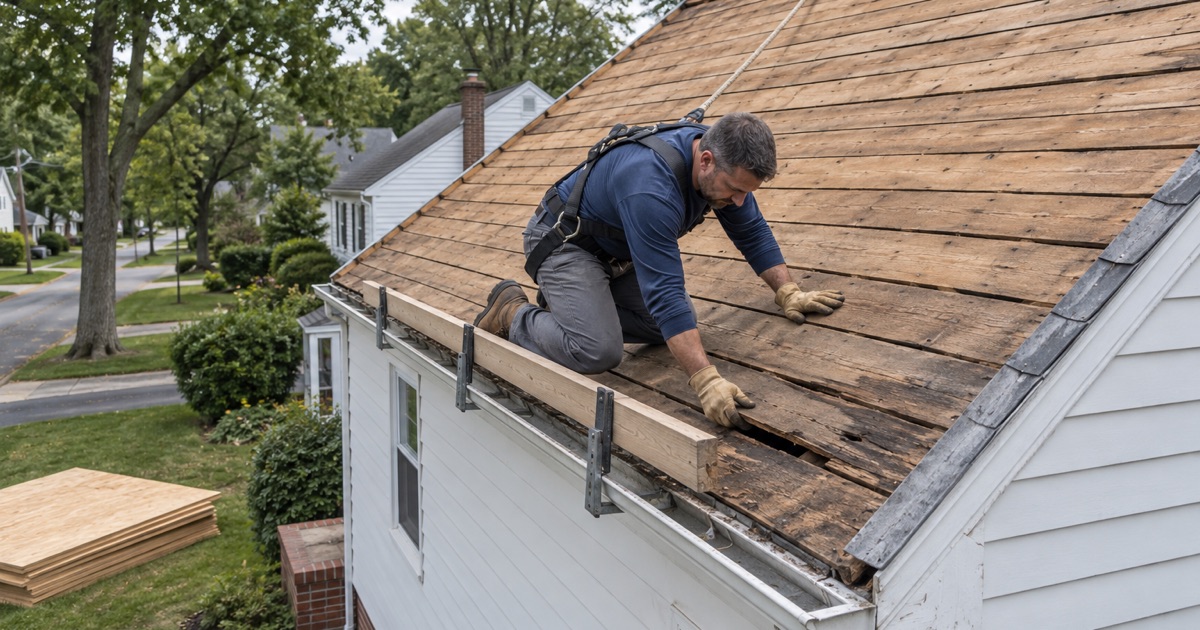
A re-roof touches those boards more often than people expect. Drip edge is installed along the eaves and rakes, gutters come down and go back up, and rotted fascia found at the tear-off has to be cut out and replaced. Each of those steps can scrape, pry or cut painted wood, and the amount disturbed is what counts under the rule.
EPA’s own guidance leaves it to the renovator to judge, job by job, how much paint the work will actually disturb. We walk the eaves and gables with you at the estimate, note which boards are sound and which are soft, and tell you whether the planned trim work is likely to stay small or grow past the minor-repair limit.
Replacing Trim With the Roof
When fascia or rake boards are rotted behind the gutter, we would rather replace them during the roof job than leave new shingles sitting over failing wood. Decking that turns out to be damaged once the old layers are off is photographed and shown to you before any sheet is replaced, at the per-sheet price already written into the contract.
Gutters and leaders get the same attention. Because the fascia carries the gutter, we size and pitch new gutters with the roof so water leaves the house rather than pooling at the foundation, and any lead-safe precautions planned for the trim cover the gutter work too.
The 20-Square-Foot Line and Testing Before the Tear-Off
Federal rules draw a line between minor repair and a renovation. On the exterior, work that disrupts 20 square feet or less of painted surface counts as minor repair and maintenance, provided none of the prohibited work practices are used and the job does not involve window replacement or demolition of painted surface areas. Past 20 square feet, it is a renovation and lead-safe practices apply on a pre-1978 house.
How Small Twenty Square Feet Is
Twenty square feet goes quickly at a roof edge. A long run of fascia along one side of a house, measured on its face, can approach that figure by itself before the rake boards or soffit panels are added in. A trim replacement planned for a whole elevation is therefore likely to cross the line, while a short patch around one gutter outlet may not.
Testing Takes the Guesswork Out
The rule does not apply where the affected components are shown to be free of lead-based paint. That can be a written determination by a certified inspector or risk assessor, a result from a certified renovator using an EPA-recognized test kit, or a paint-chip sample collected by a certified renovator and analyzed by an EPA-recognized laboratory.
Testing before the tear-off is the sensible order. If the fascia, rake boards and soffits come back clean, the trim work proceeds as ordinary carpentry. If they do not, or if nobody tests, the job is planned as lead-safe from the start, and that decision is reflected in the schedule and the written scope rather than discovered with the old shingles already in the dumpster.
Permits Are a Separate Question
The lead rule is easy to confuse with permitting, but the two are unrelated. Under N.J.A.C. 5:23-2.7, repairing or replacing the existing roof covering on a detached one- or two-family house is ordinary maintenance that needs no construction permit. Attached homes such as townhouses fall outside that provision, and where an association is involved we also check its documents to confirm who holds the roof before writing an estimate.
Storm Leaks, Emergency Work and Keeping Dust Contained
When a Storm Opens the Roof
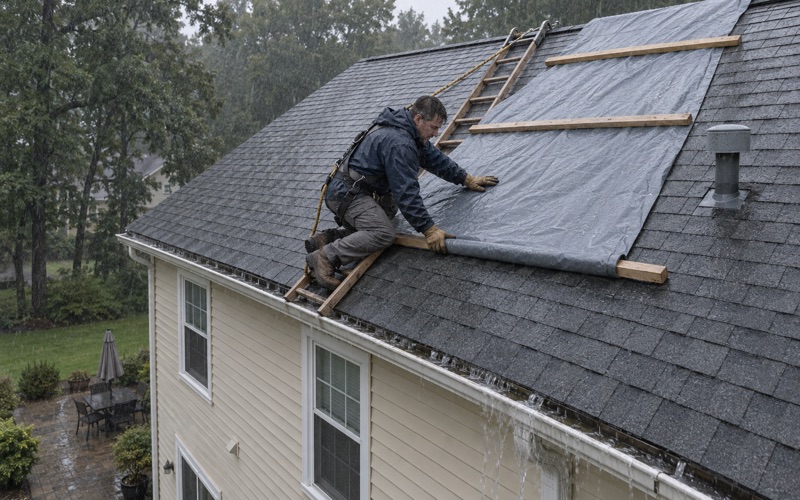
Wind and heavy rain do not wait for a paint test. Federal rules recognize this with an emergency category: renovations that were not planned and result from a sudden, unexpected event. A tree limb through the roof or a section of shingles torn away in a storm, followed by a tarp and a temporary patch, is, as we read the rule, the roofing version of that situation.
The emergency exception is narrower than it sounds. It waives the pre-job information distribution step, and it relaxes warning signs, containment, waste handling, training and certification only to the extent the emergency requires. Cleaning, cleaning verification and recordkeeping still apply, and once the immediate threat is handled, the permanent repair is planned like any other job.
After a storm we photograph the damage and write it up so you can file your own claim, and we will meet the insurance adjuster at the house if you ask. We also check the attic during that visit, because water often shows up inside some distance from where it entered.
Keeping Dust Out of the Yard and the House
On a job planned under lead-safe practices, the painted trim work is set up so dust and chips do not spread. That generally means plastic sheeting on the ground below the work area, keeping windows and doors near the work closed, and avoiding the prohibited methods, such as open-flame burning or high-speed power sanding without proper controls.
Our ordinary cleanup already runs in that direction. The driveway, yard and gutters are cleaned at the end of every work day, including a magnet sweep for roofing nails, so a project spread over several days never leaves debris sitting overnight where children or pets play.
Older Houses, Fuller Inspections
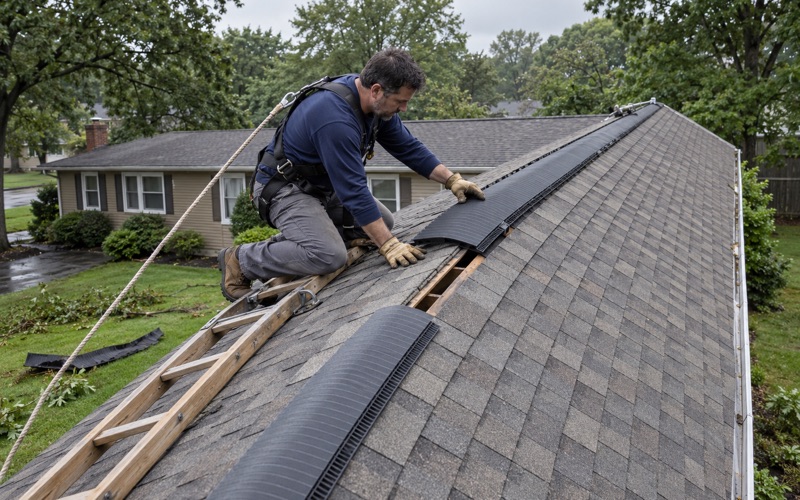
A house built in the 1950s or 1960s has often had more than one roof by now, and its flashing and ventilation may date from different eras. On a replacement we install new step, counter and chimney flashing instead of reusing the old metal, and we check that the attic can breathe, because a roof without adequate ventilation ages from underneath.
Where two or more layers of shingles are already on the roof, New Jersey’s rehabilitation subcode calls for tearing off to the deck rather than adding another layer, which also exposes the decking and fascia edges for inspection. Selling soon? We can provide a written roof condition report that you hand to the buyer’s inspector.
- 20+ Years in Business
- Attic Checked on Every Leak
- Itemized Written Scopes