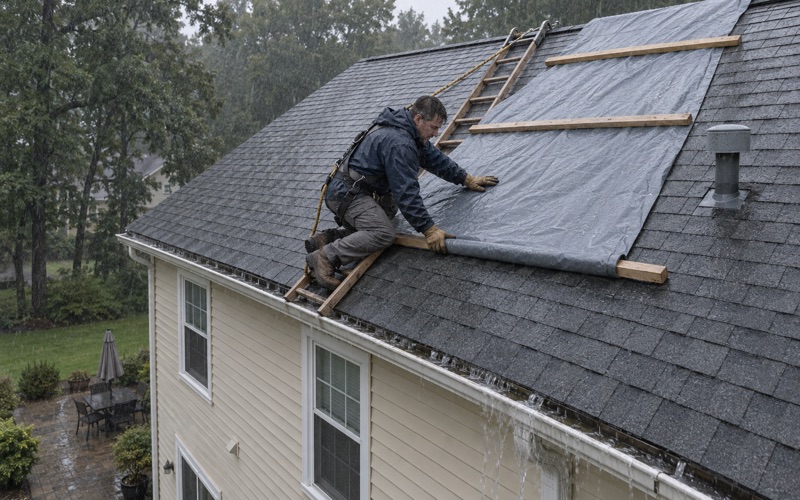
Old Bridge Roofing brings more than 20 years in the trade to roofing in Bound Brook, and every leak call we take here starts in the attic as well as on the roof. Water seldom drips where it got in, so we follow the stain, the damp sheathing and the rusted nail tips back to the real opening before anything is priced.
Once the source is found, you get a plain answer on whether the roof can be repaired. Replacement only comes up when a repair would not hold, and when it does, our written scope breaks tear-off, decking, underlayment, flashing, ventilation and gutters into separate lines so you can set our number beside anyone else’s and compare them item by item.
There is one more line we put on every Bound Brook quote that most homeowners never think to ask about: the fire rating of the roof covering itself. In a borough with closely built blocks and a recent, well-remembered fire downtown, that rating deserves the same attention as shingle color and warranty length.
The January 2020 Fire That Crossed East Main Street
A fire carried by wind
On the evening of January 12, 2020, a fire broke out around 8 p.m. in the Meridia Downtown complex, a five-floor apartment building still under construction at Mountain Avenue and East Main Street. The police chief said strong, gusty winds helped push the blaze to another apartment building across the street, two houses and an electronics store. Four buildings were gutted.
NBC News described the fire as fueled by windy conditions that caused it to jump across a street, and more than 100 people in the area were evacuated from their homes. For anyone living nearby, the lesson was plain: fire can travel between buildings without them ever touching.
What the record does and does not say
We want to be careful about what that night proves. None of the reporting we have read links the spread to any roof, or to the fire class of any roof covering, and we will not pretend otherwise. We bring it up because it showed how quickly flame moved through a dense downtown on a windy night, and that is a fair reason to ask how a roof is rated.
Wind is the thread worth pulling. When a fire is burning nearby, gusts can carry burning debris well past the building where it started, and the top surface of a house is the part most exposed to whatever comes down. A roof covering’s fire class is the industry’s measure of how that surface behaves when something burning lands on it.
Looking for roofing closer to Manville? See Manville Roofing.
What Class A, B and C Mean, and How the Burning-Brand Test Works
The three classes
Roof coverings sold for homes are tested and listed as Class A, Class B or Class C. Class A is the highest rating and is meant for severe fire exposure, Class B covers moderate exposure, and Class C covers light exposure. A covering that never went through the testing carries no class at all, which is a different thing from Class C.
The rating is not always a property of the shingle alone. Some coverings reach Class A only as part of a listed assembly, meaning a particular underlayment or deck beneath them is part of what was tested. When we write a scope, the underlayment line is chosen to match the assembly the manufacturer listed, so the rating on the bundle is the rating on your house.
Older roofs are where the question gets harder. A covering installed decades ago may be a product that is no longer made, and its listing can be hard to trace. When we cannot confirm what an existing roof is rated, we say so in writing rather than guess, and that uncertainty becomes one more fact to weigh when deciding between repair and replacement.
Inside the ASTM E108 and UL 790 tests
The classes come from two matching standards, ASTM E108 and UL 790. Each runs a roof sample through a set of exposures, including a spread-of-flame test that measures how far fire travels across the surface, an intermittent-flame test that applies and removes a flame repeatedly, and a burning-brand test.
The burning brand is the one that matters most for a fire carried on the wind. A block of burning wood is set on the sample and left there, and the test watches whether the covering lets fire through to the deck below. The brand used for Class A testing is the largest of the three, so a Class A listing means the covering held up against the heaviest burning load the standard applies.
Common materials and their ratings
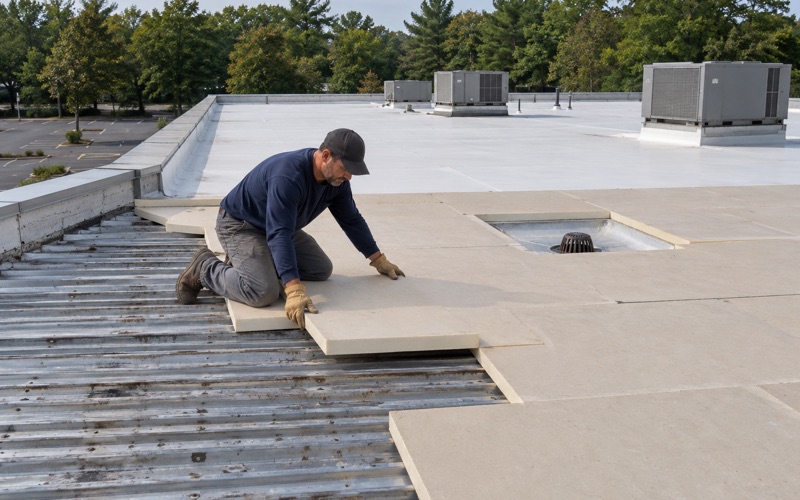
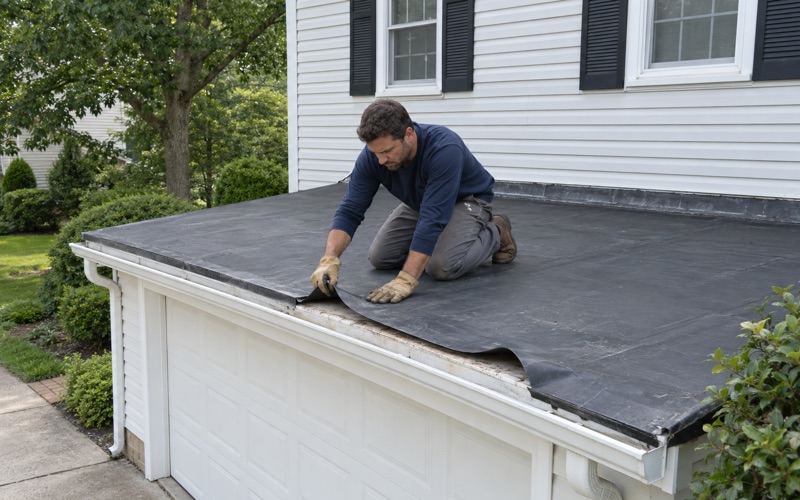
Fiberglass-mat architectural shingles, including lines such as GAF Timberline HDZ, Owens Corning Duration and CertainTeed Landmark, are generally sold with a Class A fire rating, and we confirm it on the product listing before it goes in a scope. Low-slope membranes such as EPDM, TPO and modified bitumen vary by system, so on a flat rear roof or porch we check the listed assembly rather than assume.
Roofs Within 3 Feet of a Lot Line
The model residential code that New Jersey adopts for one- and two-family homes, the IRC, ties fire rating to distance in section R902.1. Where the edge of a roof is less than 3 feet from a lot line, it calls for Class A, B or C roofing, which means a tested, classified covering rather than an unrated one.
Why the distance matters in Bound Brook
Census figures show only 41.7 percent of Bound Brook’s housing units are one-unit detached houses, with the rest in attached homes, two-family houses and apartment buildings of every size. That mix can put eaves and neighboring walls closer together than they would be on a typical single-family street.
We have not measured the setbacks on Bound Brook streets, and we will not guess at them for your house. What we do on each estimate is look at how close the roof edge runs to the property line and to the next building, and note it in writing, so the fire class of the covering is chosen with that distance in mind rather than by habit.
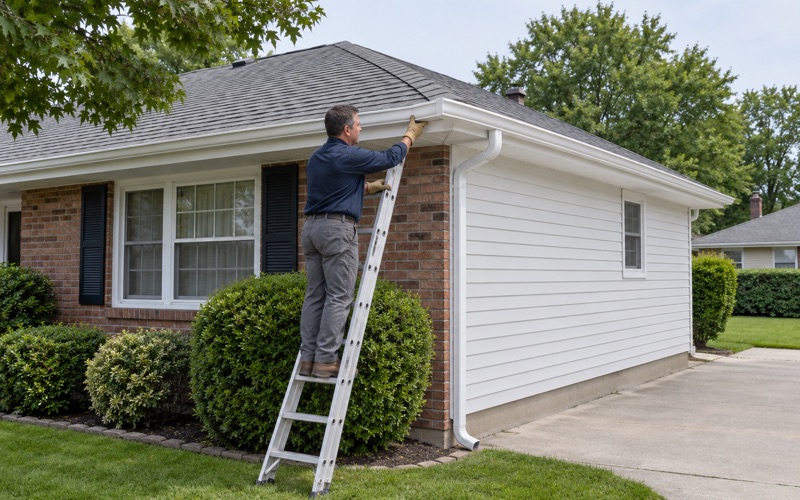
The roof edge is also where the gutters, drip edge and soffit vents sit, and where houses sit close together those parts can face a neighboring wall a short distance away. We size and pitch seamless aluminum gutters and leaders with the roof so water leaves the house instead of the foundation, and we fit drip edge at the eaves and rakes so the covering ends on finished metal rather than a raw board.
Attached homes and small apartment buildings
On a twin or a row of attached homes, one owner’s roof meets the next at a shared wall, so the covering on your side and the covering next door are effectively one surface. We check where your roof ends, how the flashing ties into the neighbor’s, and whether the materials on both sides carry a rating before we price the tie-in.
Unlike a detached one- or two-family house, where re-covering a roof is ordinary maintenance in New Jersey, attached homes and buildings of three or more units remain permit work through the Bound Brook Building Department at Borough Hall, 230 Hamilton Street. For those jobs, the covering’s listing and fire class go into the paperwork we prepare, so the rating is on record.
Asking for the Fire Class on a Bound Brook Roofing Quote
Put it next to color and warranty
Many roofing quotes name the shingle line, the color and the warranty, and stop there. Ours adds the fire class of the covering and the standard it was tested to, on the same line as the product. If two bids name different materials, you can see at a glance whether one of them is asking you to accept a lower rating.
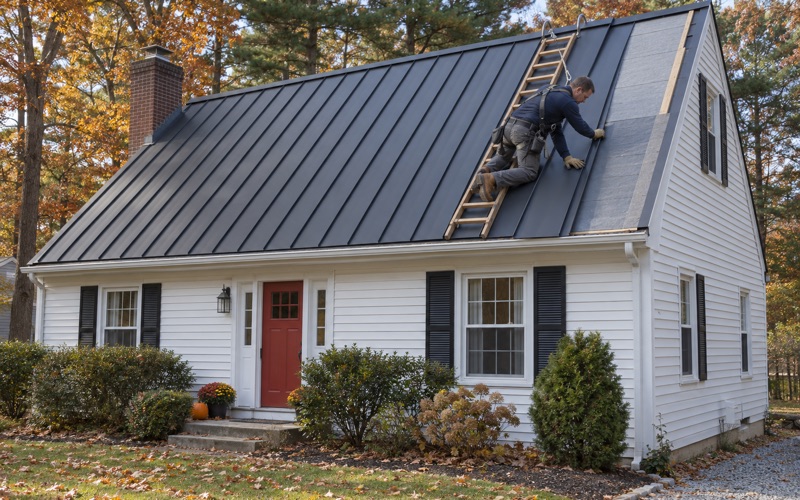
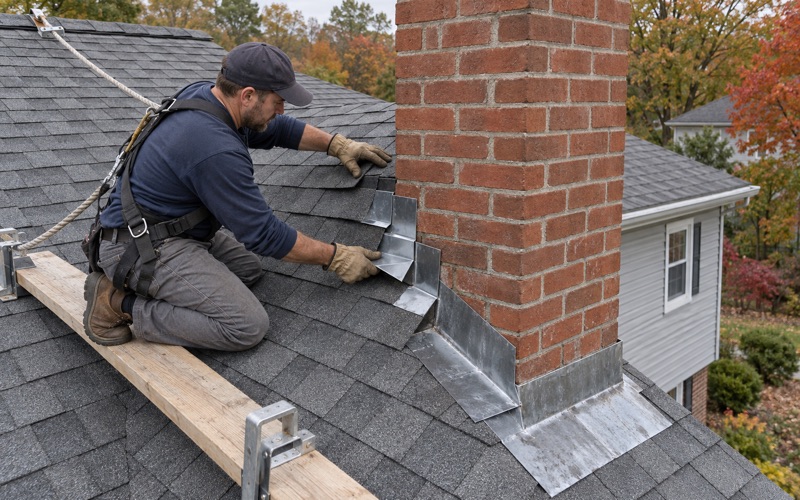
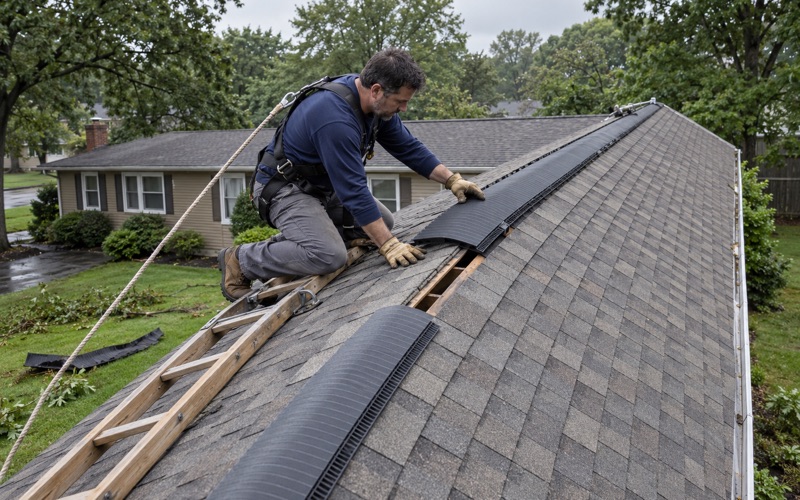
The rest of the scope is broken out the same way. Flashing gets its own line because we replace step, counter and chimney flashing with the new roof instead of bending the old metal back into place, and ventilation gets its own line because a roof that cannot breathe ages from the underside no matter what its rating says.
If a roof is being replaced after storm damage, we photograph the damage and write it up for your own claim, and we will meet your insurance adjuster on site if you ask. That written record can include the fire class of the old covering and the new one, which keeps the replacement specification clear for everyone reading the file.
Decking, tear-off and what lies underneath
A covering’s rating assumes a sound deck under it. Once the old roof is off, any rotted or delaminated sheathing is photographed and shown to you before it is replaced, at the per-sheet price already written into the contract, so a repair to the deck never shows up as a surprise on the final bill.
Older Bound Brook houses can hide more than one layer. Census data puts 27.6 percent of the borough’s housing units in buildings from 1939 or earlier, and homes that age can turn up stacked roofs, plank decking and painted trim covered by the EPA lead-safe rule for pre-1978 work. New Jersey requires a full tear-off once a roof already carries two or more layers, and we price it that way from the start.
Contracts, cleanup and the end of the job
Every contract we sign is written to New Jersey’s home improvement rules, including the notice of your three-day right to cancel. At the end of each work day the driveway, yard and gutters are cleaned and the ground is swept with a magnet for stray nails, which matters on a tight lot where a neighbor’s walk can sit a few steps from your drip edge.
If you are selling, we can also write up the roof’s condition, including its covering and fire class, in a report you can hand to the buyer’s inspector. Either way, the rating is something you should know about your own roof, and in Bound Brook it is a question worth asking before the first bundle comes off the truck.
- 20+ Years in Business
- Attic Checked on Every Leak
- Itemized Written Scopes