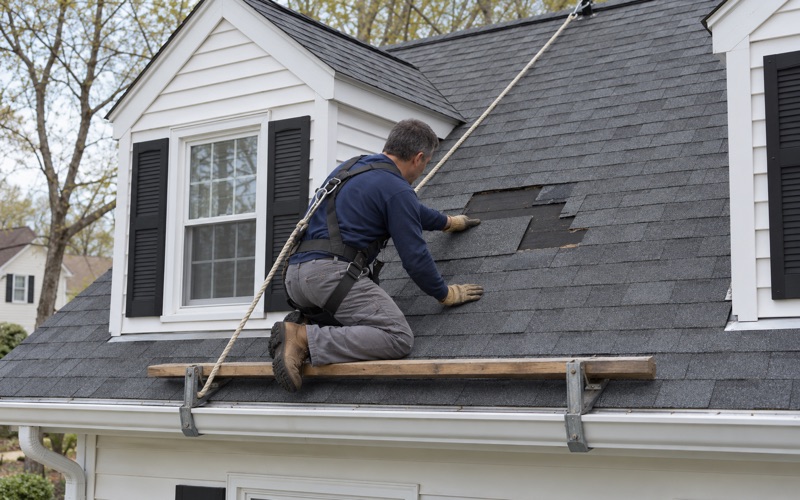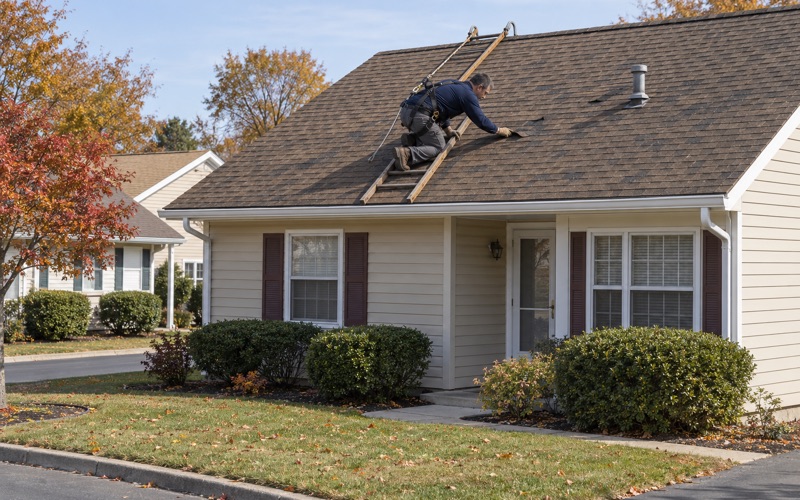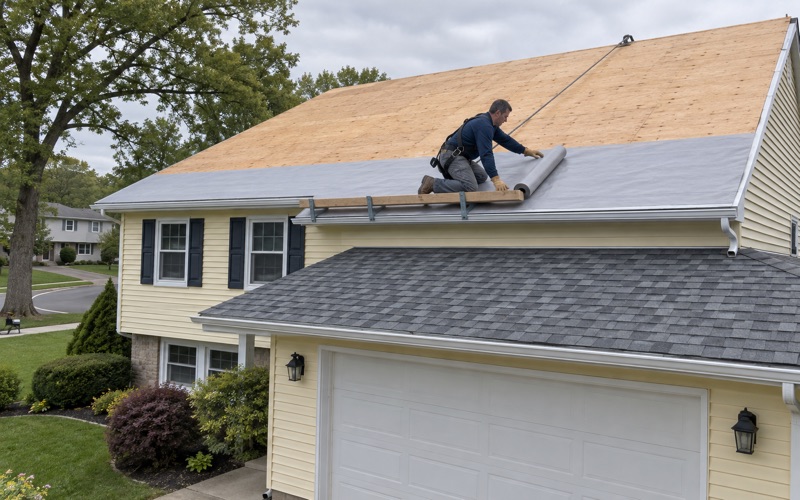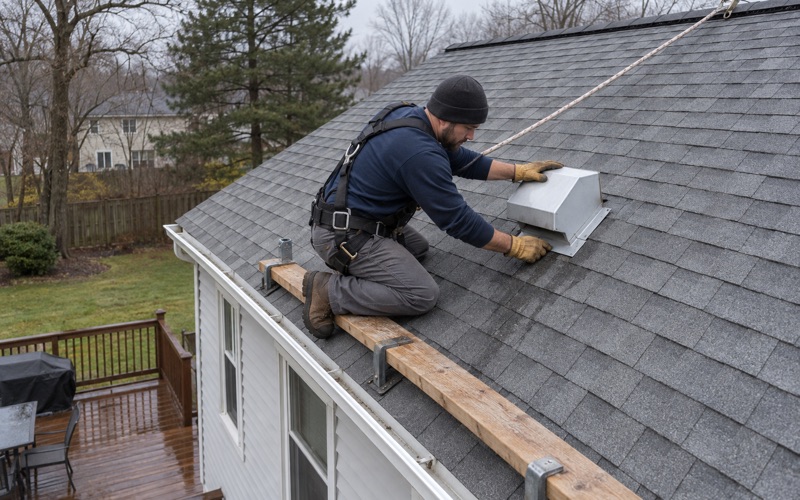
Old Bridge Roofing brings more than 20 years of experience to roofing in Chatham Township, and this page is about the roof over an attached home. A townhouse or condominium roof is shared with neighbors, so the first question is rarely about shingles. It is about who holds the roof and who gets to decide when it is replaced.
That is why we check the association’s governing documents before we write any estimate on an attached unit. The answer decides who signs the contract, who approves the material and color, and who pays. Guessing at it wastes the owner’s time and the board’s, and it can put a crew on a roof that nobody with authority asked us to touch.
Once that is settled, the work itself follows our usual order. Every leak call starts in the attic as well as on the roof, you get a straight answer on repair before replacement comes up, and the written scope breaks tear-off, decking, underlayment, flashing, ventilation and gutters into separate lines so a board or an owner can compare bids item by item.
Roofing for Chatham Glen and Other Chatham Township Townhomes
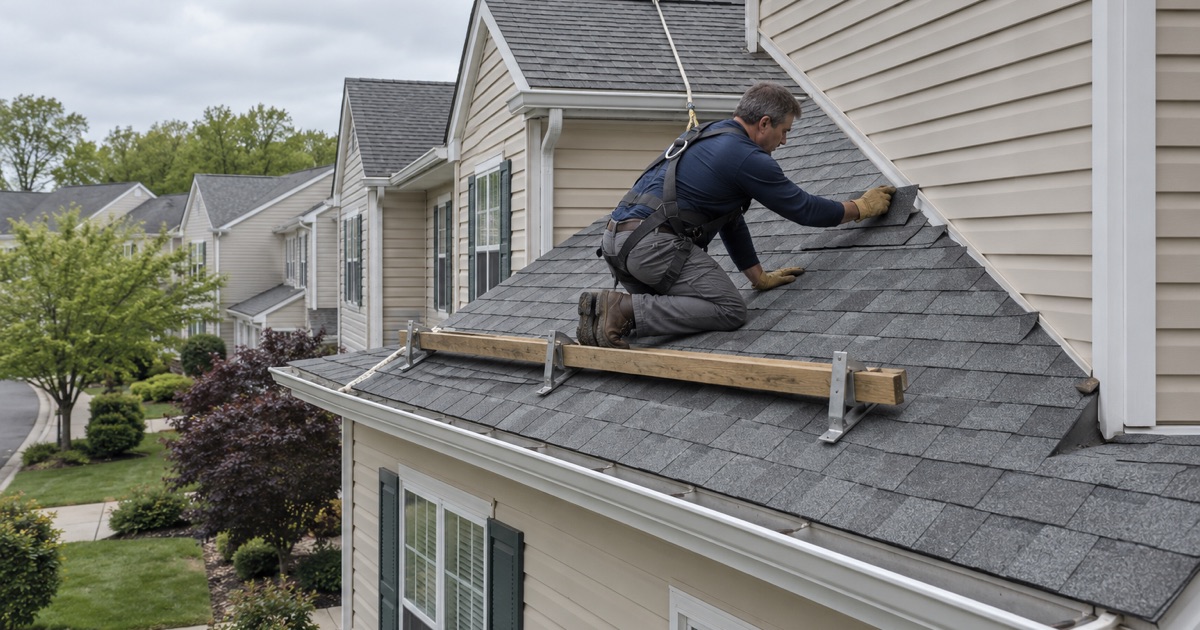
Chatham Township is a suburban township in Morris County, and it is a separate municipality from Chatham Borough. Most of its housing is detached, but not all of it. The 2024 American Community Survey five-year estimates count 4,102 homes in the township, and roughly a quarter of them are attached townhouses or units in buildings of three to nineteen units.
How the attached stock breaks down
The survey counts 348 one-unit attached homes, 82 units in three- and four-unit buildings, 448 in five- to nine-unit buildings and 219 in ten- to nineteen-unit buildings. Owners occupy 674 of those homes. That is a meaningful number of households whose roof sits over a neighbor’s ceiling as well as their own. For each of them, a roofing decision is partly a shared decision.
Owner households are the ones most likely to call a roofer themselves, so they most need to know where their responsibility starts and stops. Renters in the same buildings usually go through a landlord, and the landlord answers to the same documents an owner does.
Four communities, four associations
Most of that attached housing sits in Chatham Glen, which was built between 1984 and 1994 in four sections: Briarwood, Heritage Green, Coachlight and Sutton Woods. Each of the four is managed by its own condominium association. That detail matters more than any shingle brand, because four associations can mean four sets of rules for the same kind of building.
The communities’ own sites give a sense of scale. Coachlight Square’s roughly 108 townhomes went up from 1984 to 1987, and Sutton Woods’ 298 units followed from 1989 to 1994. A township planning document, as quoted by a local broker, also lists Vernon Grove among the attached-home areas, so the attached stock is not limited to the four Chatham Glen sections.
Looking for roofing closer to North Arlington? See Roofing in North Arlington.
Thirty-Year-Old Roofs on 1980s and 1990s Condominium Buildings
The township’s construction dates tell the same story from another side. The survey counts 693 homes built in the 1980s, more than in any other decade it reports for Chatham Township, and another 310 from the 1990s. Chatham Glen’s whole building period falls inside that window, so a large group of attached roofs started their service lives within about ten years of each other.
What thirty to forty years means
If the first roofs on those buildings are still in place, they are now 30 to 40 years old. That figure is our inference from the build dates, not from any association record; we have not seen a roof history for any Chatham Glen community, and some buildings may already have been re-roofed. The only way to know is to look.
Asphalt shingle roofs of that era were commonly three-tab products, and few were designed for four decades of service. On a roof that old we expect to find brittle shingles, granule loss in the valleys, cracked pipe boots and sealant doing the job flashing should be doing. None of that means replacement is automatic, and we say so when a repair will hold.
What a first look covers on an attached building
We start in the attic or the top-floor ceiling space wherever we can get access, because a stain on one unit’s ceiling can begin several feet away on the roof. From outside we check the ridge, the valleys, the step flashing where roofs meet walls, and the drip edge at the eaves and rakes, where older buildings often show rot first.
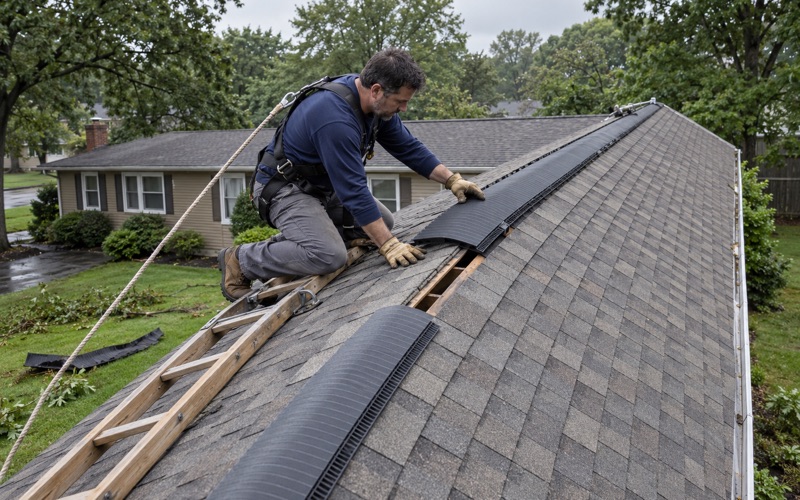
Ventilation gets the same attention. Older attached buildings may vent through a mix of gable louvers, box vents and soffits, and a roof that cannot breathe ages from underneath no matter what goes on top. On any replacement we check ridge vent and soffit intake together, so the net free area works for the whole attic rather than one unit’s share.
Who Decides on a Condominium Roof and When a Permit Applies
The master deed, not the roofer
In a New Jersey condominium, the master deed and the association’s bylaws set out which parts of a building are common elements and which belong to the unit owner. Where the roof falls varies from one community to the next, and the only reliable answer is the document itself, read for the specific community and the specific building.
We have not read the declaration for any Chatham Glen community, so we will not tell an owner who pays before we have. A 2019 listing for a Heritage Green unit said condo fees include exterior maintenance, and that phrase alone does not settle roofs. Exterior maintenance can mean painting and gutters while replacement is handled some other way.
So before we price anything, we ask the owner for the master deed, the bylaws and any board resolution on roofs, or we ask the property manager directly. If the association holds the roof, we work with the board and its manager. If the owner holds it, we still confirm what the association requires on color, material and approval before the estimate is written.
Why an attached re-roof is permit work
New Jersey’s ordinary-maintenance rule, N.J.A.C. 5:23-2.7, lets a detached one- or two-family house get a new roof covering without a permit. Attached townhouses and multi-unit condominium buildings sit outside that rule, so re-roofing them is permit work through the Chatham Township Construction Office. We build the application into the schedule rather than treating it as an afterthought.
A permitted job also leaves a record the next buyer or board can rely on. Our contracts follow New Jersey’s home improvement rules, including the three-day cancellation notice, and any rotted decking found under the old roof is photographed and shown to whoever signed before it is replaced, at a per-sheet price already written into the contract.
When a leak cannot wait
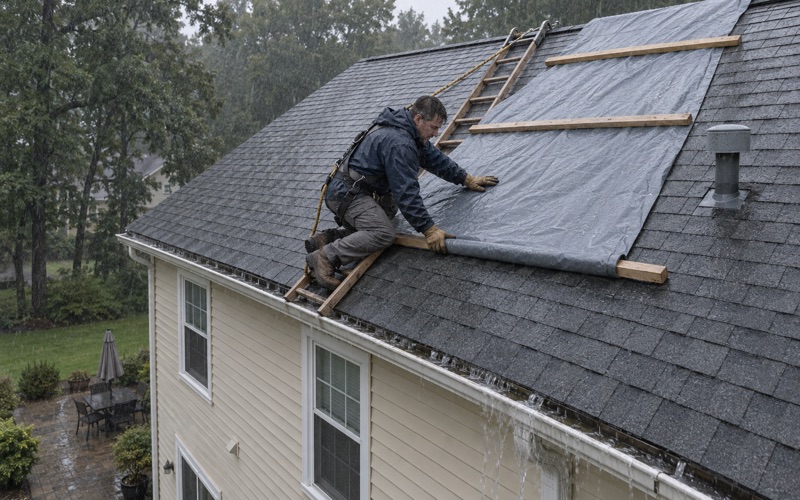
The township’s construction page lists roof leaks among valid emergencies. Work may begin before a permit is issued, as long as the office is notified and the applications follow within 72 hours. On an attached building, that often means a temporary repair to stop the water while the association and owner sort out the permanent fix.
Leaks Between Units, Party Walls and Shared Ridge Lines
Attached roofs fail in places a detached house does not have. Where two units meet, the roof usually runs continuously over a fire-rated party wall, and a ridge or valley may cross the line between two owners. Water that enters over one unit can travel along framing and show up in the neighbor’s ceiling, which is how disputes start.
Tracing water to where it gets in
That is why every leak call we take includes the attic as well as the roof surface. On a townhouse row, we may need access to two attics to follow a stain back to its source, and we ask the association or the neighbor for that access rather than guessing from the outside. Pricing comes after the entry point is found.
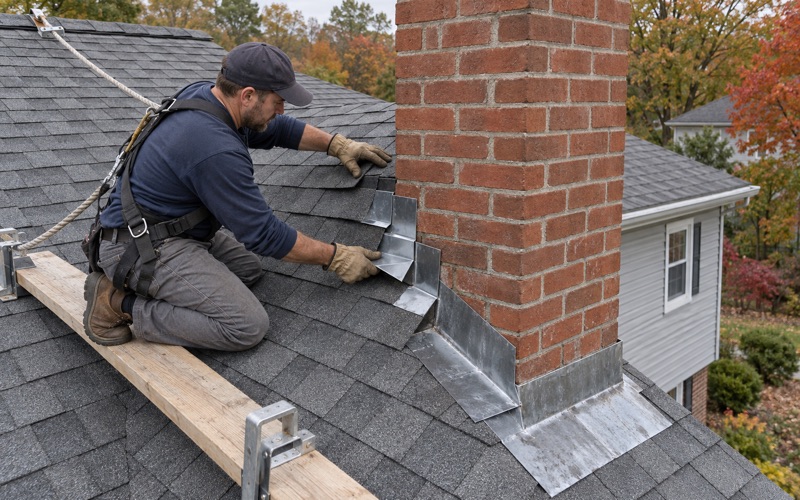
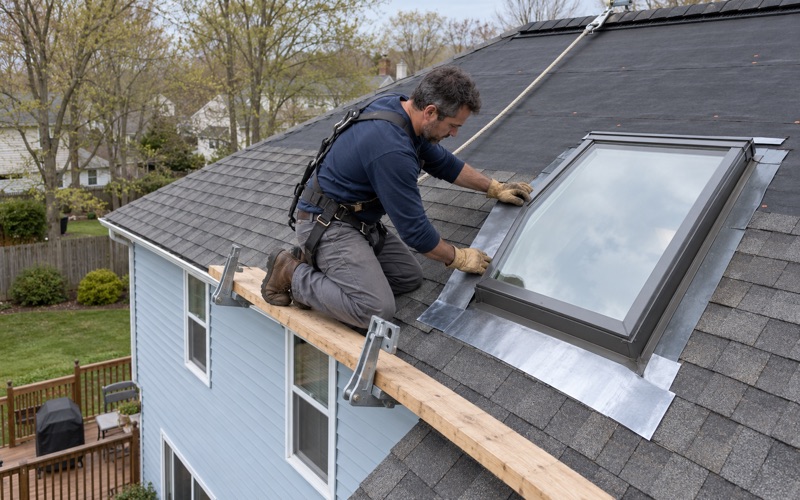
Common entry points on attached buildings include the step flashing where a taller unit meets a lower roof, the cap over a party wall, chimney and vent penetrations near the unit line, and valleys that collect water from two roof planes. Each one can sit on the boundary between an owner’s responsibility and the association’s, which is one more reason to read the documents first.
Matching one unit to the rest of the row
When only one unit in a row is re-roofed, the new section has to tie into the old one cleanly. We replace step, counter and chimney flashing with the roof rather than reusing it, and we lap new underlayment and ice and water barrier under the neighbor’s edge where the documents and the neighbor allow it. A weak seam at the unit line is a leak waiting to happen.
Associations often care about appearance as much as performance, so color and shingle line matter. Architectural shingles such as GAF Timberline HDZ, Owens Corning Duration and CertainTeed Landmark come in many colors, and we confirm the approved product with the board before ordering so a single re-roofed unit does not stand out from its neighbors.
Cleanup, storm claims and sale paperwork
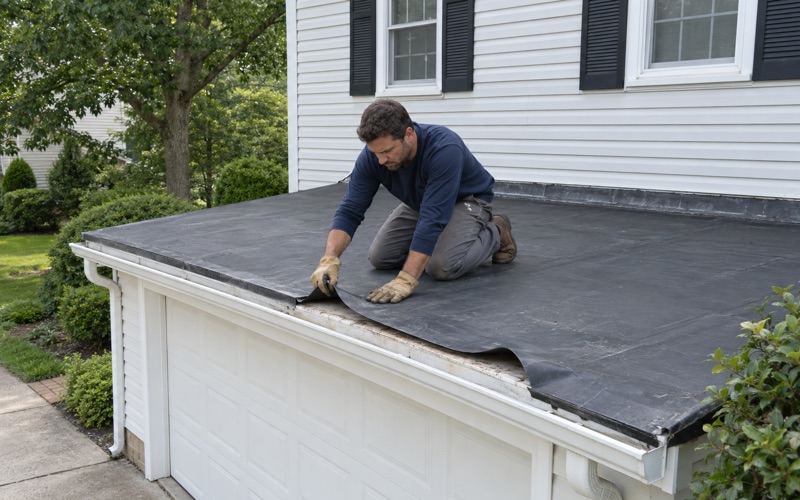
Attached communities share parking, walks and landscaping, so cleanup carries more weight here. At the end of each work day we clean the driveway, yard and gutters and run a magnet sweep for roofing nails along shared walks. Gutters and leaders are sized and pitched with the roof so water leaves the building rather than pooling at a neighbor’s foundation.
Townhouse owners selling a unit can ask us for a written roof condition report to hand to the buyer’s inspector. On an attached home, that report notes what we saw over the unit and where the association’s documents place responsibility, so the buyer’s questions go to the right party from the start.
When a storm damages a shared roof, we photograph and write up the damage for whoever holds the claim, the association’s carrier or the owner’s, and the crew will meet the adjuster on site when asked. A point in the township near Green Village falls in National Weather Service forecast zone NJZ008, issued by the Mount Holly office, which is the zone to watch for storm alerts.
- 20+ Years in Business
- Attic Checked on Every Leak
- Itemized Written Scopes