Old Bridge Roofing brings more than 20 years in business to roofing in Eatontown, and the first thing we give a homeowner is a plain answer on whether the roof can be repaired. Replacement enters the conversation only after that answer, and only when the roof has actually earned it.
When a leak brings us out, we go into the attic as well as onto the shingles, because water rarely shows up on a ceiling directly below where it got in. Tracing it to the real entry point before we price anything is what keeps a small repair small, and it is how we avoid selling a roof to someone who needed a new pipe boot or a run of step flashing.
This page is written for a particular kind of Eatontown owner: someone who has owned for a long time, may live in an attached home, and wants to know who is responsible for the roof before anyone climbs a ladder. If that sounds like your situation, the sections below walk through how we approach it.
Eatontown’s Older Homeowners and Their Roofs
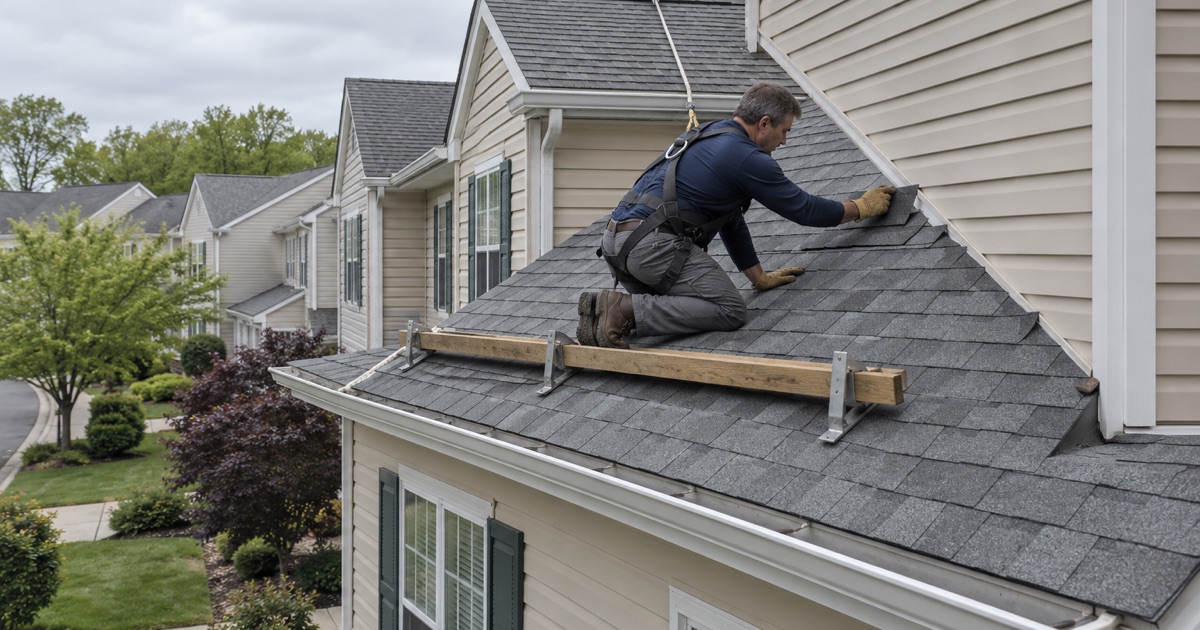
Eatontown has a large rental share, with 2,395 of its 5,719 occupied homes rented according to the Census Bureau’s 2024 five-year estimates, so it is easy to picture a young, transient borough. The owners tell a different story. Among the 3,324 owner households, 1,389 are headed by someone 65 or older, which is 41.8 percent, and 2,081, or 62.6 percent, are headed by someone 55 or older.
What the age breakdown shows
The detail matters more than the headline. The same estimates count 770 owner households headed by someone 65 to 74, 445 by someone 75 to 84, and 174 by someone 85 or older. A good share of the borough’s owner-occupied roofs belong to people for whom a replacement is a large, infrequent decision that has to fit a household budget and a plan for how long they will stay.
That changes what a useful roofing visit looks like. An older owner usually does not want to be talked into the biggest job on the menu, and often should not be. What helps is a clear read on condition, a repair if a repair will hold, and enough written detail that a son, daughter or financial advisor can review the numbers without us in the room.
Seeing the roof without climbing it yourself
No one should be on a ladder checking their own shingles at 75, and we would rather you call than try. We photograph what we find on the roof and in the attic and walk you through the pictures at the kitchen table, so the condition of the roof is something you have seen rather than something you were told.
If you are thinking about selling rather than re-roofing, we can put the roof’s condition into a written report you can hand to the buyer’s inspector. For an owner weighing a move to something smaller, that report can help settle the question of whether to replace the roof first or price the house as it stands.
Looking for roofing closer to Bound Brook? See Roofing Services in Bound Brook.
Parker Village Estates and Eatontown’s 55+ Attached Homes
Eatontown’s one listed age-restricted community is Parker Village Estates, off Village Drive. The 55places directory lists it as 66 attached homes built in 2002, while other listing summaries describe a set of townhouse-style condominiums run by an association with common elements and professional management. The counts in those sources do not agree, which is one reason we start with the community’s own documents rather than a website.
What a 2002 build date means for the roofs
Homes completed in 2002 have roofs that are about 24 years old if they are still on their original covering. That figure is arithmetic from the build year, not the result of any inspection, and we have not been up on those roofs. Some may have been repaired or replaced since; some may still have years left.
What the age does tell you is that the first full re-roof of an attached building from that era is reasonable to start planning for, even if the work itself is some way off. A shingle roof in its third decade usually shows its years in granules collecting in the gutters, tabs that curl or lift, and sealant strips that have let go along the edges.
Why attached homes are handled differently
New Jersey treats replacing the roof covering on a detached one- or two-family house as ordinary maintenance under N.J.A.C. 5:23-2.7. Attached homes sit outside that rule, so a re-roof at a community like Parker Village is approached as a different kind of job from the start, and we confirm what the Eatontown Construction Department needs before a date goes on the calendar.
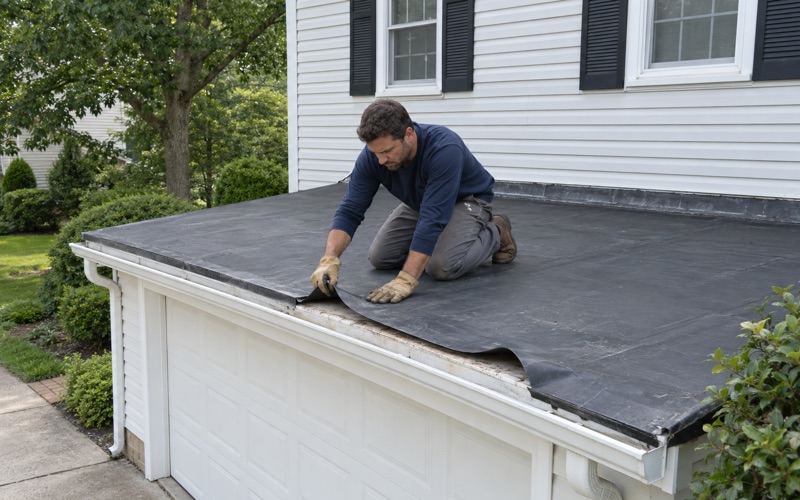
The physical work differs too. On a row of attached homes the roof planes usually run across party walls, so shingle courses, ridge vents and flashing on one unit meet the neighbor’s. Replacing one section means planning how the new material ties into the old at that seam, and whether the seam should move to a point where it will shed water cleanly.
Who Holds the Roof: Association or Owner
In any townhouse, condominium or 55+ community, the question that decides everything else is who is responsible for the roof. In some communities roofs are a common element that the association maintains and replaces; in others each owner carries their own roof, and plenty of arrangements fall somewhere in between. We have not read Parker Village’s declaration, and we will not guess at it on this page or at your door.
Reading the master deed before the estimate
Before we write any estimate in a community with shared elements, we check who holds the roof against the association’s documents: the master deed or declaration, the bylaws, and any maintenance chart the board has adopted. If you have a copy, we will read the roofing language with you. If you do not, the management company can usually provide it.
That step protects you from two expensive mistakes. One is paying privately for work the association was obligated to do. The other is hiring a roofer for a unit roof that the association has the sole right to contract for, and then finding the work may have to be redone to match the rest of the building.
When responsibility is split
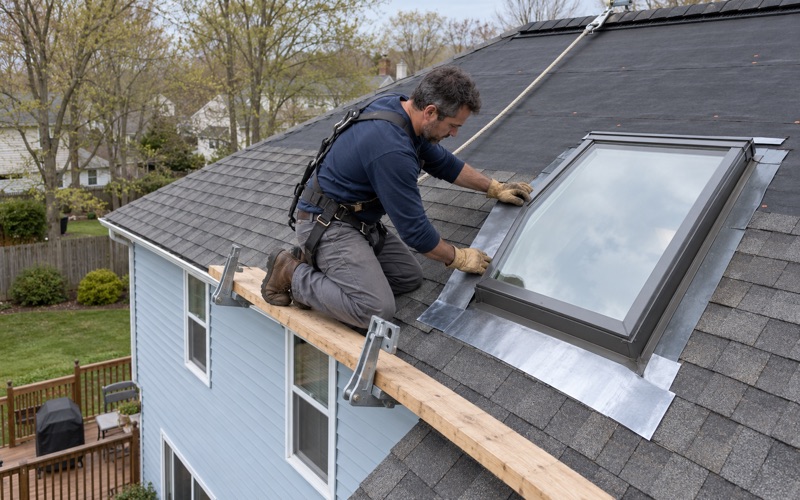
Documents sometimes split the roof itself. The association may hold the shingles and decking while an owner holds a skylight, a vent or the gutters on their own unit, or the reverse. When that happens we write the scope so each line names the party paying for it, and, with your permission, we send the same scope to the board or manager so nobody is surprised.
Re-Roofing on a Fixed Income and a Shared Calendar
Once responsibility is settled, the practical questions are money and timing. A first re-roof on a 2002 attached building is rarely a one-unit decision, and for an owner on a pension or retirement savings, the price has to be predictable before anyone signs.
An estimate you can compare line by line
Our written scopes break the job into separate lines for tear-off, decking, underlayment, flashing, ventilation and gutters. That lets you, a family member or a board compare our number with another contractor’s item by item instead of trying to read two lump sums. Where an ASTM D1970 self-adhering ice and water barrier goes at the eaves and valleys, the scope says so.
Decking is the line that usually moves a price after the old roof comes off. If we find damaged sheathing, we photograph it and show you before we replace it, and the per-sheet price is already set in the contract. On a fixed budget, that means any added cost is priced by a rate you agreed to in advance.
Every contract we write follows New Jersey’s home improvement rules, including the three-day cancellation notice. If a relative wants to look over the paperwork after you sign, there is time for that without pressure from us.
Scheduling the work across attached units
When several attached units share a roof line, the cleanest result usually comes from doing the whole building, or at least a full section of it, in one visit. That keeps shingle color and pattern consistent, puts new flashing where every unit meets, and avoids a patchwork of roof ages on one ridge. It also takes coordination among owners or a board decision, which can take a season to arrange.
For residents who are home all day, we plan around the household as much as the roof. We tell you which days will be loud, when the driveway is needed for the dumpster, and what to take down from walls and shelves in the rooms below. At the end of each work day we clean the driveway, yard and gutters and run a magnet over the ground for roofing nails, which matters on walks used by people who are less steady on their feet.
What we check on every replacement
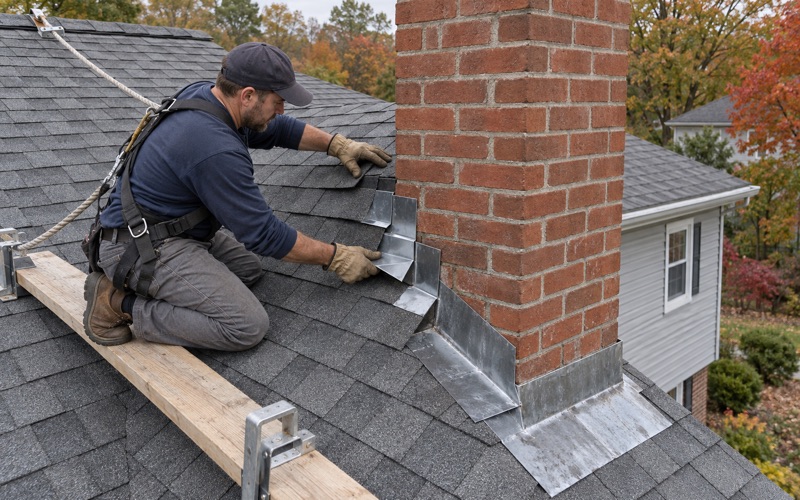
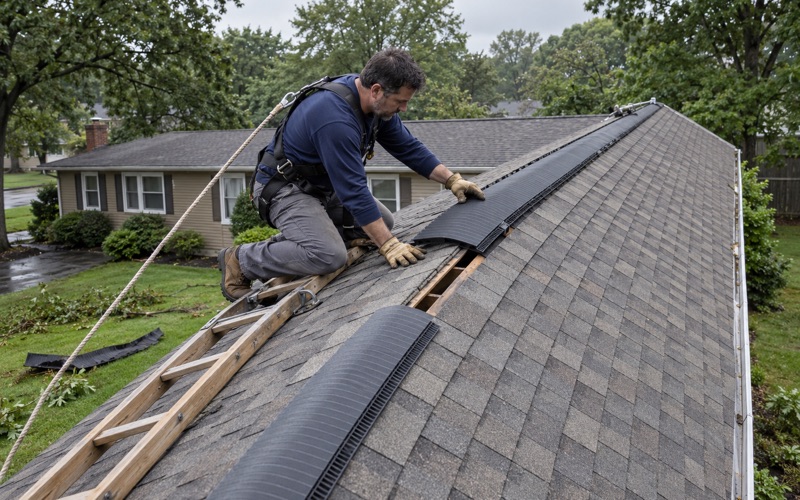
Step, counter and chimney flashing is replaced with the roof rather than reused under new shingles, because reused flashing is a common source of leaks on a new roof. We also check attic ventilation on every replacement, balancing a ridge vent against soffit intake, since a roof that cannot breathe ages from underneath and can shorten the life of the investment you just made.
Gutters and leaders are sized and pitched along with the roof, so water is carried away from the house instead of toward the foundation. If you own in Eatontown and are not sure where your roof responsibility begins, call us before you call for prices; sorting that out first is usually the most useful hour of the whole project.
- 20+ Years in Business
- Attic Checked on Every Leak
- Itemized Written Scopes