Old Bridge Roofing brings more than 20 years in the trade to roofing in Florham Park, and the question we hear most after a rough summer afternoon is a simple one: will this roof hold next time? The honest answer depends on details most owners never see, from the wind rating printed on the shingle bundle to how the first course was nailed along the eave.
This page is about wind, because summer thunderstorms, rather than hurricanes, are what tend to test a roof here. We look at the shingle’s rating, the starter strip and nail pattern underneath it, and the condition of the seal strips that hold each tab down. When something has lifted, we say plainly whether a repair will do before anyone mentions a new roof.
Every leak call we take includes a trip into the attic as well as onto the roof, so we can follow the water to where it actually enters. Wind damage often shows first as a stain on the ceiling rather than a shingle in the yard, and the attic is where that trail starts.
A Measured Gust at the Airport Next Door
On September 8, 2023, the Storm Prediction Center logged a 59 mph thunderstorm gust at Morristown Municipal Airport, which its report places 2 miles west-northwest of Florham Park. The note filed by NWS Mount Holly put the peak at 51 knots and said several parked aircraft were lifted and damaged. That is a dated reading from instruments, not a story passed around after the fact.
It is also one event. The report names no roof damage, and a single gust at an airfield is not a wind record for the borough. We use it because it shows the kind of wind a short, violent summer storm can carry across Morris County, and it is a better starting point than guessing.
Florham Park falls in the National Weather Service’s Morris forecast zone, NJZ008, issued from the Mount Holly office, so wind advisories for the borough come out under that zone. A wind advisory is a reasonable cue to note the time, then check the roof from the ground once the weather has passed.
Thunderstorm Wind Versus Hurricane Wind
Owners often picture hurricanes when they think about roof wind damage, but in Morris County the more practical concern is the summer downburst. A storm cell can push a burst of wind down and outward for a few minutes, then move on, and a roof edge that was nailed short or never sealed is what gives first.
The distinction matters for insurance language too. New Jersey’s hurricane deductible applies only to a hurricane named by the National Weather Service with sustained winds of 74 mph or more, under DOBI Bulletin 11-16. A thunderstorm gust is a different event, and what your policy pays for it is between you and your carrier, which is why we document damage rather than predict coverage.
Design Wind Speed Is Set by Address
New Jersey does not publish one design wind speed for a whole town. Under DCA Bulletin 19-1 the figure is address-specific, so we never quote a borough-wide number, and you should be wary of anyone who does. What we can judge on site is how your roof’s materials were rated and how they were put down.
Looking for roofing closer to Hopewell Township? See Roofing in Hopewell Township.
Shingle Wind Ratings and What the Bundle Label Means
The wind rating on a shingle is printed on the bundle wrapper, and it is one of the first things we confirm when we price a new roof for a Florham Park house. Two test standards show up most often on asphalt shingles: ASTM D3161 and ASTM D7158. They test in different ways, and the label tells you which one the product passed.
ASTM D3161 and ASTM D7158
ASTM D3161 is a fan-driven test that blows air across shingles installed on a test deck, and passing products carry a class letter, commonly Class F on architectural shingles. ASTM D7158 measures uplift resistance once the seal strips have bonded, and it uses its own letters, with Class H the highest on that scale.
We do not translate those letters into miles per hour for you, and we would be cautious of a sales sheet that does it loosely. A rating describes how a product performed in a lab under set conditions. It does not promise that a roof will come through any particular storm, and it says nothing about how the roof was nailed.
Reading the Label Before the Roof Goes On
When we write a scope for a Florham Park replacement, the shingle line names the product and its rating, so you can hold it against a second estimate. GAF Timberline HDZ, Owens Corning Duration and CertainTeed Landmark are all laminated architectural shingles, and the wrapper is where to confirm which wind standard a given product lists.
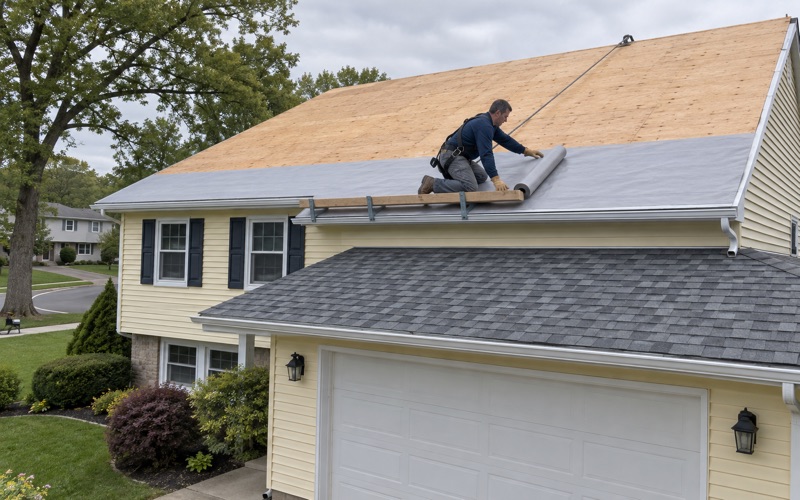
That scope also breaks tear-off, decking, underlayment, flashing, ventilation and gutters into separate lines. A high wind rating on the shingle means little if the underlayment or drip edge around it is skimped, and listing each item separately is how you see where two bids actually differ.
Florham Park’s housing is young for northern New Jersey, with a median year built of 1984 in Census survey estimates. A newer house is not automatically a wind-ready one, though, and a replacement is the moment to confirm the new shingle’s rating rather than assume it matches whatever came off.
Starter Strips, Nailing and Sealant: Where Wind Gets In
Wind rarely tears a roof off from the middle. It finds an edge, gets under the first course at the eave or along a rake, and peels upward from there. That is why the starter strip, the nail line and the factory sealant matter as much as the shingle’s rating, and why so much of our installation attention goes to the perimeter.
The Starter Course
A proper starter strip puts a line of sealant right at the eave and rake edges, so the first full course of shingles bonds down instead of sitting loose. Cutting tabs off ordinary shingles and flipping them can leave the sealant in the wrong place. We use starter material made for the job and set it to overhang the drip edge correctly.
The manufacturer’s wind rating generally assumes its own installation instructions were followed, often including a matching starter product. When an estimate lists a high-rated shingle but says nothing about the starter or the edge metal, ask what is going on the perimeter. That line item goes a long way toward deciding whether the rating on the bundle carries over to your roof.
Nail Placement and Seal Strips
Each shingle has a nailing zone, and a nail driven above it or too close to the edge leaves the shingle free to flex in a gust. Overdriven nails that break through the mat do the same thing. We hand-check nail placement on the first courses and watch the gun pressure through the day, because a crooked pattern is invisible once the next course covers it.
The seal strip on each shingle needs warmth and sun to bond to the course below. A roof put on late in the fall may not fully seal until warmer weather arrives, and during that window it is more open to uplift. On a cool-season job we discuss whether hand-sealing the edges makes sense before the first summer storm reaches it.
Flashing at the Edges and Walls
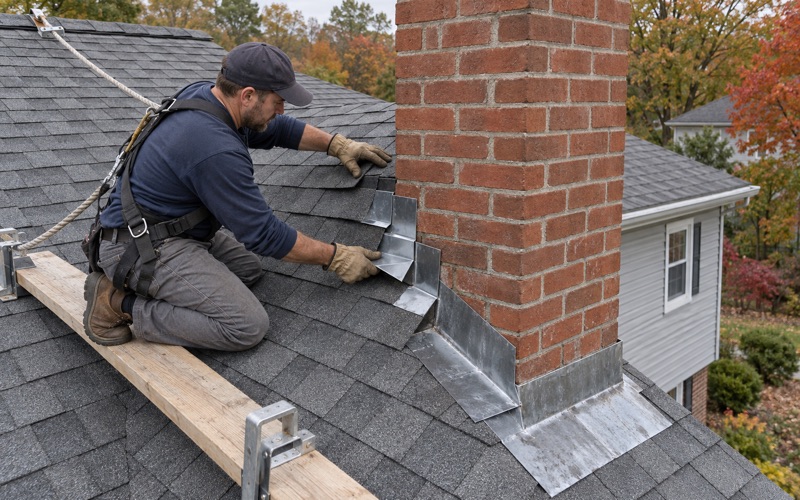
Wind-driven rain gets in at walls and chimneys as readily as at the eave. We replace step, counter and chimney flashing with the roof instead of bending old metal back into place under new shingles, and we install drip edge at both eaves and rakes so the deck edge is covered where wind gets its first grip.
Checking a Florham Park Roof After a Summer Storm
After a strong storm passes, start from the ground. Walk the property and look for shingle pieces in the yard, a dark stripe along the roof where a course has lifted, or drip edge and ridge cap that look out of line. Stay off ladders and off the roof; a creased shingle is easy to miss from a distance and easy to slip on up close.
What We Look For Up Close
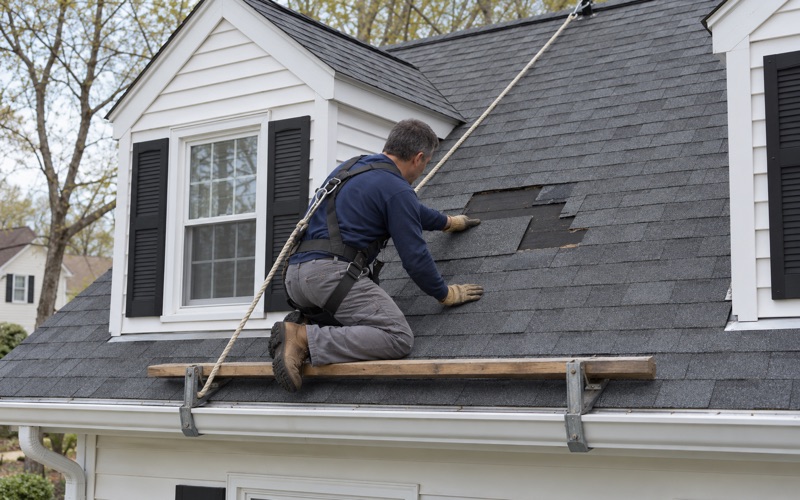
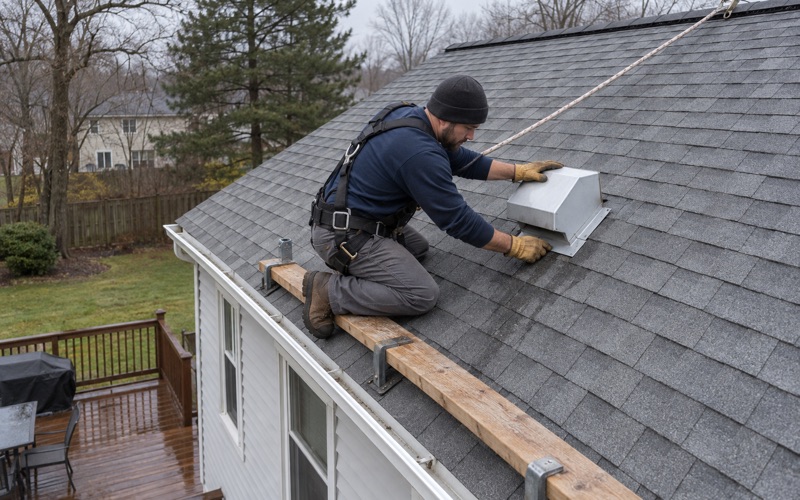
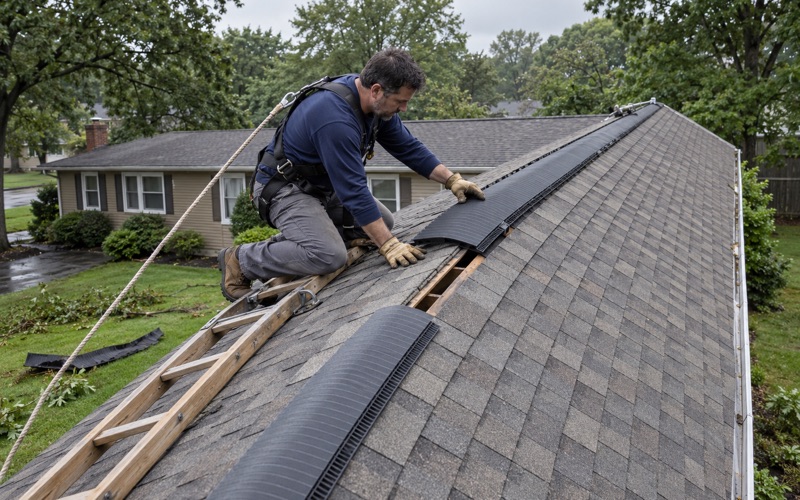
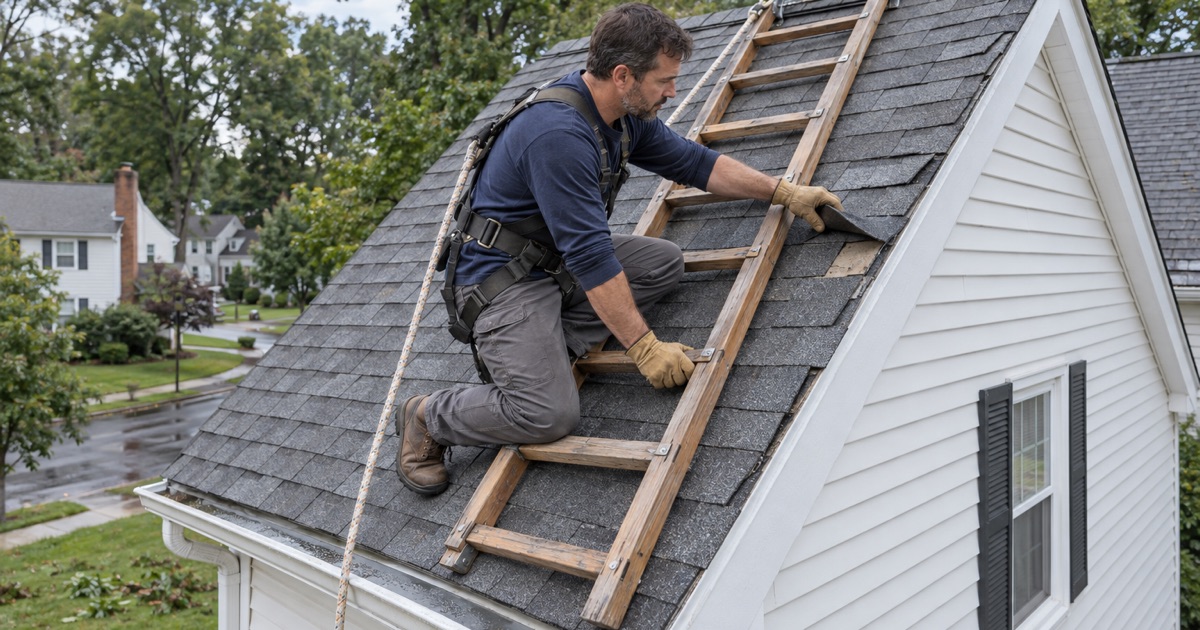
On the roof, we look for creases across the tabs, which tell us a shingle was lifted and folded back even if it settled flat again. We check whether seal strips have let go, whether nails have backed out, and whether pipe boots, ridge vents and flashing edges are still tight. A single lifted course can often be repaired without touching the rest of the roof.
Then we go into the attic. Daylight around a nail, damp sheathing or a fresh stain on the underside of the deck shows us where water has already found a way in, and it keeps a repair aimed at the real entry point. Attic ventilation gets a look at the same time, since a roof that cannot breathe weakens from underneath.
Photos and Paperwork for Your Own Claim
If there is storm damage, we photograph it and write it up so you have a clear record for your own claim. When you ask, our crew will meet the insurance adjuster on site and walk the roof with them. The claim itself stays in your hands, since New Jersey’s Public Adjusters’ Licensing Act governs who may act for a policyholder.
On a detached one- or two-family house, replacing the roof covering counts as ordinary maintenance under N.J.A.C. 5:23-2.7 and needs no construction permit, so storm repairs are not held up waiting on paperwork. Whatever the size of the job, the written contract follows New Jersey’s home improvement rules, including the three-business-day cancellation notice.
If you live in Florham Park and a summer storm has left you wondering about your roof, call us for an inspection. We will tell you what the wind did, whether a repair covers it, and what rating and installation details would make sense if the roof ever needs replacing.
- 20+ Years in Business
- Attic Checked on Every Leak
- Itemized Written Scopes