
Old Bridge Roofing handles gutter installation in Old Bridge, NJ, serving surrounding cities including South River, Aberdeen, South Amboy, Holmdel and Highland Park, and we bring more than 20 years of roofing work to every gutter job. Gutters are the last part of the roof’s drainage system, not an add-on. If they are too small, pitched wrong or missing leaders, the roof above them does its job and the water ends up at the foundation anyway.
That is why we size and pitch gutters and leaders together with the roof. We look at how much roof drains to each run, how steep it is, and where the water can be carried safely away. The goal is simple: water should leave the house, not soak the fascia, pour over the edge or pool by the basement wall.
We install seamless aluminum gutters formed on site, with leaders placed where they will actually do the work. Whether the gutters go up with a new roof or replace a tired old system, the written scope lists them as their own line so you can see what you are paying for.
Seamless Gutter Installation for Old Bridge Homes
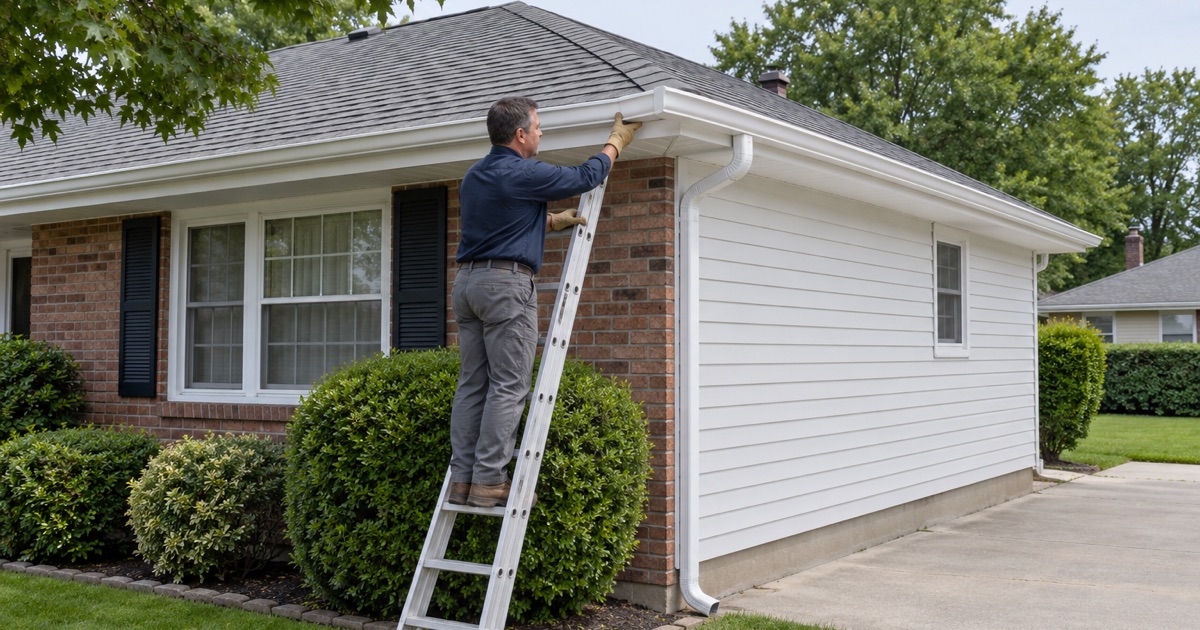
Seamless Aluminum Formed on Site
Seamless gutters are made from a coil of aluminum run through a forming machine at your house, cut to the full length of each run. That leaves joints only at corners and ends, instead of every few feet. Fewer joints mean fewer places for water to drip and for sections to separate.
Aluminum does not rust, is light enough to hang without stressing the fascia, and comes in colors to match trim. We seal corners and end caps carefully, since those are the remaining weak points. The result is a cleaner line along the house and a system that holds up to years of freeze and thaw.
Sizing Gutters to the Roof
Gutter size should follow the roof, not habit. A large or steep roof sheds water fast, and a gutter that is too small will overflow in the first heavy downpour no matter how clean it is. Five-inch K-style gutters suit many houses, while big roofs and long runs often need six-inch gutters.
We measure the roof area draining to each run and look at the pitch and any valleys that concentrate water. Inside corners where two slopes meet often need special attention. Sizing it correctly the first time costs less than replacing an undersized system later.
Pitch, Hangers and Fastening
Gutters need a slight, steady slope toward each leader so water does not sit and freeze. Too little pitch leaves standing water, and too much makes the gutter look crooked and can send water over the end. We snap a line for each run and set the slope before hanging anything.
Hidden hangers are screwed into solid fascia at close spacing so the gutter can carry the weight of water, ice and the occasional ladder. Old spike-and-ferrule systems tend to pull loose over time. Proper hangers keep the gutter straight and tight to the house for years.
Leaders and Moving Water Away from the House
Leader Placement and Count
A gutter can only drain as fast as its leaders let it. Long runs need a leader at each end or more than one along the way, and runs fed by large roof areas need larger leaders. We plan leader locations around both the roof and the ground below, avoiding walkways and driveways where possible.
Leaders are fastened securely to the wall and placed where they will not be knocked loose. Elbows are kept to a minimum, since every bend slows the water and catches debris. Where a larger leader fits the house, it often solves overflow problems on its own.
Extensions, Splash Blocks and Drainage
The point of a gutter system is to get water away from the foundation. A leader that empties right against the house can push water toward a basement or crawl space. We extend leaders and set splash blocks so water lands on ground that slopes away from the house.
Where a yard is flat or slopes toward the house, we discuss options for carrying water farther away. Some properties already have underground drains, which we connect to after checking they flow. Water that leaves the house properly protects the foundation as much as the roof does.
Drip Edge and the Roof Edge
Without drip edge, water running off the shingles can curl back under the edge and run behind the gutter. That soaks the fascia and the first row of decking, and over time it causes rot. Drip edge at the eaves directs water into the gutter instead.
We check that drip edge is present and correctly lapped over the gutter. When we install gutters with a new roof, the drip edge and gutter go in together so they work as one system. On older roofs, adding drip edge is often part of a gutter job.
Gutters, Roofs and Fascia
Installing Gutters with a New Roof
A roof replacement is the best time to replace gutters, because the roof edge is already open. New drip edge, new fascia where needed and new gutters can all be set to match. Doing them separately can mean disturbing a brand-new roof edge to fix old gutters later.
When we replace a roof, gutters and leaders appear as their own line on the scope. You can choose to include them or not, but you will know what each part costs. Sizing them alongside the roof keeps the whole system in step.
Rotten Fascia Repair
Fascia boards behind failing gutters are often soft from years of water getting behind them. Hanging new gutters on rotten fascia means the hangers will not hold. We check the fascia along every run before installing anything.
Damaged sections are cut out and replaced with new boards, then covered in aluminum trim where the house calls for it. On houses built before 1978, painted fascia and trim may contain lead, and the EPA RRP lead-safe rule governs how it is disturbed. We plan for that on older homes.
Gutter Guards Under Heavy Trees
Where oaks, maples or pines drop leaves, needles and seed pods, gutters can clog several times a season. Guards can reduce how often that happens and how often a ladder comes out. They are worth discussing on houses where clogging is a regular problem.
No guard is maintenance-free. Fine debris can still collect on top of or inside some designs, and they need an occasional check. We explain the options and the trade-offs, and recommend them where they will genuinely help.
Commercial and Multifamily Gutters
Larger Gutters and Box Gutters
Commercial buildings and larger multifamily roofs carry far more water to the edge than a house does. They often need oversized gutters, larger leaders and more of them. Low-slope roofs may drain to scuppers that feed collector boxes and leaders.
We size these systems to the roof area and the building’s layout. On flat roofs, the gutter and scupper work ties into the membrane and flashing at the edge. Commercial and multifamily roof edge work falls outside the detached-house ordinary-maintenance rule, so we check permit needs first.
Rental Buildings and Maintenance Codes
New Jersey’s maintenance code for multiple dwellings, N.J.A.C. 5:10, covers the condition of roofs and leaders on those buildings. Owners and managers of rental properties need gutters and leaders that work and are kept in repair. A failing leader that dumps water against a wall can become a code issue as well as a building problem.
We inspect the gutters and leaders across a building and give the owner a written list of repairs, separating urgent items from planned work. That makes it easier to budget and to show the work was done. Replacement can be phased building by building where that suits the owner.
Our Step-by-Step Gutter Installation Process
Step 1: Measure and Plan
We measure each roof section, note the pitch and valleys, and plan gutter size and leader locations around the roof and the ground below. The fascia and drip edge are checked at the same time. You get a written scope with gutters, leaders and any fascia work listed separately.
Step 2: Remove and Prepare
Old gutters come down, and the fascia is inspected along every run. Rotten boards are replaced, and drip edge is added or corrected where needed. The goal is a solid, straight edge to hang the new gutters on.
Step 3: Form and Hang
The seamless gutter is formed on site to each run’s length, then hung with hidden hangers into solid fascia at the planned slope. Corners and end caps are sealed, and leaders are fastened to the wall. Extensions and splash blocks are set to carry water away.
Step 4: Test and Clean Up
We run water through the system to check the pitch and watch each leader drain. The work area is cleaned up, including any old fasteners and gutter scraps. You see the finished system and how the water leaves the house.
- 20+ Years in Business
- Attic Checked on Every Leak
- Itemized Written Scopes