Old Bridge Roofing handles roofing in Hopewell Township with more than 20 years in the trade behind us, and we plan these jobs around the property as carefully as around the shingles. A re-roof on a big house set far back from the road raises questions a crowded street never does: where the trucks park, how the old roof leaves, and what gets crossed on the way.
Every estimate starts with a straight answer on whether the roof can be repaired, and replacement only comes up when repair would not hold. When a leak is the reason for the call, we go into the attic as well as onto the roof, so the price is built on where water actually gets in rather than where the stain shows.
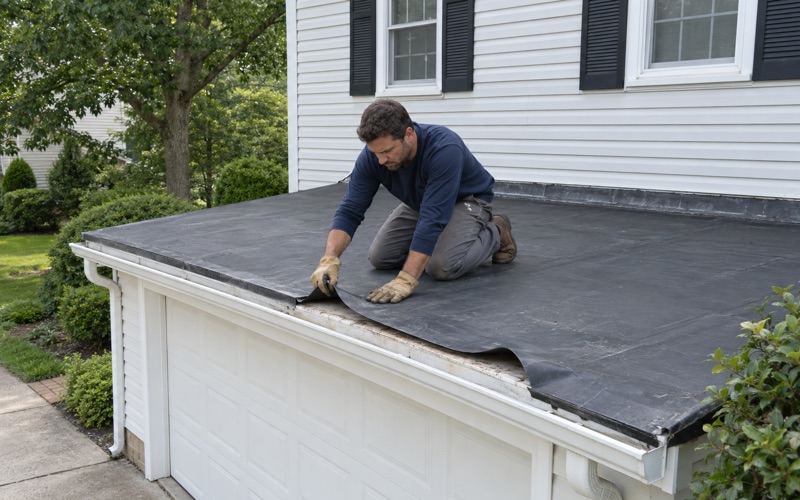
The written scope breaks the work into separate lines for tear-off, decking, underlayment, flashing, ventilation and gutters. On a large house that matters more than usual, because the numbers are bigger and two estimates are only comparable when you can line them up item by item.
Six- and Fourteen-Acre Zoning Around the Boroughs
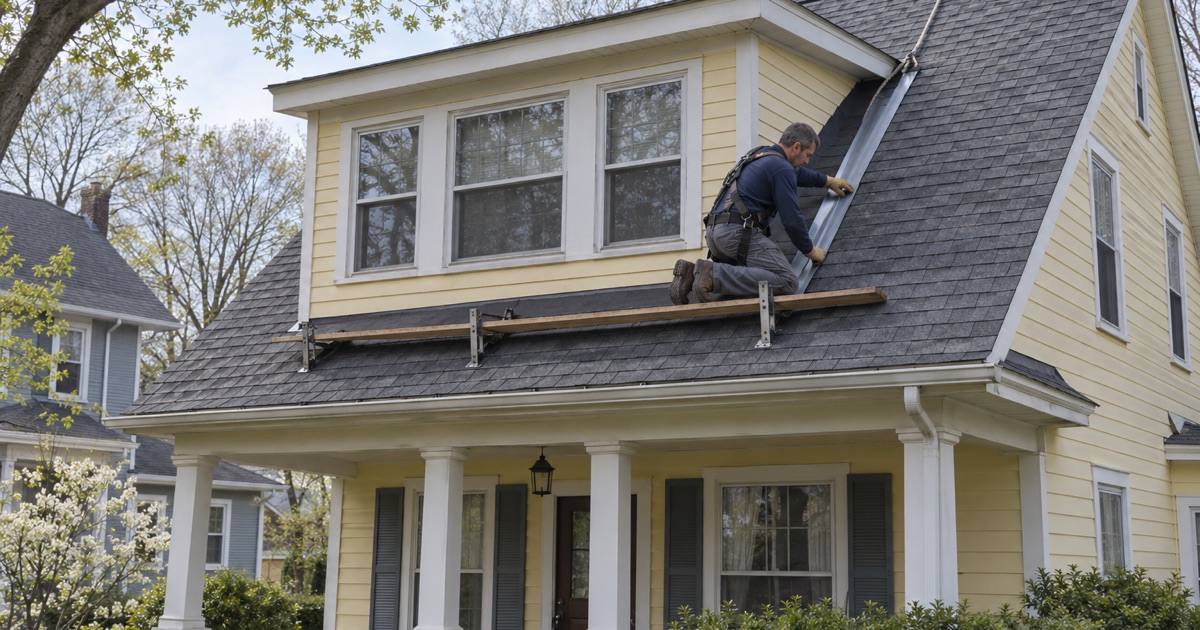
Much of Hopewell Township is laid out for large lots on purpose. In December 2002 the township adopted Ordinance 02-1268, which created two conservation districts, and a 2008 Appellate Division opinion, Greenwood v. Hopewell Township, describes what that ordinance set. That opinion is our source here, so the figures below are the 2002 rules as the court read them.
Valley and Mountain Resource Conservation Districts
The ordinance set a six-acre minimum lot in the Valley Resource Conservation district and a fourteen-acre minimum in the Mountain Resource Conservation district. Before it, the court notes, those lands carried four-acre and six-acre minimums. Together the two districts cover roughly 78 percent of the township’s land, which helps explain why many houses here sit well back from the road.
Zoning can be amended, and we have not read the current code, so treat those minimums as the 2002 rules rather than today’s text. They also do not describe every property. Parcels created before the ordinance can be smaller, and a house on a modest lot is staged much like any suburban re-roof.
Where the Water Comes From
The same opinion records that all but about 3,500 residents drew their water from wells at the time. For a roofing crew that is a practical fact, not background: a well head can sit near the drive or close to the house, and a heavy truck or a stack of tear-off has no business near it.
Septic is the other half. A tank and leach field are easy to miss under a lawn, and they are not built to carry a loaded dumpster or a shingle delivery. We ask where both are before we pick a staging spot, and if you have a site plan or a septic drawing, it saves guessing.
Township, Not Borough
Hopewell Township, in Mercer County, surrounds Pennington and Hopewell Borough, and both boroughs are separate municipalities with their own offices and rules. This page is about the township around them. If your house is inside either borough, tell us at the first call so we check the right office before the scope is written.
Inside the township, questions about the work itself go to the Hopewell Township Construction Department, and we would rather ask than assume. Weather forecasts for the area come from the National Weather Service office in Mount Holly, and we watch them closely on a tear-off that will leave part of a large roof open for a day.
Looking for roofing closer to Readington? See Roofing Services in Readington.
Large Houses Among Preserved Farms and Woods
Big lots are only part of the setting. Hopewell Township has kept a great deal of its land open, and the houses that roof crews visit here often stand beside fields and tree lines that are meant to stay that way.
Farmland That Stays Farmland
Through fiscal year 2020, the State-paid farmland preservation program alone had preserved 36 farms covering 2,456 acres in the township, according to the Garden State Preservation Trust. That count leaves out farms preserved by donation, by transfer of development rights or without State payment, so the full picture of preserved farms here can be larger.
One example is the Kerr farm on Bear Tavern Road, where Mercer County and the State Agriculture Development Committee preserved 355 acres as four separate farms. The township’s own planning record shows the same direction: open space and recreation land, counting conservation easements and preserved farms, grew from 10,644 acres in 2004 to 16,400 acres in 2021.
What Open Land Means for a Roof Job
A house next to preserved fields or woods usually has no neighbor’s driveway to borrow and no side street to park on. Everything the job needs, from the dumpster to the shingle pallets, has to fit on the owner’s own land, and the open ground around the house is often lawn, garden or a septic area rather than pavement.
Trees matter too. Where a house backs onto woods, branches over the roof drop debris into valleys and gutters, and we look at that during the estimate because a clogged valley is a common source of the leaks people call about. Clearing gutters at the end of each work day, with a magnet sweep of the drive and yard for nails, is part of every job.
Named Places Inside the Township
The township covers about 58.95 square miles and includes named communities such as Titusville, Pleasant Valley, Mount Rose and Washington Crossing. Getting from one end to the other takes time on rural roads, so we schedule material drops and crew arrivals with that distance in mind.
What a Nine-Room House Puts on the Roof
The houses on that land tend to be large. In the 2024 American Community Survey five-year estimates, 2,046 of the township’s 6,612 homes have nine or more rooms, about 30.9 percent, and the median home has 7.5 rooms. Another 1,222 have eight. Detached houses make up 85.5 percent of the total.
Room counts are not roof measurements, and we will not guess a roof size from them. What they do suggest is a lot of house under one roof, which can mean wings, additions, dormers and several valleys, and each of those changes how a re-roof is priced and built. We measure each roof on site before any number goes on paper.
More Flashing, More Places to Leak
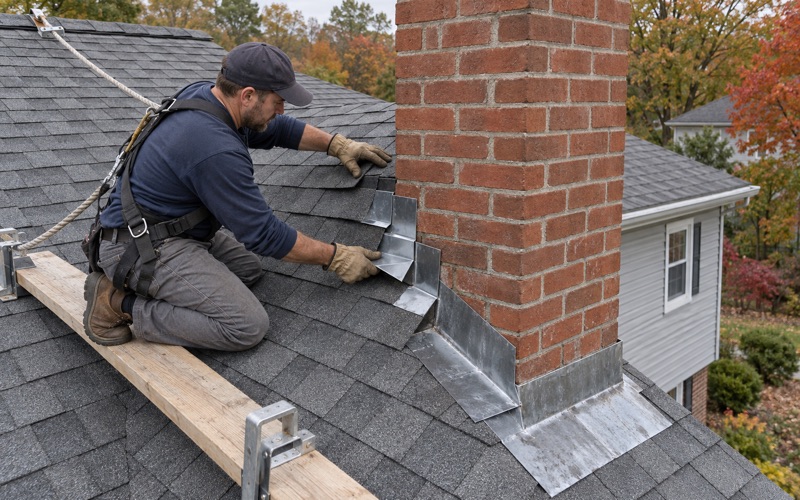
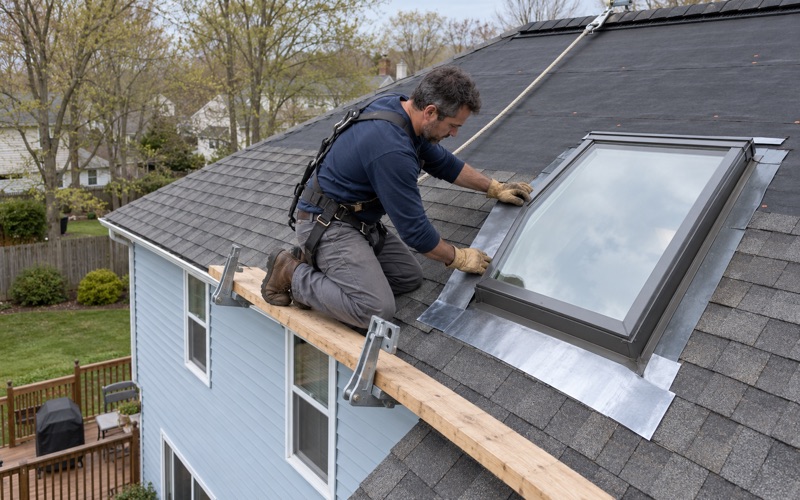
Every wall a roof meets, every chimney and every dormer cheek is a flashing detail. On a large, cut-up roof there are simply more of them, and they are where many leaks start. We replace step, counter and chimney flashing with the roof instead of bending the old metal back under new shingles, and we check for kick-out flashing where a roof edge dies into a wall.
Wide chimneys get a closer look as well. The residential code calls for a cricket, or saddle, behind a chimney wider than 30 inches, so water splits around it instead of pooling against the brick. Where a big house has a wide chimney without one, the scope says so on its own line.
Ventilation and Decking on a Large Attic
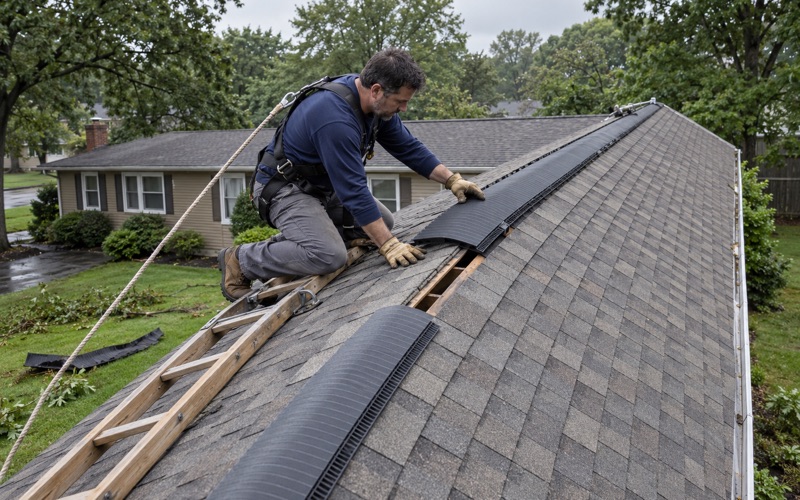
A large attic needs enough intake and exhaust to move air across all of it, and a roof that cannot breathe ages from underneath. We check ventilation on every replacement, usually pairing a ridge vent with soffit intake sized to the attic’s net free area, and we note on the scope when the existing setup falls short.
Decking is the other unknown. Once the old roof is off, any damaged sheathing is photographed and shown to you before it is replaced, at a per-sheet price already written into the contract. On a roof this size that clause protects you from a surprise total, because the sheet count can run higher than on a small house.
Planning a Re-Roof Around the Drive, the Well and the Lawn
On a property with a long drive and open ground, staging is a decision, not an afterthought. None of what follows is a township rule; we did not find one on staging. It is the planning we do on a large lot so the job leaves the property the way we found it.
The Drive and the Dumpster
We walk the drive with you before the start date. A long gravel or paved drive has to take a roll-off truck, a loaded dumpster and a delivery truck with a boom, and soft shoulders, tight turns and low branches all shape where each can stop. The dumpster usually goes on the drive itself, close enough to the house to keep the tear-off short.
If the drive cannot hold it, we talk through the alternatives, such as plywood under the wheels on a firm patch of yard or a smaller container emptied more often. You decide; we just make sure the choice is made before the truck arrives, not on the morning of the job.
Keeping Clear of the Well and Septic
We mark the well head and the septic tank and field before anything heavy moves. Trucks stay off both, tear-off chutes point away from them, and shingle pallets are set down on ground that is not hiding a tank lid. A cracked septic lid or a damaged well cap costs far more than the extra minutes it takes to plan around them.
Protecting the Lawn and Landscaping
On a large lot the lawn and beds near the house usually take the brunt of a tear-off. We cover plantings along the drip line, use tarps to catch debris, and keep crew traffic to a single path where we can. Gutters and leaders are reviewed with the roof, sized and pitched so water leaves the house rather than pooling at the foundation.
Our contracts follow New Jersey’s home improvement rules, including the three-day cancellation notice, and the staging plan we agree on goes into the written scope next to the tear-off and decking lines. If a storm is what brought you to us, we photograph and write up the damage for your claim and will meet the adjuster on site if you ask.
- 20+ Years in Business
- Attic Checked on Every Leak
- Itemized Written Scopes