Old Bridge Roofing approaches roofing in Madison with more than 20 years in the trade, and this borough hands us a job most towns never do: a re-roof where the back of the lot meets an electrified railroad. We plan those jobs around the line first, because where a ladder is footed and how far a lift can swing are settled by what runs behind the fence.
Away from the tracks, a Madison roof is the same job we do anywhere: a leak traced from inside the attic before anything is priced, an honest repair-or-replace answer before replacement comes up, and a written scope that breaks tear-off, decking, underlayment, flashing, ventilation and gutters into separate lines. Near the tracks, the same scope gets a staging plan written for the right-of-way.
This page covers what changes when the railroad is your back neighbor: why the line sits where it does, which federal job-site rules come into play near energized equipment, how materials reach the roof, and how we keep the work on your side of the property line.
A Railroad Borough and the Houses Beside Its Raised Line
Why the tracks run above the streets
Madison grew up around its railroad. The Morris and Essex line, founded in 1838, was raised through the borough in a track elevation project with the Delaware, Lackawanna and Western Railroad, and the 1913 plans turned street-level crossings into underpasses and overpasses. Madison station on Kings Road, in the Collegiate Gothic style, was built in 1916 as part of that work.
The Hartley Dodge Memorial Building, home to borough government, faces the station, so the line is not tucked away at the edge of town. It runs through the middle of Madison on its raised grade, and some residential lots back directly onto the right-of-way.
Power on the line since 1930
The line through Madison was electrified on December 18, 1930. The Delaware, Lackawanna and Western ran it at 3,000 volts DC, and by August 1984 NJ Transit had converted the Morris and Essex Lines to 25 kV at 60 Hz. Today the same tracks carry Morristown Line commuter trains, with service through the Kearny Connection to Secaucus Junction and New York Penn Station.
For a homeowner, the practical point is simple. If your back fence meets the right-of-way, an energized railroad system sits close to your roof line, and the federal rules that govern our crew change with that distance. That is the part of a Madison re-roof we think through before we quote.
What we look at on a lot beside the tracks
On a first visit to a house that backs onto the line, we walk the back of the property as well as the roof. We note where the fence and the right-of-way begin, which slopes face the tracks, where a ladder could be set without leaning toward the line, and whether the yard leaves room to stage a dumpster and pallets on the street side instead.
The attic gets the same look it gets on every leak call we take. Water that shows up on a ceiling below a rear slope is traced to where it actually enters, so the repair is aimed at the real opening and the rear slope is only worked when it has to be.
Looking for roofing closer to Point Pleasant? See Roofing Services in Point Pleasant.
Ladders and Lifts Near Energized Railroad Power
Two federal job-site rules shape how a roof beside the Morris and Essex tracks gets worked. Neither is a Madison ordinance; both are workplace rules that apply to our crew wherever energized equipment or a power line is close, and the railroad is the reason they come up here.
Nonconductive ladder siderails
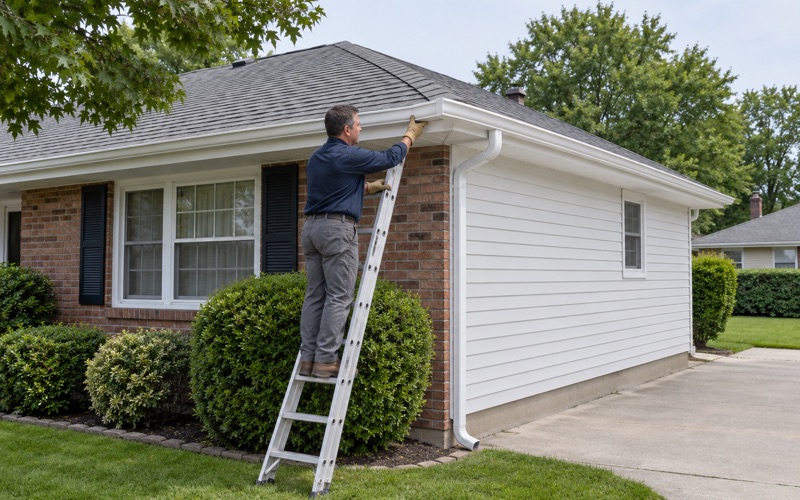
Under 29 CFR 1926.1053(b)(12), ladders must have nonconductive siderails where the worker or the ladder could contact exposed energized electrical equipment. An aluminum extension ladder is the everyday tool on most residential jobs, and it is exactly the wrong one to raise near railroad power.
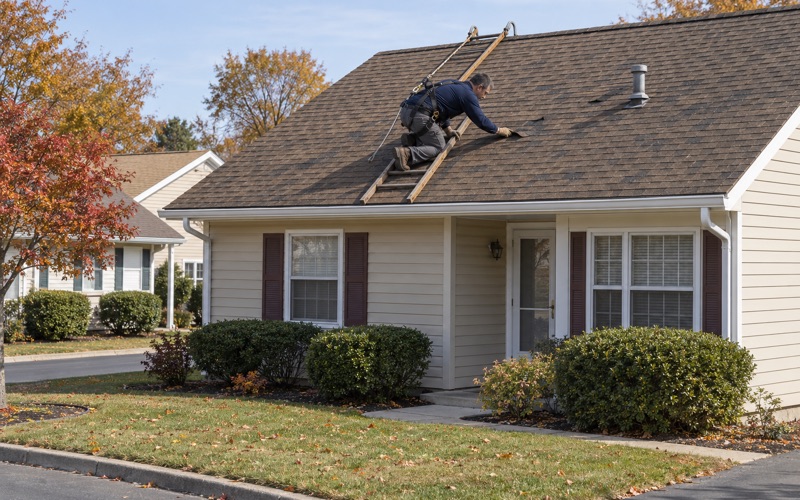
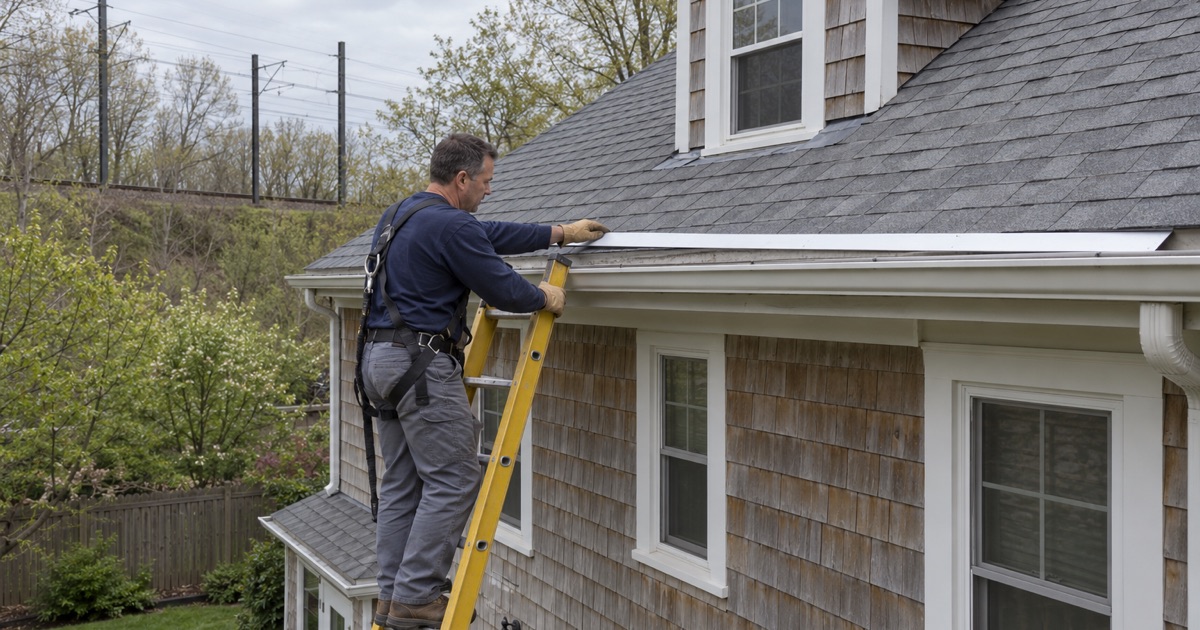
On a Madison house whose rear slope faces the line, we plan ladder positions on the far side of the house where we can, and we bring ladders with nonconductive siderails for any spot where a ladder or a worker could reach toward the energized system. Raising and lowering a ladder is when it is hardest to control, so the path it travels matters as much as where it finally rests.
The 20-foot question for booms and lifts
Any crane or boom that could bring its equipment, load line or load closer than 20 feet to a power line triggers an assessment under 29 CFR 1926.1408(a)(2). If that distance cannot be ruled out, the work needs a clearance plan, and Table A sets a minimum of 10 feet for lines up to 50 kV and 15 feet for lines over 50 up to 200 kV.
The line through Madison runs at 25 kV, which falls in the first band. We do not guess at distances from the ground. When a lift or boom is part of the plan for a lot beside the tracks, we set it up where the 20-foot question has a clear answer, and if it does not, we change the method instead of crowding the line.
Fall protection still applies
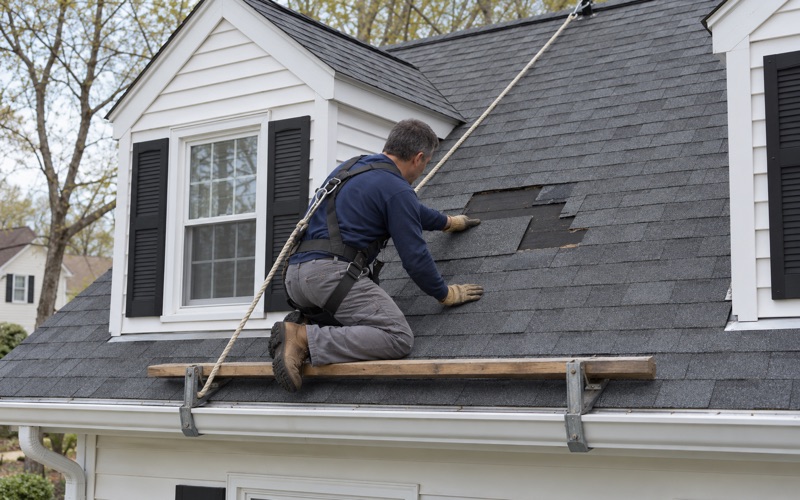
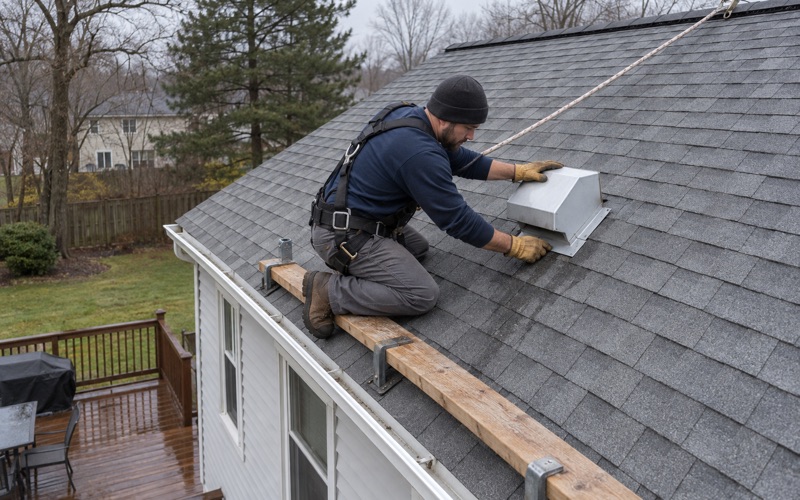
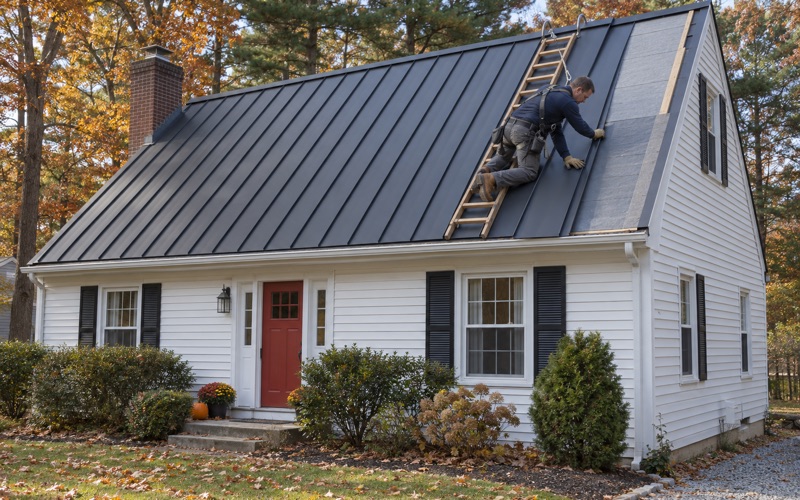
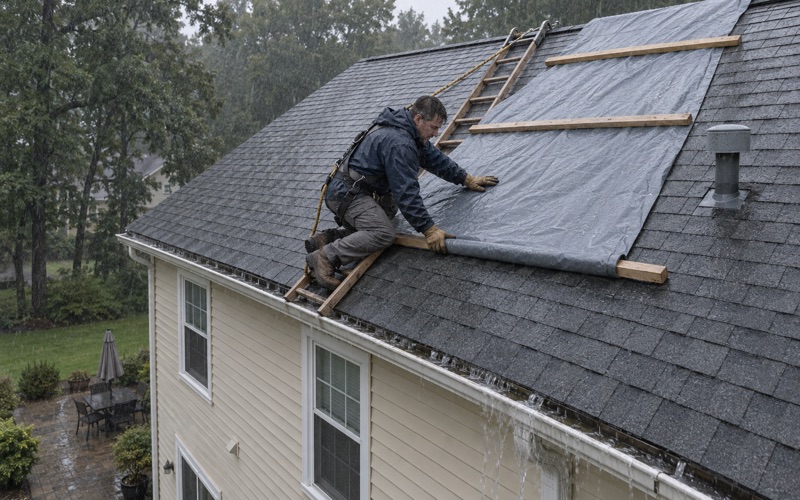
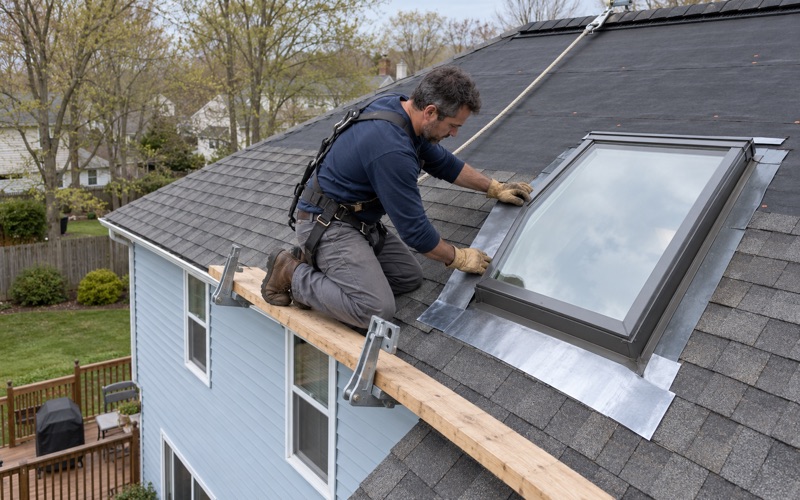
Clearance from the line sits alongside the ordinary roofing rules, not in place of them. OSHA’s residential roofing standard calls for fall protection at 6 feet under 29 CFR 1926.501(b)(13), and on a slope facing the tracks we route lifelines and set anchors so no rope or tie-off gear trails toward the right-of-way.
Getting Shingles Onto a Roof Beside the Right-of-Way
Boom truck delivery and the crane rules
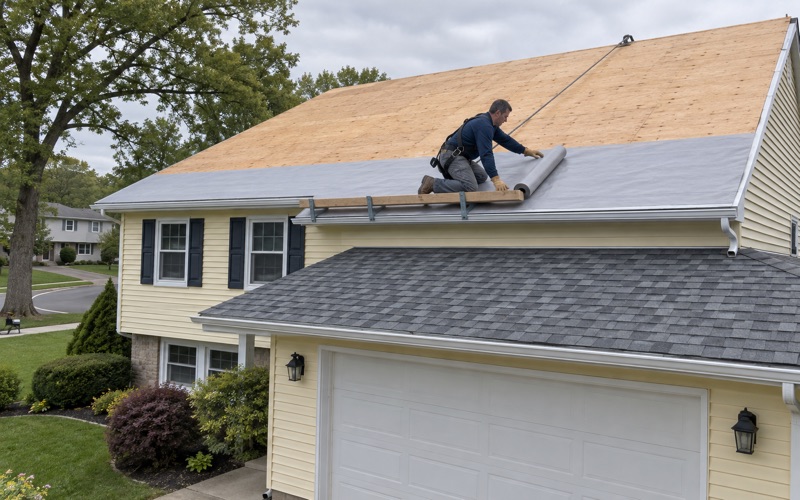
Bundles of shingles often arrive on a knuckle-boom truck that sets pallets straight onto the roof. Under 29 CFR 1926.1400(c)(17)(ii), an articulating boom truck placing packages of roofing shingles or rolls of roofing felt onto a structure with a fork or cradle is excluded from the crane subpart when it has a working automatic overload prevention device.
That exclusion is about which federal subpart applies, not permission to swing a load toward live railroad power. On a lot that backs onto the Morris and Essex line, we decide with the supplier where the truck parks and which slope receives the load, and we favor the street side so the boom works away from the tracks.
When the street side will not work
Some lots leave no good street-side landing, because of a tree, a narrow driveway or a roof shape that puts the only workable landing spot facing the line. In that case we would rather carry bundles by hand from the driveway, or stage on the ground and lift in smaller loads, than land a pallet on a slope where the boom could come within 20 feet of a power line.
Hand-carrying costs more labor, and we say so in the written scope as its own line rather than folding it into a vague total. You can see what the railroad side of the house adds to the price and compare it item by item against any other estimate.
Tear-off debris and the dumpster
Old shingles come off faster than new ones go on, and a rear slope facing the tracks is where loose debris can travel the wrong way. We chute or bag tear-off from that slope toward our own dumpster, keep tarps on the right-of-way side, and position the dumpster in the driveway rather than at the back fence.
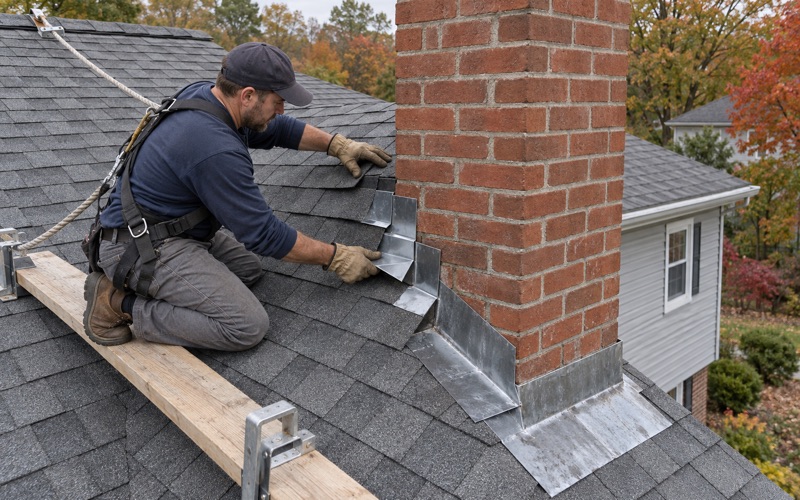
If the old roof reveals damaged decking, we photograph it and show you before any sheet is replaced, at the per-sheet price already written into the contract. Flashing at walls and chimneys is replaced with the roof rather than reused, so the new shingles are not sealed against old step and counter flashing.
Staying on Your Own Lot During a Re-Roof
A re-roof beside the tracks only works if every part of it stays on your property. We do not set ladders, stage materials or run equipment on the railroad’s side of the fence, and we plan the job so nothing has to.
What we do not know until we look
We cannot tell you from a phone call how close the railroad’s equipment is to your roof, and we will not quote a distance we have not seen. Lots along the line differ, and the measurements that matter are taken on site, from your yard, before the scope is written.
If something about the right-of-way is unclear, such as where the property line actually falls, we raise it with you before work is scheduled. Questions about what is allowed on railroad property belong to the railroad, and we will not answer them on its behalf.
Working hours and the daily cleanup
Madison limits construction and demolition work, outside emergencies, to 7:00 a.m. to 6:00 p.m. on weekdays and 9:00 a.m. to 5:00 p.m. on Saturdays and federal holidays, with no commercial work on Sundays. We schedule tear-off and deliveries inside those windows.
At the end of each day the driveway, yard and gutters are cleaned, and a magnet sweep picks up roofing nails. On a lot beside the tracks we sweep the back fence line as well, so nothing from the job is left where it could drift toward the right-of-way.
Ventilation, gutters and the finished roof
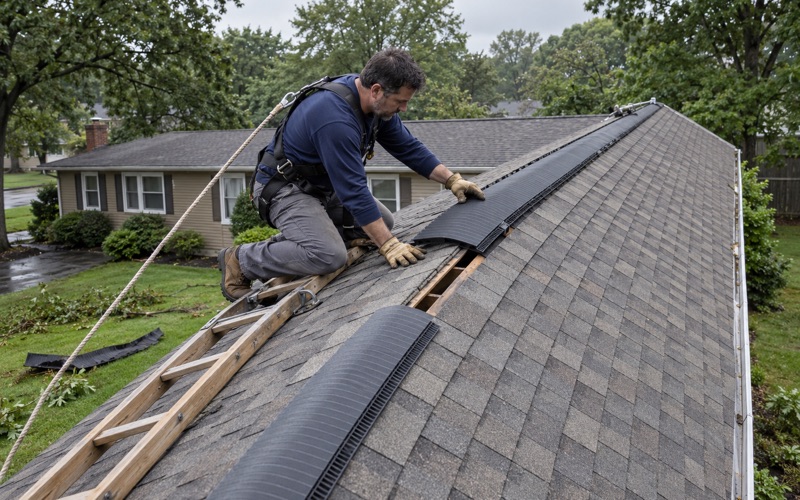
Attic ventilation is checked on every replacement we do, because a roof that cannot breathe ages from underneath, and the rear slope on a railroad lot gets no less attention than the front. Gutters and leaders are sized and pitched with the new roof so water is carried away from the foundation.
If you are selling a house beside the line, we can provide a written roof condition report to hand to the buyer’s inspector. Every contract we write follows New Jersey’s home improvement rules, including the three-day cancellation notice, so the terms of a Madison job are in writing before anyone climbs a ladder.
- 20+ Years in Business
- Attic Checked on Every Leak
- Itemized Written Scopes