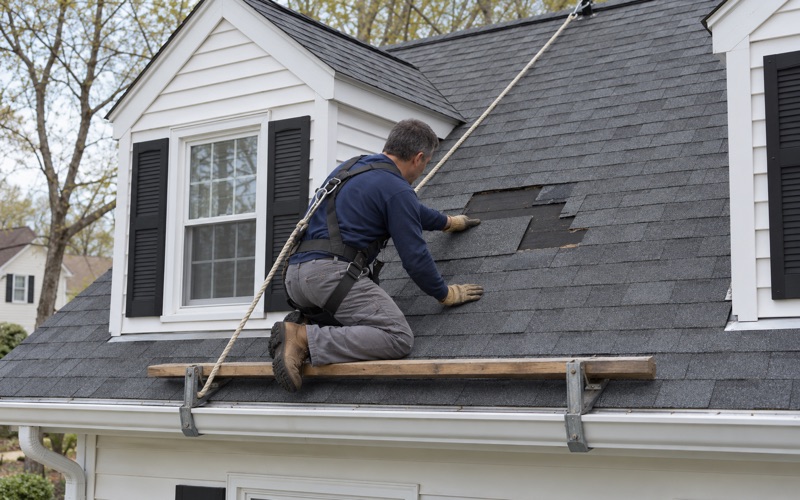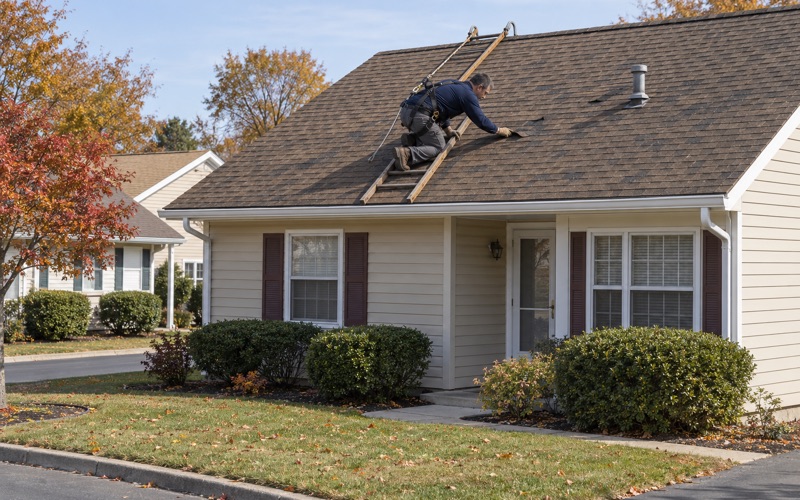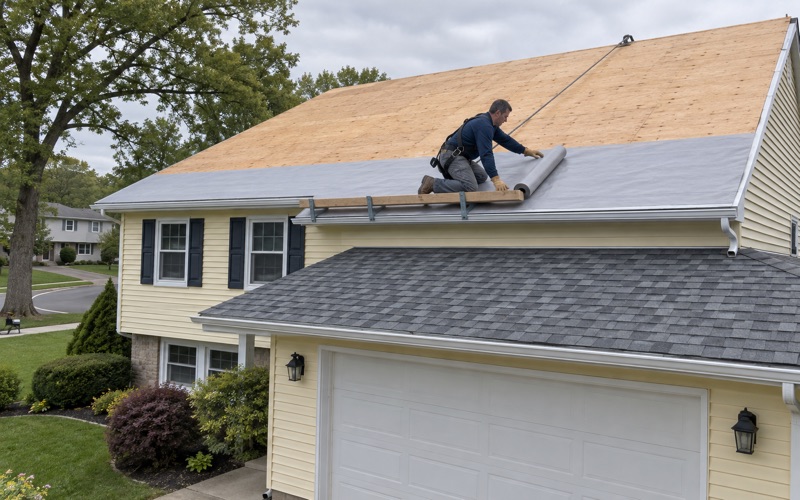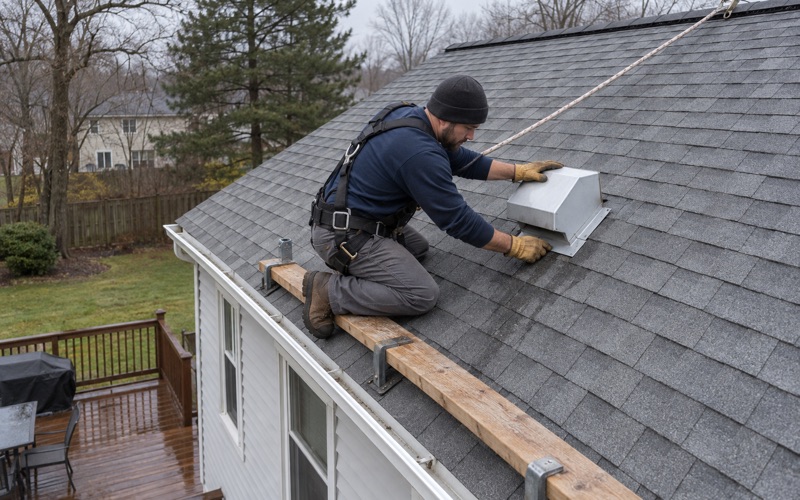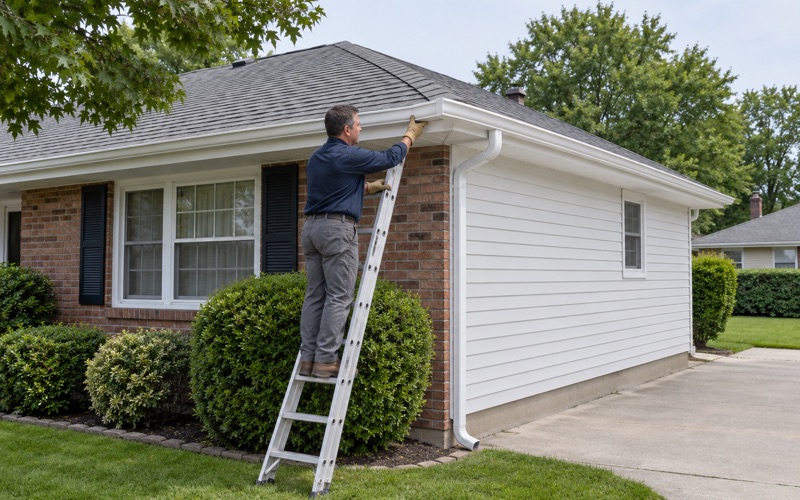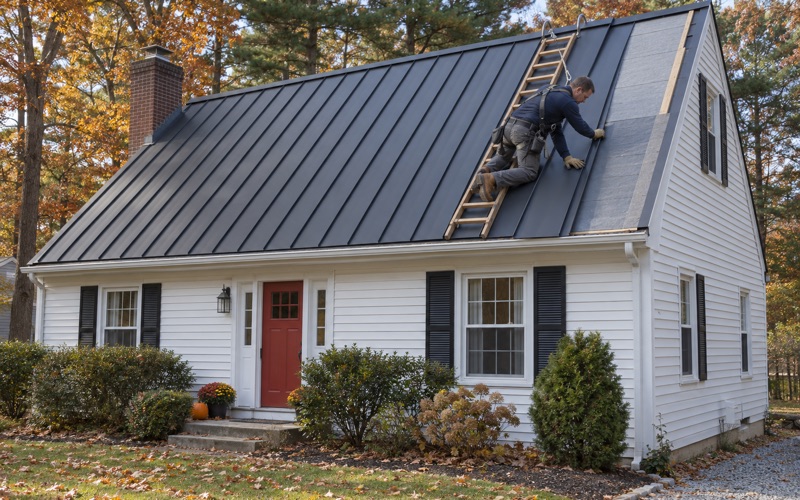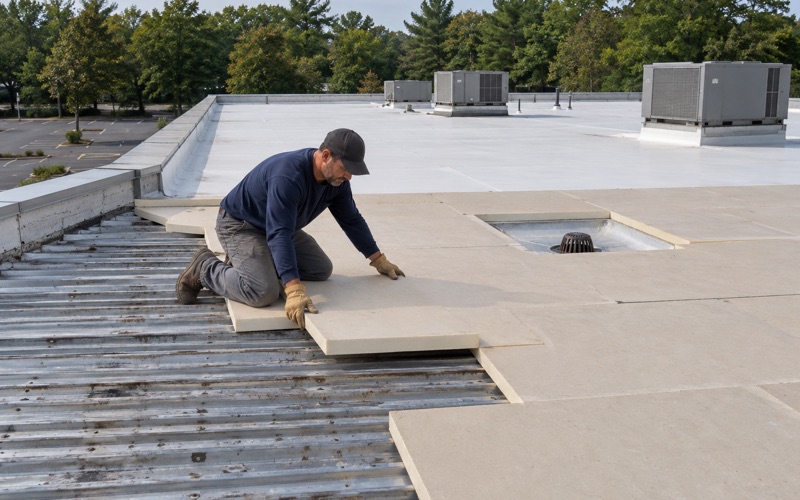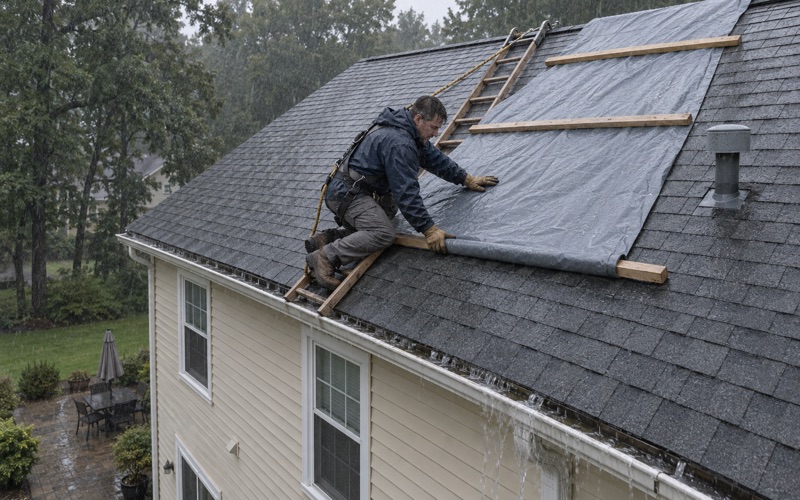
Old Bridge Roofing offers roofing in Point Pleasant backed by more than 20 years in the trade, and much of what we plan here starts with one question: who is living under this roof right now? For a year-round household the answer is simple, and a leak gets noticed the night it starts. For a summer house or a second home, the honest answer for much of the year is nobody, and that changes how a roof should be inspected, repaired and scheduled.
Our approach on any leak is to look in the attic as well as on the roof, tracing the water to where it actually gets in before a price is written. On a house that has been closed since fall, that attic look matters even more, because a slow drip can stain sheathing and insulation for months before anyone opens the door.
We also give a straight answer on whether the roof can be repaired before replacement comes up at all. Some seasonal owners need one season of reliable shelter more than a new roof, and when a repair will deliver that, we say so plainly.
Point Pleasant’s 571 Seasonal Homes and How They Are Used
The 2024 five-year American Community Survey counts 693 vacant housing units in Point Pleasant, and 571 of them, 82.4 percent, are held for seasonal, recreational or occasional use. Only 53 sit vacant because they are for rent. Most of the houses counted as empty here are not on the market at all; they are someone’s summer place waiting for summer.
Those 571 units are 6.5 percent of the borough’s 8,742 housing units, so seasonal homes are a minority of the stock rather than its defining trait. Still, they share a pattern a roofer notices: an owner who often lives elsewhere, a key that may sit with a neighbor, and a roof nobody looks at closely for months at a stretch.
Summer Houses and Month-Long Leases, Not Weekend Rentals
Seasonal use in Point Pleasant looks different from a beach town built on weekly turnover. Secondary sources report that the borough bars renting a dwelling, or a segment of one, for less than 30 days. A resident petition created in May 2021 says the ban on short-term rentals under 30 days passed the week of Thanksgiving 2020, and a 2025 brokerage guide to the borough code repeats the 30-day floor.
We have not read the ordinance itself, so we will not quote a number or a fee. What the reported rule means for roofing is practical: a seasonal house here is usually either the owner’s own summer house or a home let on a month-long summer lease, not a property swapping guests every Saturday.
That distinction shapes the job. A weekly rental gets eyes on it constantly through the season, while a month-long lease or an owner’s own use means fewer visits, longer gaps and a firm date when someone expects to walk in and find the house dry. Our scheduling is built around that date.
Where These Houses Sit
Point Pleasant covers about 4.17 square miles, with the Manasquan River along its northern boundary and Beaver Dam Creek along the southern one. The Point Pleasant Canal, completed in 1925, divides the borough in half. For an owner arranging work from out of town, we confirm which side of the canal the house sits on and how the crew will reach it before the first visit is booked.
Most of the borough’s homes are detached single-family houses, 6,933 of 8,742 units, and owners make up the large majority of occupied households. A detached second home has no shared wall and no association crew watching it, so whatever happens on that roof over the winter waits for whoever checks next.
Looking for roofing closer to Florham Park? See Florham Park Roofing.
A Roof Nobody Watches From October to May
A roof on a year-round house has a built-in alarm system: the people inside. A stain on a bedroom ceiling or a drip by the chimney gets a phone call within days. A roof on a closed summer house has no such alarm, and a small opening that starts in a November storm can sit for months before anyone sees the result.
We want to be careful here. No source we have counts roof damage on seasonal houses, and we are not claiming these homes leak more often than any other. The difference is only in how long a problem can go unnoticed, and on a roof, time is what turns a loose shingle into wet decking.
What Winter Does to an Unwatched Roof
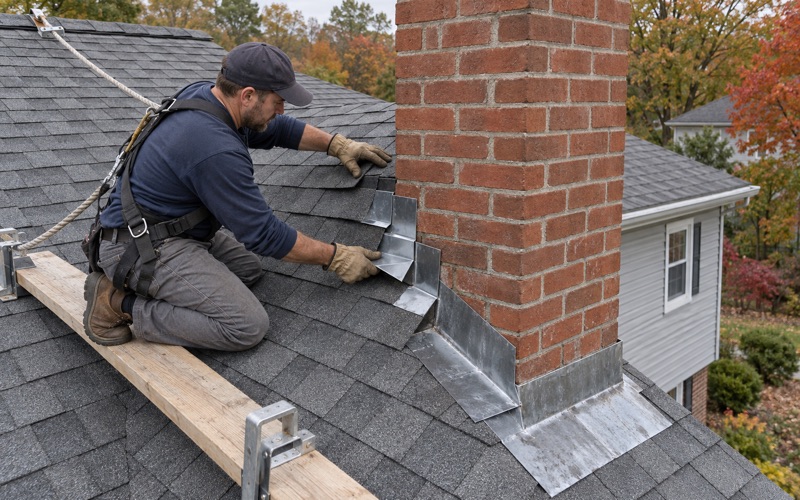
Point Pleasant falls in the National Weather Service’s Coastal Ocean forecast zone, issued from the Mount Holly office, so its forecasts are written for the shore rather than inland. On a closed house, the weak points we check first are the familiar ones: step and counter flashing along walls, the flashing around a chimney, pipe boots, and the drip edge at the eaves.
Wind-lifted shingles are another. A tab that lifts and reseals in a lived-in season can lift and stay open in winter, letting water run under the course above it. Without heat in the house, an attic also has less warmth to dry out any moisture that gets in, so we look for staining on the underside of the sheathing as well as on top.
Ventilation on a Closed House
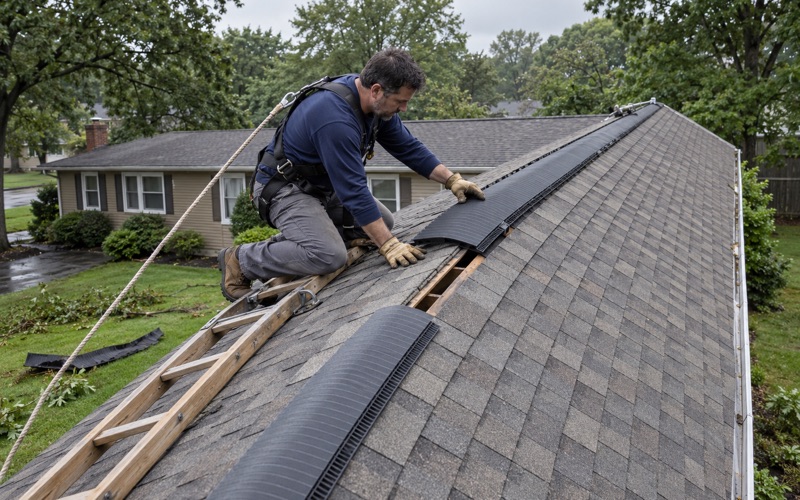
Attic ventilation gets checked on every replacement we do, because a roof that cannot breathe ages from underneath. That matters on a second home that spends months shut tight. A balanced ridge vent with soffit intake keeps air moving through the attic whether or not anyone is home to open a window.
Gutters deserve the same attention. A leader clogged with fall leaves on an empty house can send water over the edge and against the foundation for an entire winter. We size and pitch gutters and leaders with the roof so water leaves the house, and we clean up gutters, driveway and yard at the end of every work day, magnet sweep for nails included.
Spring Roof Checks Before the Owner or Tenant Arrives
The most useful visit we make to a Point Pleasant second home can be the one in early spring, after the worst of winter and well before the house opens. A spring roof check gives an owner a clear picture while there is still time to act on it, instead of a surprise the week the family or the July tenant shows up.
What the Check Covers
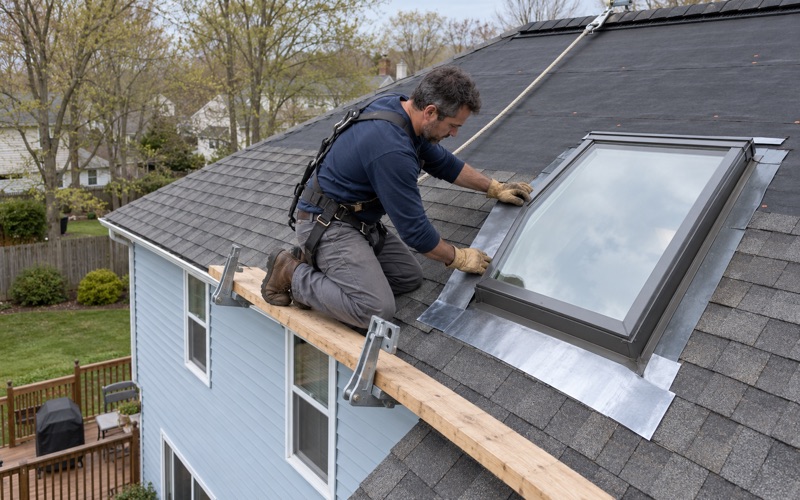
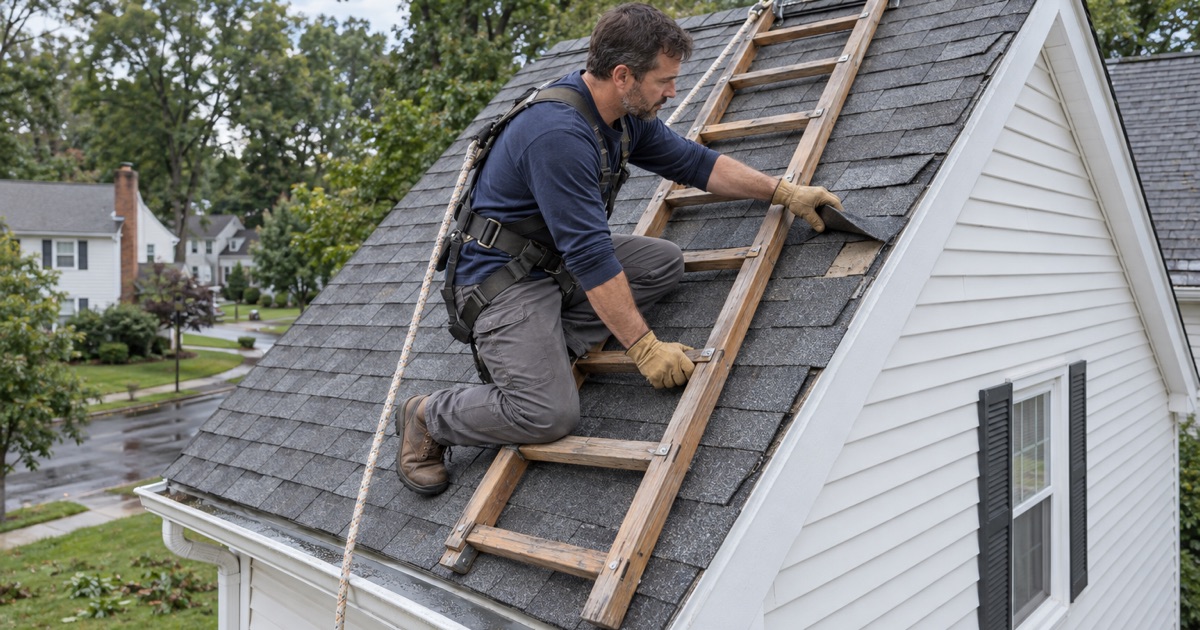
We walk the roof surface and then go into the attic, because the two views together show where water is actually entering. On the roof we look at shingle condition, flashing at walls and chimneys, pipe boots, skylight curbs and the ridge. In the attic we look for dark or damp sheathing, wet insulation and daylight where there should be none.
For an owner who is not on site, the report has to stand on its own. We photograph what we find and write it up so it can be read from a kitchen table in another state, with each item marked as something to fix now, something to watch, or something that is fine for another season.
Repair First, Replacement Only When It Is Due
Many spring findings turn out to be repairs: a lifted shingle, a cracked pipe boot, a gap in the flashing. We tell the owner plainly whether a repair will carry the roof through the summer and beyond, and replacement only enters the conversation when the roof itself has reached the end of its life.
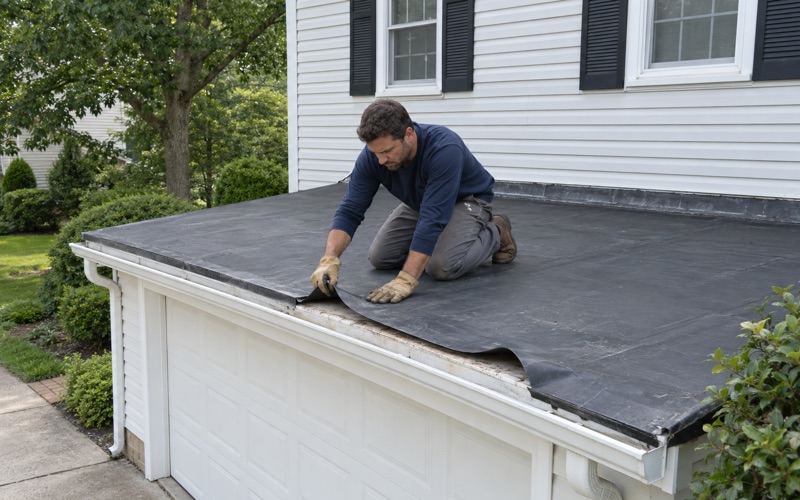
When replacement is the right call, the written scope lists tear-off, decking, underlayment, flashing, ventilation and gutters as separate lines. An owner comparing bids by email can then line two estimates up item by item rather than trusting a single total. If rotted decking turns up once the old roof is off, we photograph it and send the pictures before any sheet is replaced, at the per-sheet price already set in the contract.
On a replacement we also renew step, counter and chimney flashing rather than reusing old metal under new shingles. On a house that will again sit empty next winter, flashing is where we least want to leave anything to chance, and new metal installed with the new roof is the dependable answer.
Scheduling Roof Work Around a Summer Lease
Roof work on a seasonal house is easiest when nobody is living in it. Tear-off is loud, dusty and disruptive, and no tenant on a month-long lease wants a crew overhead during the weeks they paid for. Our aim is to finish the job between the spring check and the day the house opens, with room left over for weather delays.
Working Backward From the First Occupied Week
We plan from the date the owner or the lease needs the house, not from the date the estimate is signed. That means ordering material early, holding a weather buffer, and saying clearly when a job is too tight to start safely before the season. If a full replacement will not fit, a sound repair to carry the house through summer can be the better plan, with replacement booked for fall.
Fall works well for that reason. Once the last month-long lease ends, the house is empty again, and a new roof installed before winter means the coming months of no one watching begin with sound flashing, fresh underlayment and a dry attic.
Paperwork and Access for an Owner Who Is Away
Replacing the roof covering on a detached one- or two-family house is ordinary maintenance under New Jersey’s N.J.A.C. 5:23-2.7, so a like-for-like re-roof does not wait on a permit. Work that touches the structure is a different matter, and we tell the owner up front if anything we find falls outside that exemption.
Our contracts follow New Jersey’s home improvement rules, including the three-day cancellation notice, and they can be reviewed and signed without a trip to the shore. We agree in writing how the crew gets in, who holds the key, and how photos and updates reach the owner as the work moves along.
If a winter storm does damage the roof, we photograph and write it up for the owner’s own insurance claim, and we will meet the adjuster at the house when asked. For an owner who cannot be there, that visit can make the difference between a claim settled from a clear record and one argued over later.
Whether the house is a family summer place or a home let by the month, the goal is the same: a dry roof waiting when Point Pleasant’s season begins. Reach out in the off-season, and we will set the spring check on a date that leaves time to fix whatever we find.
- 20+ Years in Business
- Attic Checked on Every Leak
- Itemized Written Scopes