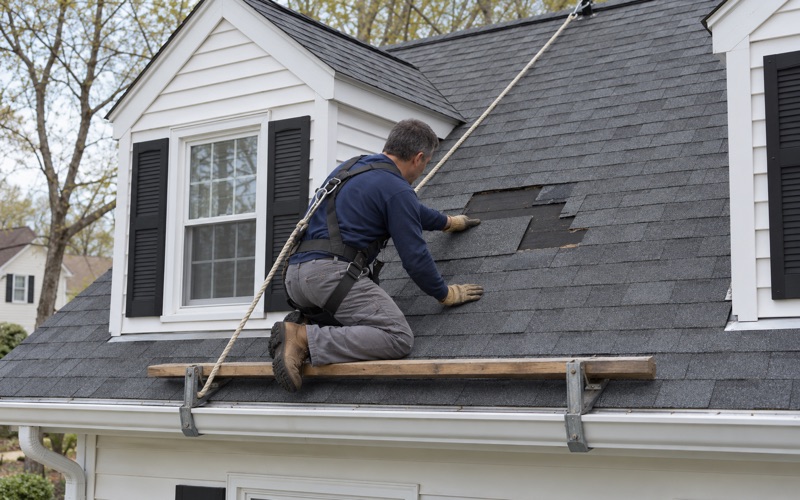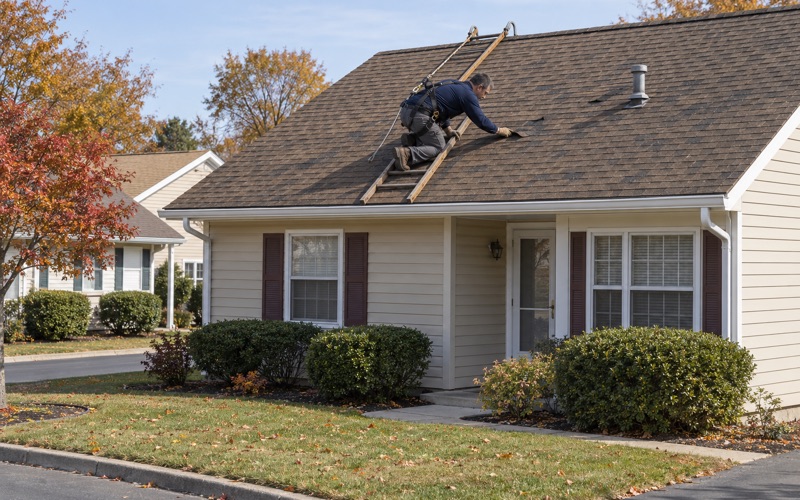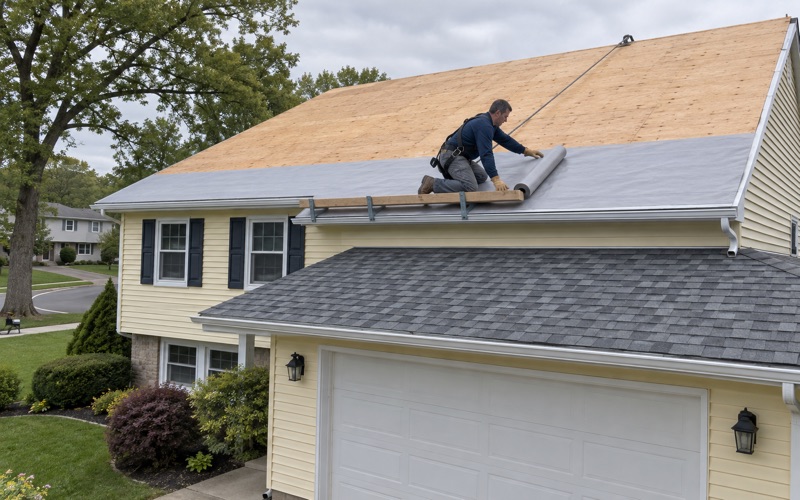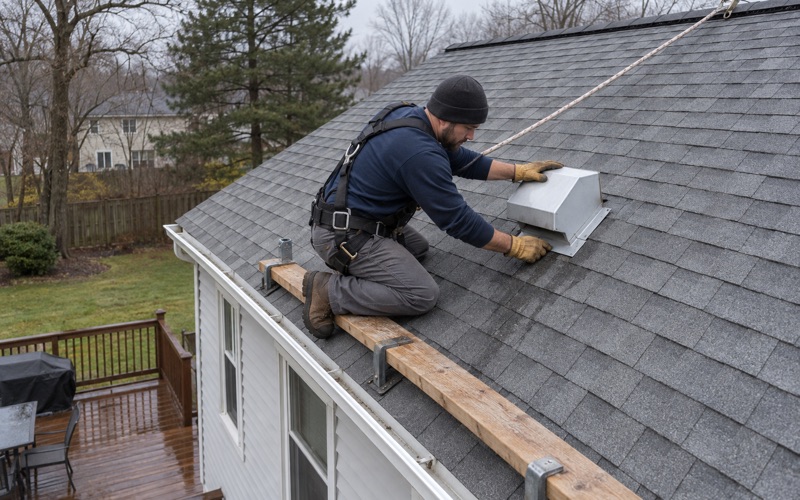
Old Bridge Roofing has spent more than 20 years on roofing in Robbinsville and the surrounding part of central New Jersey, from houses on their second or third roof to homes so new the owner may still have the closing paperwork on the kitchen table. A leak in a roof that is a few months old raises a different first question than a leak in an old one: is this the builder’s to fix, or the owner’s?
That question matters because the answer shapes everything after it. On a new home, the right move is often to document the problem and report it to the builder in writing, not to hire anyone. On an older roof, it is a straight repair-or-replace decision. We start every leak call in the attic as well as on the roof, so the water is traced to where it actually gets in before anyone talks about cost.
This page covers the new-home side of that line: the state warranty, what its roofing standard counts as a defect, and where it draws the boundary between a builder problem and weather.
Robbinsville Is Still Building
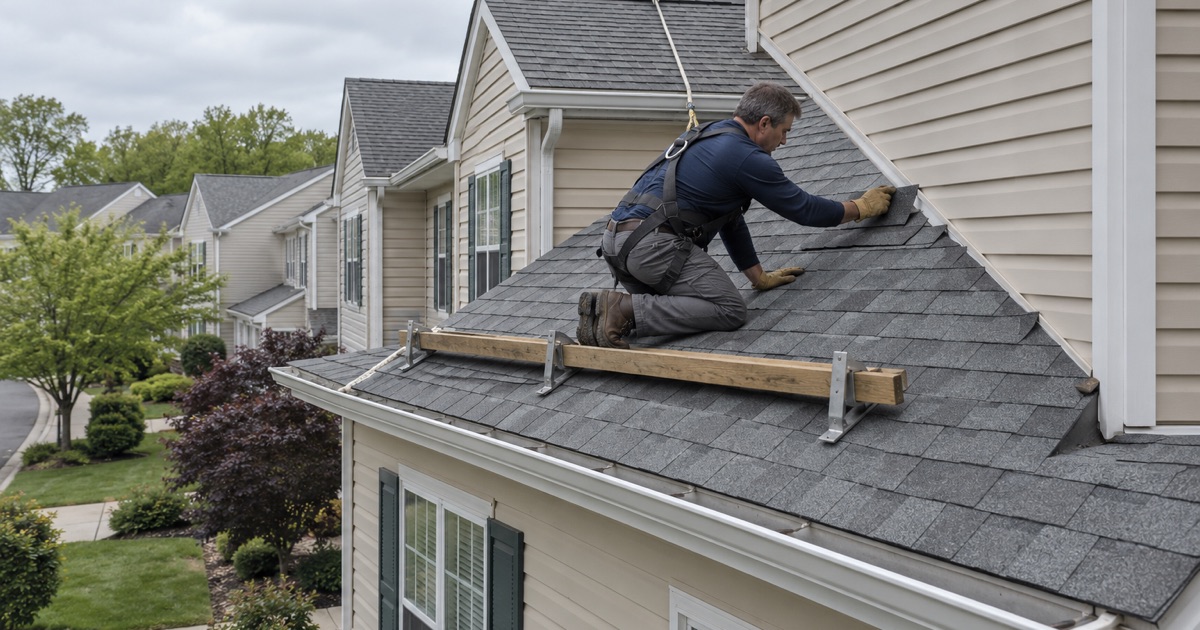
Robbinsville Township in Mercer County went from 3,487 residents in 1980 to 10,275 in 2000, and the 2020 census counted 15,476, its highest decennial count ever. Most of the housing is young: census estimates put about three in four units in the 1980 to 2009 build years, with 361 more from 2010 to 2019 and 47 from 2020 on.
Preston Pointe across from Route 130
The building has not stopped. In September 2025 Lennar announced Preston Pointe, 100 two-story townhomes just across from U.S. Route 130, with two- and three-bedroom options, a clubhouse, a pool and a tot lot. Listing excerpts show estimated completions around September 2026, so for buyers there the warranty questions below are close at hand.
Townhomes add a layer that a detached house does not. In an attached community, the roof over a unit may belong to the owner or may be a common element listed in the master deed, and which one applies is set by the community’s own documents. We have not read Preston Pointe’s, so we do not assume either way. Before we write any estimate on a townhome, we check who holds the roof against the association’s documents.
When the new-home warranty starts
A new home in New Jersey carries the state builder warranty under N.J.A.C. 5:25. It runs from the warranty date, which the rules define as the date the owner first occupies the home or the settlement date, whichever comes sooner. If you close in one month and move in the next, the clock started at settlement, not on moving day.
The rules define a new home as a dwelling unit not previously occupied, leaving out units built solely for lease. A townhome bought from the builder and lived in by its first owner fits that description; an apartment built to rent does not. That distinction decides whether any of what follows applies at all.
From that date the coverage runs in three lengths: one year for defects measured against the performance standards, two years for mechanical and electrical systems, and ten years for major structural defects. The roofing standards sit in the one-year tier. The ten-year term covers major structural defects only; it does not reach the roof covering.
Looking for roofing closer to Berkeley Heights? See Roofing Services in Berkeley Heights.
What the Roofing Standard Counts as a Builder Defect
The performance standards are specific about roofs, which makes them more useful than most homeowners expect. Section 5:25-3.5 lists what counts as a deficiency, what the builder’s corrective action is, and what is excluded. Three items matter most on a new roof: leaks, shingles and gutters.
Roof and flashing leaks
Under the roofing standard, a roof or flashing leak that occurs under normal weather conditions is a deficiency, and the builder’s corrective action is to correct leaks verified to have occurred under normal weather. The word verified carries weight. A stain on a ceiling is not yet proof of a roof leak; it could just as easily be condensation in the attic or a bath fan duct dripping.
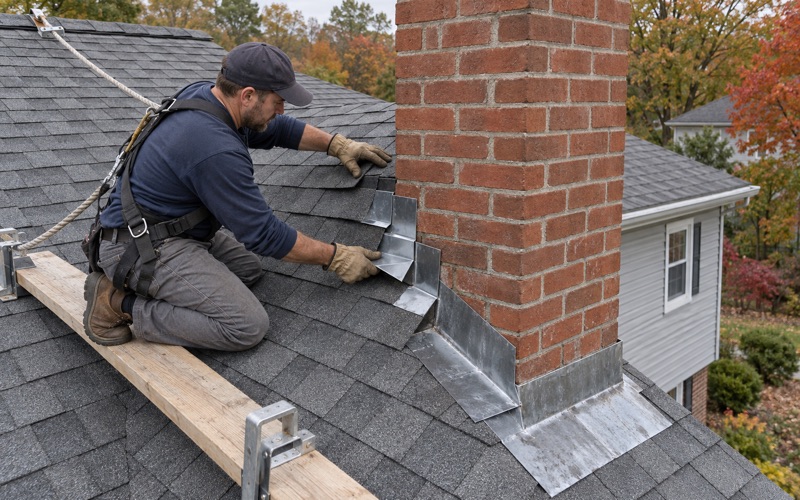
This is where our attic-first habit earns its keep on a new home. We look at the underside of the deck, the flashing at walls and penetrations, and the path the water took, then write down what we saw. That record does not decide anything, since the builder makes the call on repair, but it gives the owner something concrete to put in front of the builder.
Shingles that lift or curl in year one
The standard also names roof shingles that lift or curl during the first year of warranty coverage, or tear loose in normal weather, as a deficiency, with the builder to repair or replace the lifted, curled or torn shingles. On a townhome row, a few raised tabs along a rake edge or ridge are easy to see from the sidewalk and easy to dismiss. They are worth photographing early, because the first year is the window that wording names.
Gutters that leak or hold water
Gutters have their own entry in the sheet metal standard. Leaking gutters and downspouts, or ones pitched so they do not drain, are a deficiency for the builder, though standing water up to one inch is acceptable. The owner’s side of the deal is keeping gutters free of leaves and debris, so an overflow caused by a clog of leaves is the owner’s to clear.
When we size and pitch gutters on our own jobs, the goal is water leaving the house rather than the foundation. On a new home we use that same eye to point out a run that holds more than an inch or a seam that drips, which is the kind of observation the standard is written around.
Normal Weather Versus Ice, High Winds and Driven Rain
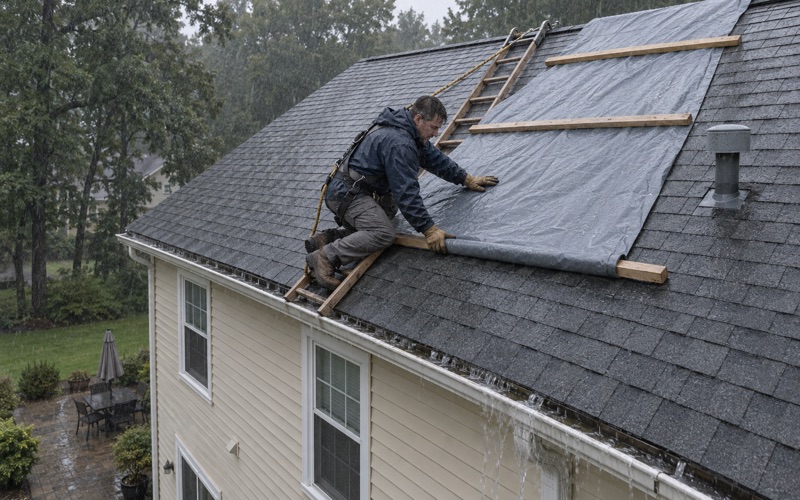
The same roofing standard that makes a normal-weather leak the builder’s to correct carves out leaks whose cause is determined to be severe weather, naming ice and snow build-up, high winds and driven rains. So on a new Robbinsville home, the first question about any roof leak is which side of that line it falls on, and the answer depends on what caused it rather than how new the roof is.
What an excluded leak looks like
Ice and snow build-up is the classic winter case: snow melts over the warm part of the roof, refreezes at the colder eave, and the backed-up water works under the shingles. Wind-driven rain is the summer and fall version, pushing water sideways past a joint that sheds ordinary rain without trouble. A leak that shows up only in those conditions may fall into the exclusion.
Not every winter leak is an ice dam, though. Water that appears at a wall-to-roof joint on a mild, still day is more likely a flashing detail than weather, and that is the kind of leak the normal-weather wording is written for. We look at step flashing, kick-out flashing and pipe boots before we put any leak down to the weather.
Falling outside the warranty does not settle who pays for a storm leak. That is a question for insurance, and we do not predict how a claim will go. What we can do is photograph the damage, write it up for the owner’s own claim, and meet the adjuster on site when asked.
Telling the two apart
The line is drawn on cause, and cause is something an inspection can usually narrow down. A leak that appears in a light, windless rain points one way. A leak that appears only after a nor’easter, or only once ice has built along the gutters, points the other. Keeping a simple log of the date, the weather and where the water showed up makes that distinction far easier to argue.
For the weather side of that log, Robbinsville falls in National Weather Service forecast zone NJZ015, served by the Mount Holly office. Saving any warning that office issued for the day a leak appeared gives a dated, neutral record of the conditions, which carries more weight than a recollection months later.
Reporting a Roof Problem in Writing Before a Period Ends
Because the roofing items sit in the one-year tier, the calendar matters. A curled shingle noticed in month eleven and reported in month thirteen is a much weaker position than the same shingle reported in month eleven. Write your warranty date somewhere you will see it, and treat the months before the first anniversary as the time to look hard at the roof.
What to put in writing
Give the builder written notice rather than relying on a phone call or a conversation with someone on site. Describe what you saw, where on the home it is, the date it first appeared and the weather that day, and attach dated photographs. Keep a copy of everything you send and anything you get back.
If the builder schedules an inspection or a repair visit, note the date and what was done, and keep watching the spot through the next few rains. A fix that holds through one dry month has not been tested. Should the problem come back before the period ends, report it again in writing, referencing your earlier notice.
On a townhome, the paperwork question comes first. If the roof turns out to be a common element under the master deed, the association may be the party that reports it, and an owner acting alone can end up in the wrong channel. Reading the community’s documents before writing to anyone avoids that.
What the builder decides and what we do
Under the standard, the builder decides how to correct a verified deficiency, whether by repair or replacement. Our role on a home still under warranty is narrower than on an older one: we inspect, trace the water, and put a written description and photographs in the owner’s hands. We give a straight answer on what we found, including when a problem looks like one to raise with the builder before paying anyone.
After the first year, the roof covering on a new Robbinsville home is past that window, and the choices look like those on any other roof. That is when the rest of our approach applies: a repair answer before any talk of replacement, and written scopes listing tear-off, decking, underlayment, flashing, ventilation and gutters as separate lines. On attached homes, re-roofing is permit work, unlike covering replacement on a detached one- or two-family house.
- 20+ Years in Business
- Attic Checked on Every Leak
- Itemized Written Scopes