Old Bridge Roofing takes on roofing in Roselle Park with more than 20 years in the trade behind it, and the work here often starts with a question about the building rather than the shingles. Is it a detached house, a two-family, or a building with three or more apartments under one roof? The answer changes which rules apply, who keeps the records and what paperwork follows the job.
For owners of rental buildings, a roof is more than a weather barrier. It is part of how the building is maintained under state law, and a leak that reaches a tenant’s ceiling is a code matter as well as a repair. We write every roof job with that in mind, starting with where the water actually comes in.
Every leak call includes a trip into the attic as well as onto the roof, and we tell you plainly whether a repair will hold before replacement comes up. Our written scopes break tear-off, decking, underlayment, flashing, ventilation and gutters into separate lines, which makes comparing bids on a multi-unit building far easier.
Three-Family Houses and Garden Apartments in Roselle Park
Roselle Park is a compact borough in Union County, and its housing is more mixed than a quick drive down a residential street suggests. Census figures from the 2024 American Community Survey put 1,996 of the borough’s 5,522 homes, about 36.1 percent, in buildings of three or more units. Of the occupied homes, 2,214 are rented.
Incorporated in 1901 from parts of Union Township, the borough fits a lot of housing into 1.225 square miles of land. Detached houses make up 55.8 percent of units and two-family houses 6.2 percent, and the rest is a mix of attached homes and apartment buildings of every size. That mix is why we ask about the building first.
How the units break down
The breakdown matters for roofing because building size changes the scale of the roof and the paperwork around it. The same survey counts 543 units in three- and four-unit buildings, 111 in buildings of five to nine, 343 in buildings of ten to nineteen, 631 in buildings of twenty to forty-nine and 368 in buildings of fifty or more. That spans everything from a three-family house to a large apartment block.
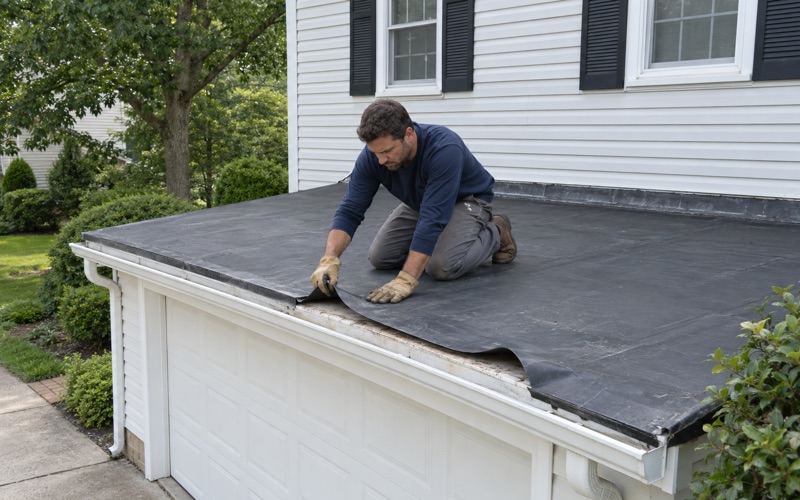
A three-family house can look much like its single-family neighbors from the curb, with a pitched shingle roof, gutters and leaders. Larger garden apartment buildings may carry low-slope sections, where EPDM rubber or a modified bitumen membrane does the work shingles cannot. We roof both, and we price each one on its own scope, line by line.
Who answers for the roof
In an owner-occupied single-family home, the roof is the owner’s own business. In a rental building, the same roof touches several households at once, and a slow leak above the top-floor unit can travel through ceilings and walls before anyone sees it. Finding the true entry point matters more here, because the stain a tenant reports may sit two rooms away from the gap that caused it.
Where a multi-unit building is a condominium rather than a rental, the question of who holds the roof can be split between unit owners and an association. We check the association’s documents before writing an estimate, so the right party signs the contract and nobody pays for a roof section that belongs to someone else.
Looking for roofing closer to Warren? See Roofing Services in Warren.
Why New Jersey Calls Three Units a Multiple Dwelling
Under the state Hotel and Multiple Dwelling Law, a building with three or more dwelling units is a multiple dwelling. The Bureau of Housing Inspection, part of the New Jersey Department of Community Affairs, is responsible for seeing that hotels and multiple-family buildings of three or more units are maintained. This is a statewide rule, not a local Roselle Park ordinance.
The rule follows the building, not the person who owns it. A three-family rental owned by one landlord and a 50-unit building run by a management company fall under the same law, with the same maintenance duties for the roof over their tenants. For an owner who thinks of a three-family as a house, that is the point worth knowing.
Registration and the five-year cycle
Owners of multiple dwellings are responsible for registering their buildings with the Bureau, and the law requires the Bureau to run a five-year cyclical inspection of these properties. Whether a given Roselle Park building is inspected by the state directly or locally under a Bureau authorization is something the owner should confirm with the Bureau; we do not set or predict those dates.
For a landlord, that means the roof sits inside a recurring inspection record rather than outside it. A roof that is quietly failing between cycles is easier and cheaper to fix early, before stains, loose material or a sagging leader become items someone else writes down. We are glad to look at a building well ahead of any visit and tell the owner what we see.
The condominium and cooperative exception
Not every building with three or four units ends up registered. A separate exemption covers some owner-occupied condominium, cooperative or mutual-housing sections of four or fewer units. If your building is organized that way, its status is worth checking with the Bureau before assuming the multiple dwelling rules apply in full. Our job is the roof; the registration question belongs to the owner and the Bureau.
What the State Maintenance Code Says About Roofs and Leaders
The maintenance regulations for multiple dwellings sit in N.J.A.C. 5:10, and three provisions bear directly on roofing. Each reads plainly enough that an owner can check a roof against it. They describe outcomes: a roof that keeps water out, an exterior without loose pieces and drainage that carries storm water away from the foundation.
Leakage under N.J.A.C. 5:10-7.4
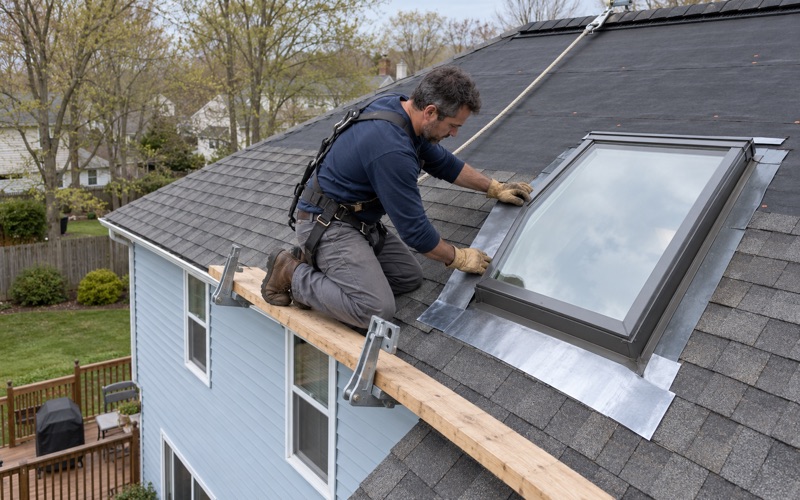
Section 5:10-7.4 requires exterior walls, roofs, windows, skylights and foundations to be kept so they exclude water, drafts and pests. It adds that damaged or badly worn material shall be repaired or replaced, and that places showing signs of rot, leakage, deterioration or corrosion shall be treated or restored. A worn-out roof is a maintenance item under that wording, not only an age question.
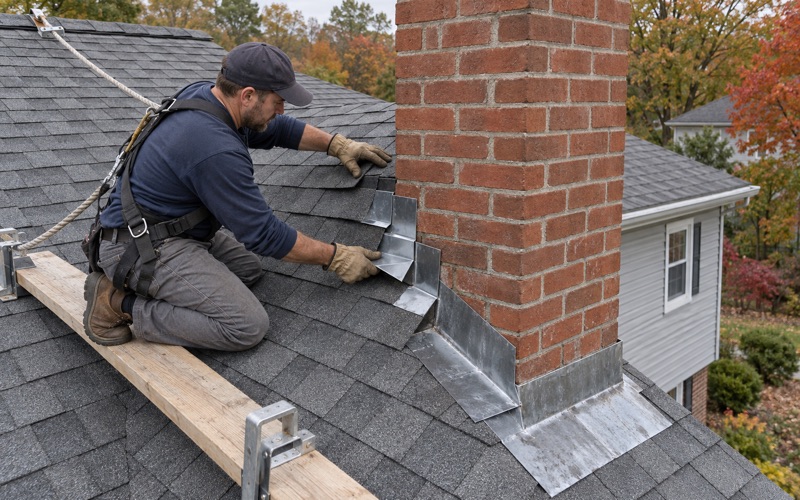
In practice, leakage on a pitched roof frequently traces to the edges and penetrations rather than the open field of shingles. Failed pipe boots, worn step flashing along a wall and an open joint at a chimney are common culprits. When we replace a roof, step, counter and chimney flashing are replaced with it, never reused under new material.
Loose shingles and exterior surfaces
Section 5:10-7.3(c) asks owners to maintain exterior surfaces to eliminate deterioration, and it lists loose shingles by name alongside broken glass, crumbling stone or brick and excessive peeling of paint. A shingle that lifted in a storm and never reseated is exactly the kind of defect that wording describes. Storm damage we find is photographed and written up for the owner’s own insurance claim, and we will meet the adjuster on site if asked.
Leaders that stay tight and clear
Section 5:10-7.5 covers leaders and drainpipes: securely fastened, free of leaks and obstructions, and directing storm water away from foundation walls. On a building with several apartments, a leader that pulled loose or clogged at the elbow can send roof water straight to the base of the wall. We size and pitch seamless aluminum gutters and leaders with the roof rather than as an afterthought, so the water the roof sheds is carried clear of the foundation.
Re-Roofing a Building Outside the One- and Two-Family Exemption
New Jersey’s ordinary maintenance rule, N.J.A.C. 5:23-2.7, lets owners repair or replace the existing roof covering on a detached one- or two-family dwelling with no permit, inspection or notice to the construction official. The Roselle Park Construction Code Department reproduces that rule in its own Ordinary Maintenance handout, and the wording is specific about the building type it covers.
Where the exemption stops
Three-family houses, garden apartment buildings and larger blocks fall outside that wording, as do attached single-family units. For those buildings, a roof replacement is not on the ordinary maintenance list, and the job goes to the Construction Code Department before the tear-off starts. We build that step into the schedule, so the owner is not left to sort it out alone.
Gutters and leaders are a separate line in the same rule: their repair, replacement or installation is listed as ordinary maintenance. That is useful for a landlord who needs a failed leader fixed quickly to stay ahead of the state maintenance code, even when the roof itself is not being replaced yet.
Plans on site and required inspections
When a roof job does run through the department, its Required Inspections notice is direct: approved plans must be on the job site, and failing to request required inspections can bring a $500 penalty under N.J.A.C. 5:23-2.31(b)(4). We keep the approved plans with the crew and call for each inspection the department requires.
The department works out of borough hall at 110 East Westfield Avenue, with construction hours Monday through Friday. A revised permit fee ordinance, No. 2870, had a public hearing set for September 16, 2026, so we confirm current fees with the office when we write the scope rather than quoting an old figure.
What goes into a multi-unit scope
A multi-unit roof is often larger, and a bigger tear-off means more decking exposed at once. We photograph any damaged sheets and show the owner before replacing them, at a per-sheet price already written into the contract. On a rental building, that keeps an unplanned cost from appearing on the invoice without a record behind it.
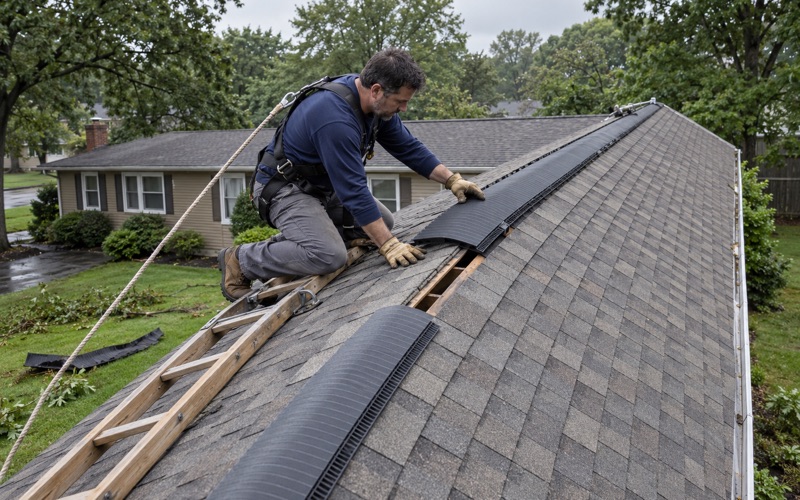
Attic ventilation gets checked on every replacement, because a roof that cannot breathe ages from underneath. Our contracts follow New Jersey’s home improvement rules, including the three-day cancellation notice, and the crew cleans the grounds at the end of each work day with a magnet sweep for nails, which matters where tenants walk and park.
Owners selling a building get a written roof condition report they can hand to the buyer’s inspector. For a multi-unit property, where the roof is part of the maintenance record, that report gives both sides a dated account of the roof’s condition when the building changed hands. It is one more page in the file a landlord already keeps.
- 20+ Years in Business
- Attic Checked on Every Leak
- Itemized Written Scopes