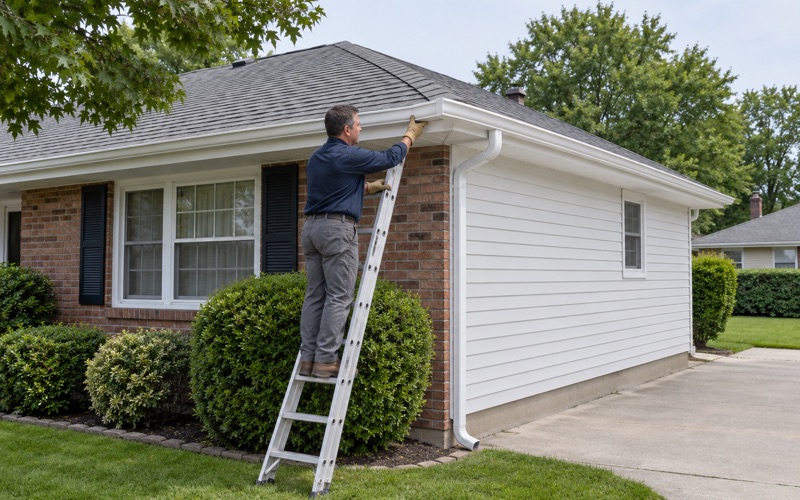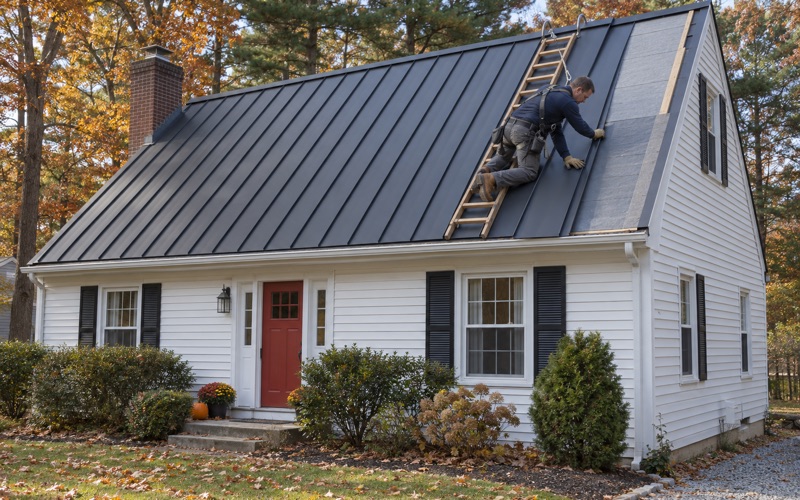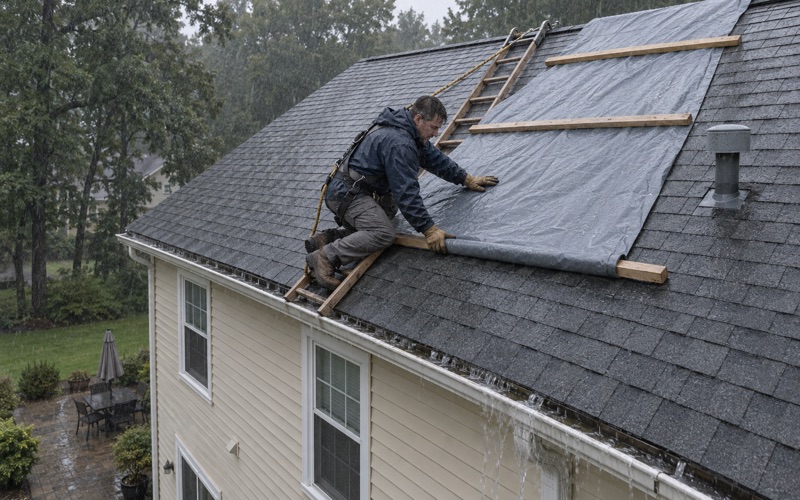
Old Bridge Roofing brings more than 20 years in the trade to roofing in Somerville, and the requests we field here tend to split two ways. Some come from owners of detached houses with a leak, a worn shingle roof or storm damage. Others come from owners and managers of mixed-use and commercial buildings, where one roof covers shops, offices or apartments and nobody below can move out for a week.
Both kinds of job start the same way with us. On a leak call we go into the attic as well as onto the roof, so the water is traced to the point where it actually gets in before a dollar is priced. Then you get a plain answer on whether the roof can be repaired, and only after that do we talk about replacing it.
Where replacement is the right call, our written scope breaks the job into separate lines for tear-off, decking, underlayment, flashing, ventilation and gutters. That lets a building owner or a homeowner set our estimate beside another one and compare it item by item, rather than weighing two totals that may not describe the same work.
Somerville, the County Seat, and Its Changing Downtown
Somerville is the county seat of Somerset County, and the borough describes itself as the seat of government for the county, home to many county facilities including the courthouse. It has also been called Downtown Somerset County, and the borough calls Main Street a destination for shopping and dining. That mix of government offices, storefronts and restaurants shapes a good share of the roofing questions that come up in the borough.
Five Redevelopment Areas
The borough lists five redevelopment areas: The Station and Landfill, West Main Street, the East Central Business District, Kirby Avenue and Gaston Avenue, where a new emergency services facility is being built. According to a 2018 NJ Future Smart Growth Award profile, the East Central Business District added two residential developments and one mixed-use development.
None of those projects is our work, and we raise them for a different reason. Redevelopment of this kind adds roofs over apartments, shops and public buildings rather than detached houses, alongside the older storefront buildings already lining Main Street. When roofs like those need repair or replacement, the rules, the schedule and the people involved all change.
A Renter-Majority Borough
The housing numbers point the same direction. Census estimates show 57 percent of Somerville’s occupied homes are rented, and 30 percent of the borough’s housing units, 1,838 of 6,131, sit in buildings of 20 or more units. Another 530 units were built in 2020 or later. Detached houses are still here, about 2,400 of them, but they are not the majority.
For a roofer, that means many Somerville households live under roofs owned by landlords, associations, management companies or commercial owners rather than by the people living directly beneath them. We plan for that from the first call by asking who holds the roof and who must approve the work, and in a townhouse or condominium building we check that answer against the association’s documents before writing an estimate.
Looking for roofing closer to Robbinsville? See Roofing in Robbinsville.
Mixed-Use Buildings: Shops Below, Apartments Above
The clearest example of the borough’s change sits on West Main Street. The NJ Future profile describes a redevelopment area of about 17 acres near the train station, where a one-story shopping center was replaced by a ShopRite grocery store and a five-story mixed-use building with shops below rental apartments.
The same profile notes that Somerville was designated a Transit Village in 2010 and that Division Street was turned into a pedestrian mall. Density near the station and foot traffic downtown both bear on roof work, because staging, deliveries and debris have to fit around people on the sidewalk rather than a quiet driveway.
A mixed-use building like that stacks different occupancies under one roof. Rain that gets past a failed seam does not land in one owner’s attic. It can travel along a deck and show up in an apartment ceiling or over a store’s sales floor, and both tenants may be calling the owner the same morning.
Tracing a Leak Through Several Floors
Our attic-and-roof habit carries over to these buildings, though the space under the roof is often a ceiling plenum, a top-floor apartment or a mechanical room instead. We look at the roof surface, the flashing at walls and parapets, and the penetrations for vents and equipment, then compare what we find with where the water actually appeared inside.
Water on a low-slope roof can run a long way before it finds a way down, so the stain in a second-floor kitchen may have started near a drain or a curb well across the building. Pricing a repair before that path is understood is how an owner ends up paying twice.
Older Storefronts Next to New Construction
Main Street keeps most of its historical buildings, and some former factories in the borough have been converted to apartments. Older commercial buildings can carry decades of patches, added layers and abandoned penetrations, and we do not assume what is up there on any particular building. We go up, look and write down what we see.
Newer buildings raise a different question. A roof only a few years old may still be under a manufacturer’s or installer’s warranty, and an outside repair can complicate that. On a newer mixed-use or apartment building we ask for any warranty paperwork first, so the owner knows whose call the repair should be before we touch the roof.
Why a Commercial or Mixed-Use Re-Roof Is Permit Work
New Jersey’s Uniform Construction Code treats roof work differently depending on the building. Under N.J.A.C. 5:23-2.7, repairing or replacing the roof covering on a detached one- or two-family dwelling is ordinary maintenance, and no permit, inspection or notice to the enforcing agency is required for it. That exemption is written for those houses only.
A storefront building, an office, a county building or a mixed-use block with apartments over shops is not a detached one- or two-family dwelling, so its re-roofing falls outside that exemption and is permit work under the code. In Somerville that means the borough’s Uniform Construction Code enforcing agency, led by a Construction Official with subcode officials, is part of the job.
What the Permit Changes for the Owner
Permit work adds steps a homeowner re-roofing a detached house does not see: an application, a review of the proposed work and whatever inspections the enforcing agency calls for. It also adds time, which matters when tenants are counting days. We build those steps into the schedule we give the owner, rather than quoting a start date that ignores them.
The rehabilitation subcode, N.J.A.C. 5:23-6, also governs re-roofing, including when the old roof has to come off rather than be covered over, such as where two or more layers are already in place. On an older downtown building that has been roofed over more than once, that rule can decide the scope before anyone picks a material.
Some of these buildings bring in one more office. The borough added a flood damage prevention article to its code in 2023, administered alongside the construction code, and its Floodplain Administrator reviews work through a floodplain development permit, including minor improvements. Whether a given building falls under that review is something we check before scheduling, not after.
Houses Are a Different Matter
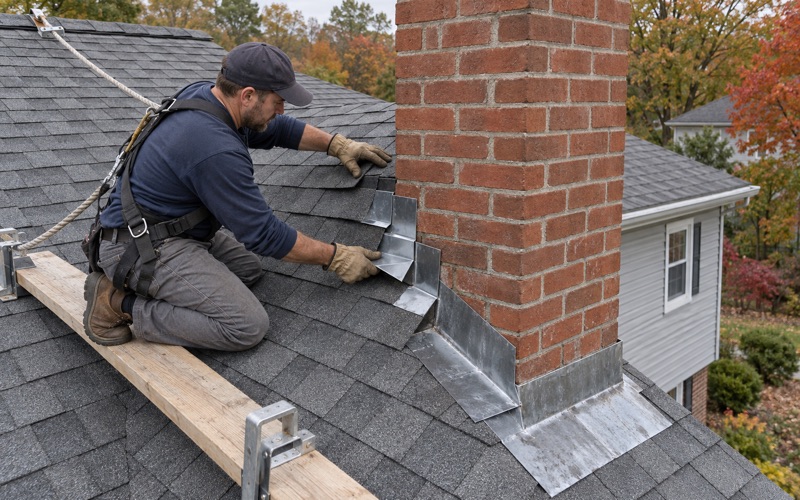
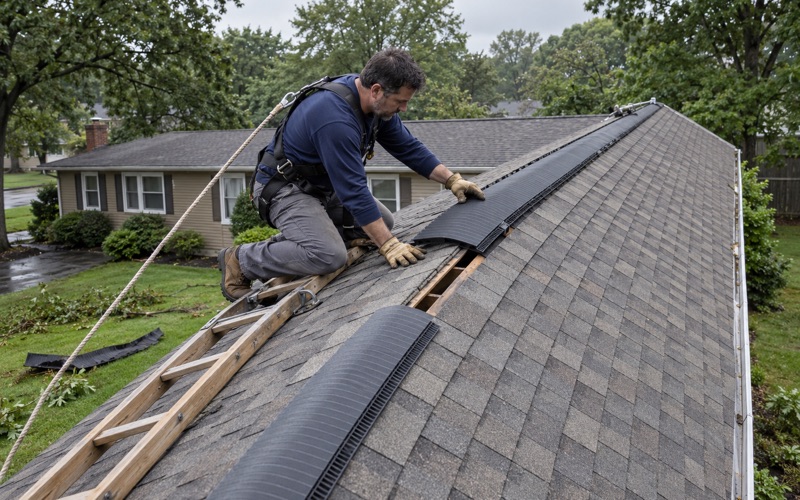
If you own one of the detached houses in Somerville, none of that permit process applies to replacing your roof covering. What still applies is New Jersey’s home improvement law, and our contracts are written to it, including the three-business-day cancellation notice. A house replacement also gets our ventilation check and new step, counter and chimney flashing rather than old metal reused under new shingles.
Low-Slope Roofs Over Occupied Storefronts, and the Tenants Below
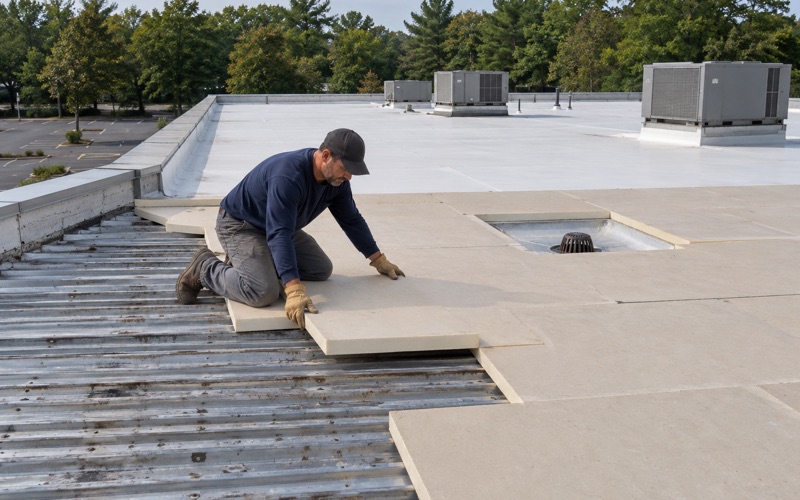
We have not surveyed the roofs on individual Main Street buildings, and we will not tell you what yours is made of until we have been up there. Commercial and mixed-use buildings in town centers commonly carry low-slope roofs, though, and those use a different family of materials than the shingles on a house.
Membrane Options
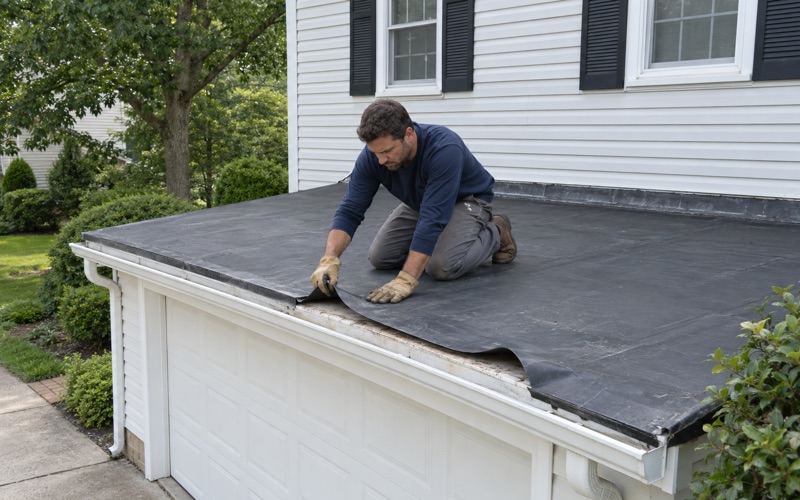
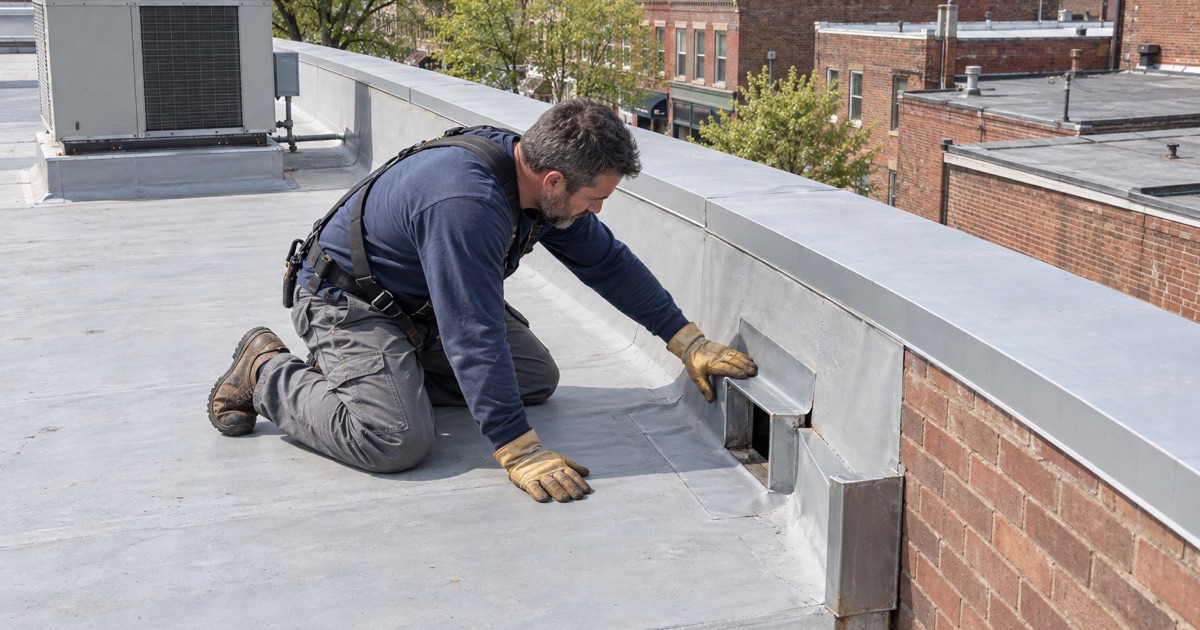
The usual choices are EPDM rubber membrane, TPO or PVC single-ply membranes, and SBS or APP modified bitumen, which is sometimes installed torch-down. Each handles seams and flashing at walls and penetrations differently. Our written scope names the membrane, the insulation or cover board beneath it, the flashing details and the drainage work as separate lines, the same way we itemize a shingle roof.
When the old roof comes off and the deck beneath it is damaged, we photograph it and show the owner before replacing anything, at the per-sheet price already set in the contract. On a building with tenants below, that photo record also helps the owner explain why a section of work took an extra day.
Drainage and Roof Runoff
Somerville’s sewer regulations bar roof runoff from any sanitary sewer and direct it to designated storm sewers or a natural outlet approved by the Borough Engineer. Where a particular building’s leaders and drains actually discharge is something we confirm on that property rather than assume. When we replace a low-slope roof, the drains, scuppers, gutters and leaders are part of the scope, not an afterthought.
Working Around Shops, Offices and Apartments
A storefront roof job is scheduled around people who cannot leave. Before work starts we talk with the owner about store hours, deliveries, apartment entrances and where staging and a material hoist can go without blocking a door or a sidewalk. Tear-off is sequenced so no more roof is open than can be closed again before the end of the day.
Our crews follow OSHA fall protection requirements, and we keep the ground below as clean as the roof. At the end of each work day the sidewalk, any yard and the gutters are cleared, including a magnet sweep for roofing nails, which matters more when shoppers and residents walk past the building all day.
If a storm is behind the damage, we photograph it and write it up for the owner’s own insurance claim, and we will meet the adjuster on site when asked. For a building owner juggling tenants, a lender and an insurer at once, having the roof documented in writing is often what keeps the repair moving.
- 20+ Years in Business
- Attic Checked on Every Leak
- Itemized Written Scopes