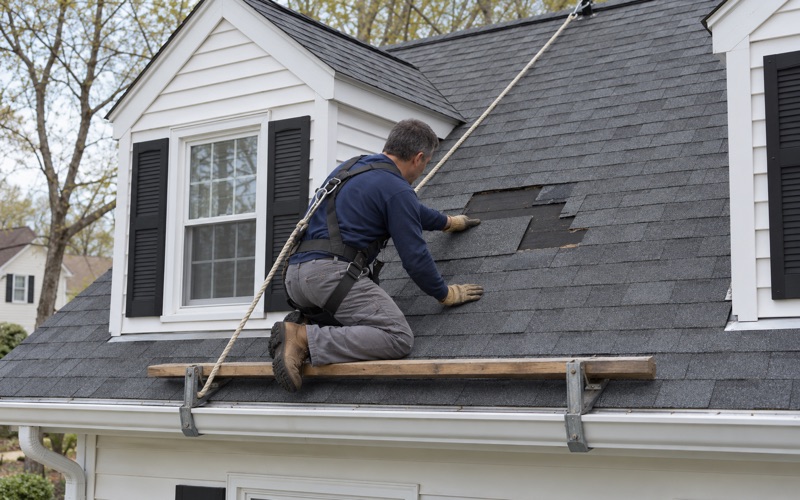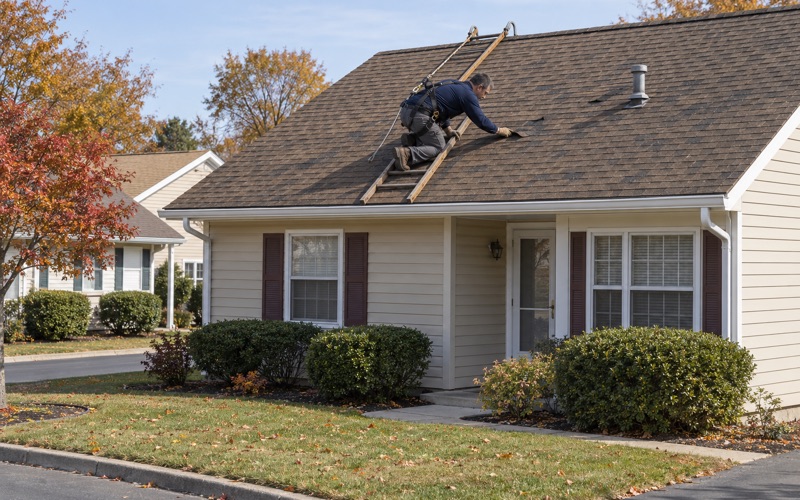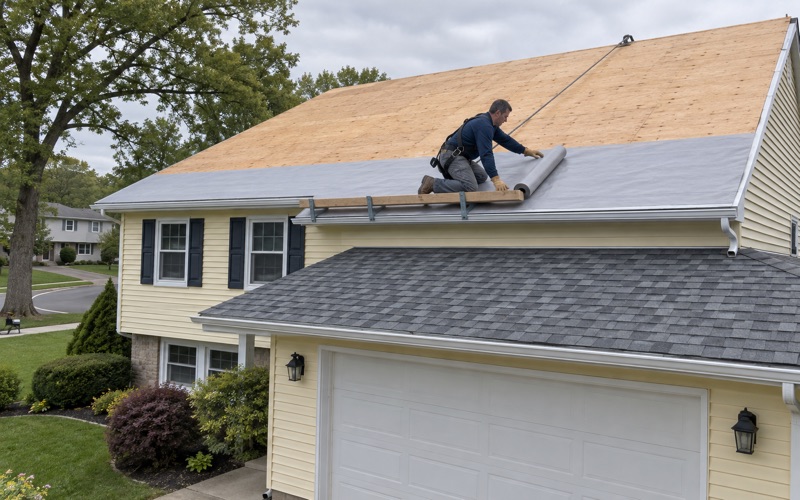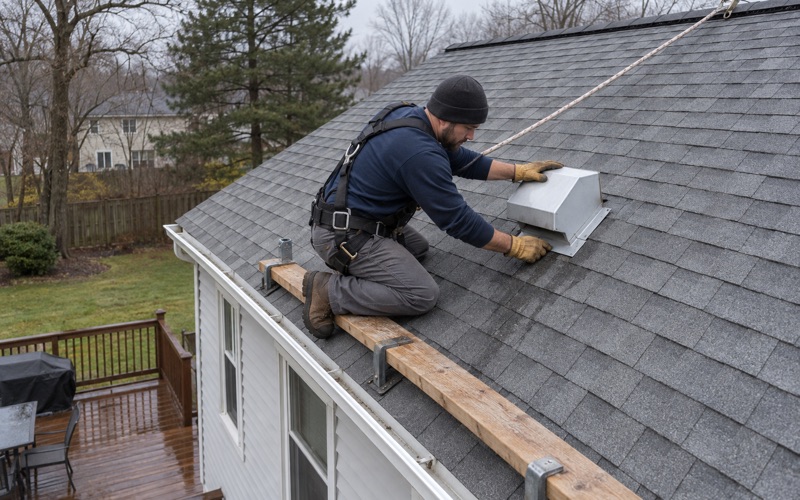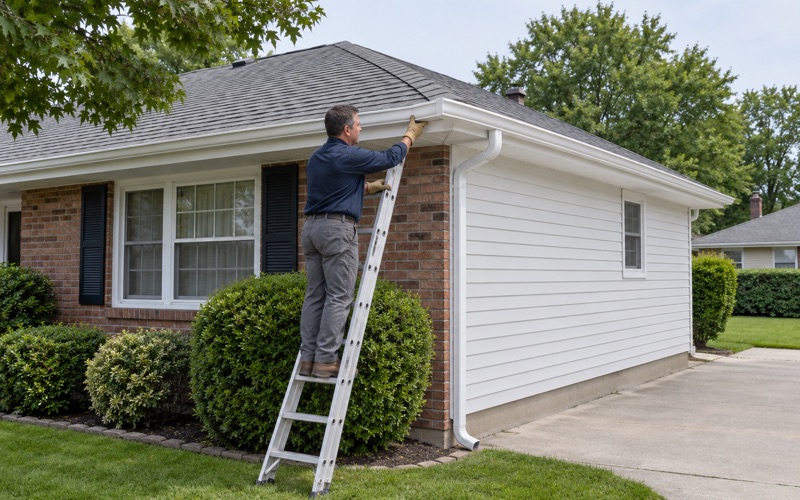
Old Bridge Roofing brings more than 20 years in the trade to roofing in South Amboy, and every leak call we take here gets two inspections instead of one. We walk the roof, then we climb into the attic, because water often travels along a rafter or the sheathing before it shows on a ceiling. The estimate gets written only after we know where the water actually gets in.
That order matters for the price. Plenty of leaks come down to a cracked pipe boot, a lifted shingle tab or a failed seam at a wall, and we will tell you plainly when a repair is the right answer. Replacement comes up only when the roof itself is finished, and when it does, you get a written scope you can hold against anyone else’s.
Owners of older brick and frame buildings in the city have one question to settle before the materials discussion even starts: whether the property carries a local historic designation. The answer is usually no, but it is worth knowing for certain, and the sections below explain how the city designates buildings, what the record says about roofs, and how to check.
South Amboy Preserves Its History One Landmark at a Time
No district, just individual buildings
Many New Jersey towns protect old architecture by drawing a historic district around a neighborhood. South Amboy has taken a narrower route. Under Chapter 83 of the city code, its historic preservation ordinance, buildings are designated individually, each with its own report and its own public hearing. We found no historic district in the city, and no private house that we know of carries a designation.
That changes the practical question for an owner. You are not asking whether your street sits inside a boundary line. You are asking whether your specific building has been through a designation, which is a far rarer event, and one that leaves a paper trail you or we can look up.
For roofing, the distinction is practical. A building that has never been designated is handled like any other older building: we inspect, trace the leak, and talk through repair or replacement on the roof’s own merits. A designated one adds a conversation with the commission to the front of the schedule, which is the subject of the last section on this page.
The ordinance has its own short history. City Council minutes show a historical preservation ordinance introduced on first reading as Ordinance 11-2017 on July 19, 2017, and the designation described below cites Chapter 83, Articles 1 through 5, as its authority.
What the Historic Preservation Commission does
The city’s Historic Preservation Commission runs this process. Its page says the commission shall identify, evaluate, designate, and maintain an inventory and local register of historic resources, and that it reviews and decides applications for local designation. It may also seek grants and Certified Local Government benefits. The city describes it as an advisory board.
What the page does not say is just as useful to know. It says nothing about certificates of appropriateness and nothing about reviewing roof work. We do not read more into that silence than is there, which is why our advice further down is to ask the commission directly rather than assume either way.
Looking for roofing closer to Holmdel? See Roofing in Holmdel.
The Independence Firehouse at 127 North Broadway
A 1924 Arts and Crafts landmark
The commission’s published designation report covers the Independence Fire Company Firehouse at 127 North Broadway, Block 47, Lot 4. It is a two-story brick building in the Arts and Crafts style, built in 1924 to replace a wood-framed firehouse from about 1901, and the report calls it the earliest surviving firehouse in the city. It was designated an Individual Landmark after a public hearing on February 2, 2021.
According to the report, no one spoke in opposition at that hearing. The building stands on the same street as City Hall at 140 North Broadway, which makes it one of the more visible pieces of the city’s past.
What the report records about the roof
The report splits the front, or west, facade into what is historic and what has been altered. The historic list reads masonry facade, parapet design, and cartouche. The alterations list reads windows, doors, modification of fire truck bays size, roof material, shutters, and signage. In other words, the commission recorded that the roof covering has already been changed and did not list it among the historic features.
The report does not say what the roof is covered with today, what condition it is in, or who has worked on it, and we have not worked on it either. What it does show is that the commission reads a building the way a roofer does, separating the parapet and masonry from the covering behind them.
Why a parapet matters on any old brick building
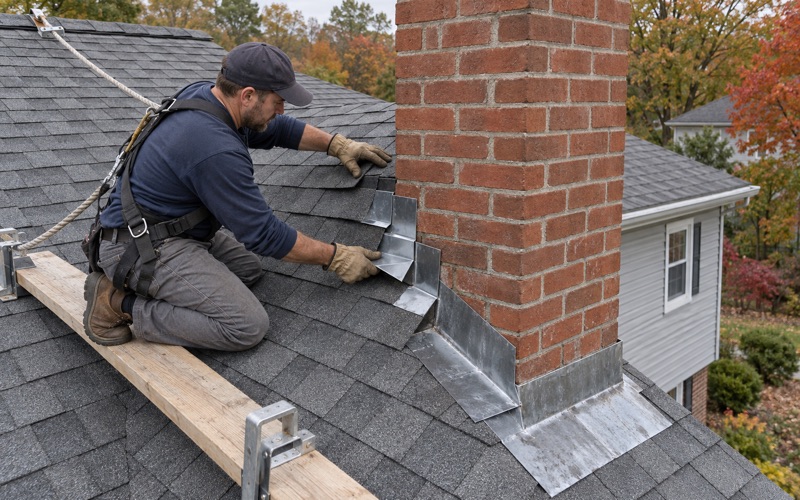
The parapet is the piece worth a roofer’s attention on a building like this. Where a flat or low-slope roof meets a parapet wall, water is kept out by base flashing turned up the wall and counterflashing set into the masonry, often in a cut reglet, with coping across the top. When those details fail, water gets into the brick from above and shows up inside as a stain far from the actual opening.
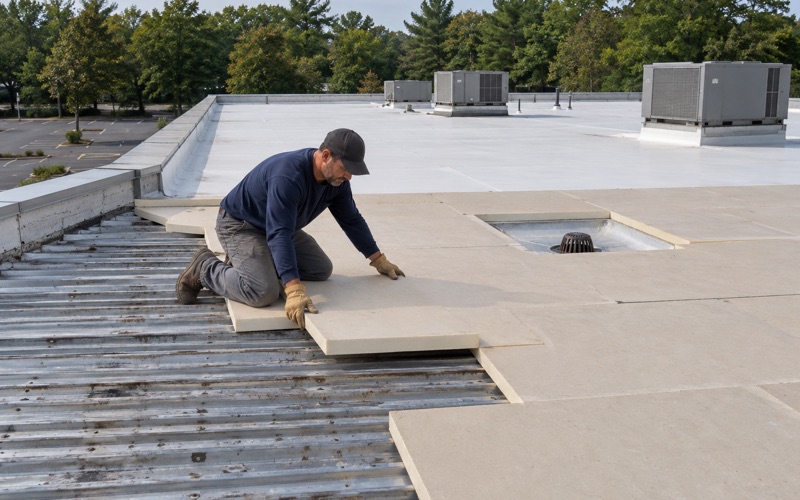
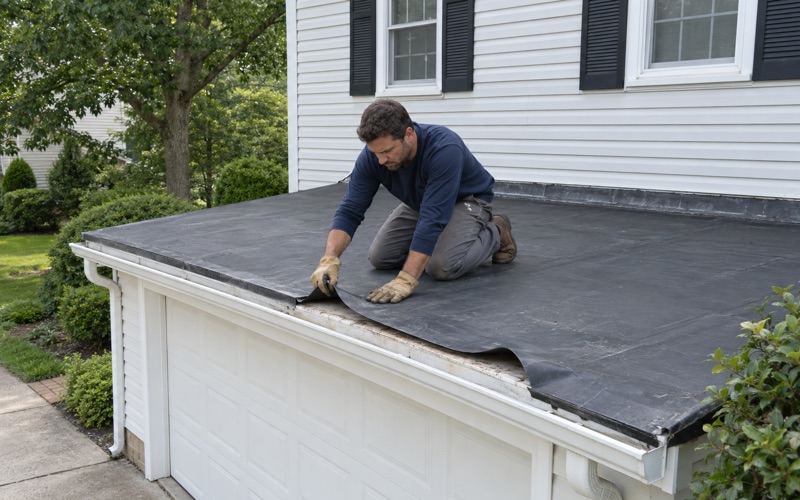
On older commercial and mixed-use buildings along a main street, we treat the parapet, coping and counterflashing as their own line in the scope, separate from the membrane, whether that membrane is EPDM rubber, TPO or torch-down modified bitumen. Reusing tired counterflashing under a new roof is how a fresh membrane starts leaking in its first season.
Is Your Building Designated? The Next Round of Decisions
The Protection Firehouse application
The firehouse report is the only designation the commission’s page lists, but it may not stay alone. At its February 19, 2026 meeting the commission set a goal to reopen and review the Protection Firehouse application for a final determination. As of those minutes the application was still pending, and we have not seen a decision on it.
We mention it because a pending application is the clearest sign that the list of landmarks can grow. Until the commission rules, nobody should treat the Protection Firehouse as designated or as cleared, and the same caution applies to any building an owner hears is being looked at.
What the commission plans next
The same minutes list several more goals. The commission wants to identify potential local designation opportunities, establish South Amboy as a Certified Local Government, and start a Historic Structural Conditions Assessment of the Independence Firehouse to support long-term preservation planning and maintenance priorities. It also proposed a voluntary Homes with History plaque program for designated properties, plus an outline for residents of what the commission does and does not advise on.
For 2027 it plans a Historic Resources Inventory building on a 1978 South Amboy Historic Inventory. The minutes draw a distinction worth repeating: a place that appears on an inventory is identified, not automatically designated. An older house turning up on a survey list does not, by itself, change anything about how its roof is handled.
How to check before roof work starts
The simplest check is the commission’s own page, which carries the designation report and a Building Inventory document. If your address is not the subject of a designation report, it has not been through the process. If you are unsure, or you have heard your building mentioned in connection with the inventory or the plaque program, the commission is the body to ask, and asking costs nothing.
We raise the question at the first visit on older buildings around North Broadway and note the answer in the scope. It takes a few minutes, and it keeps an owner from learning about a designation after the tear-off crew is already on the calendar.
Re-Roofing an Older South Amboy Building the Right Way
Asking the commission what it advises
If your building is designated, or its application is under review, talk with the Historic Preservation Commission before you settle on a roofing material. The city describes the commission as advisory, and the city’s page does not say whether Chapter 83 sets any review step for roof work on a landmark. That is exactly why the call is worth making: the commission can tell you what it advises for your building, and we will build the scope around that advice.
On any building with historic features, those features are where we slow down. A parapet or masonry facade gets protected during staging, new flashing is let into mortar joints rather than smeared over the face of the brick, and we plan the sequence so nothing worth keeping is disturbed just to make the roofing easier.
What goes into a written scope
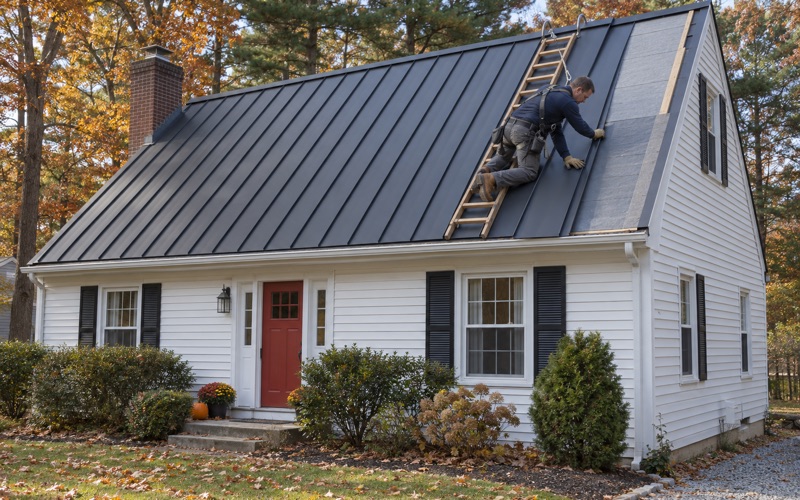
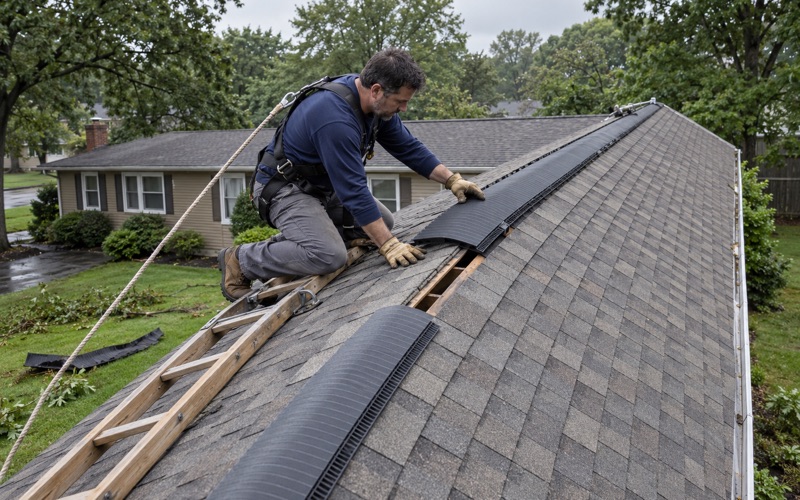
Every replacement scope we write lists tear-off, decking, underlayment, flashing, ventilation and gutters as separate lines. If you collect a second estimate, you can compare the two item by item instead of guessing what a single lump sum covers. Step, counter and chimney flashing is replaced with the roof, never reused under new material, and attic ventilation is checked on every job because a roof that cannot breathe ages from below.
Old buildings hide their decking until the covering comes off. When we find rotted or delaminated boards, we photograph them and show you before replacing anything, and the price per sheet is already written into the contract. Nobody gets a surprise line item after the fact, and you see the damage with your own eyes.
Contracts, cleanup and paperwork
Our contracts follow New Jersey’s home improvement rules, including written notice of your three-business-day right to cancel. Gutters and leaders are sized and pitched alongside the roof so water is carried away from old brick foundations, and at the end of every work day the crew cleans the driveway, yard and gutters and runs a magnet sweep for stray nails.
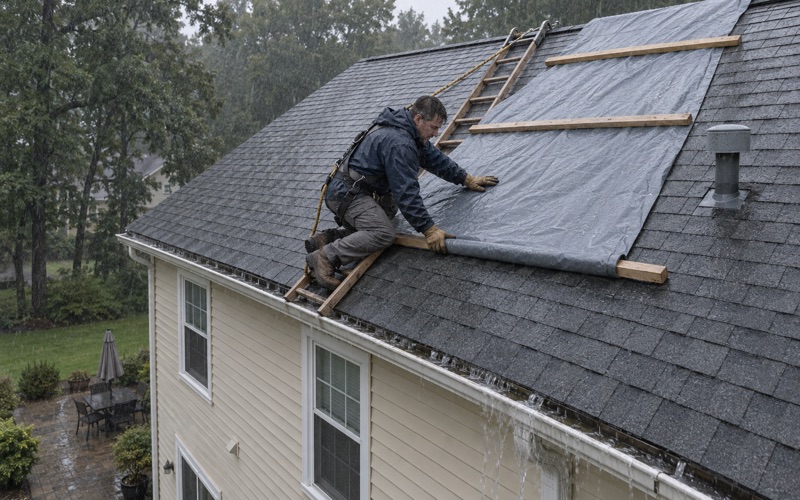
If storm damage brought you to the roof, we photograph it and write it up for your own claim, and we will meet the insurance adjuster on site if you ask. If the building is going on the market, we can give the seller a written roof condition report to hand to the buyer’s inspector.
- 20+ Years in Business
- Attic Checked on Every Leak
- Itemized Written Scopes