Old Bridge Roofing brings more than 20 years in business to roofing in South River, and the first thing we plan on a replacement here is not the shingle color. It is where the old roof goes once it comes off. A full tear-off fills a roll-off container, and in this borough the spot that container sits on decides whether anyone needs paperwork before the work date.
Before that conversation, we start where every roof job should: a look at the roof and a look in the attic, so a leak is traced to the place water actually gets in. You get a straight answer on whether the roof can be repaired before replacement comes up at all. Plenty of calls end with a repair, and a repair rarely calls for a container.
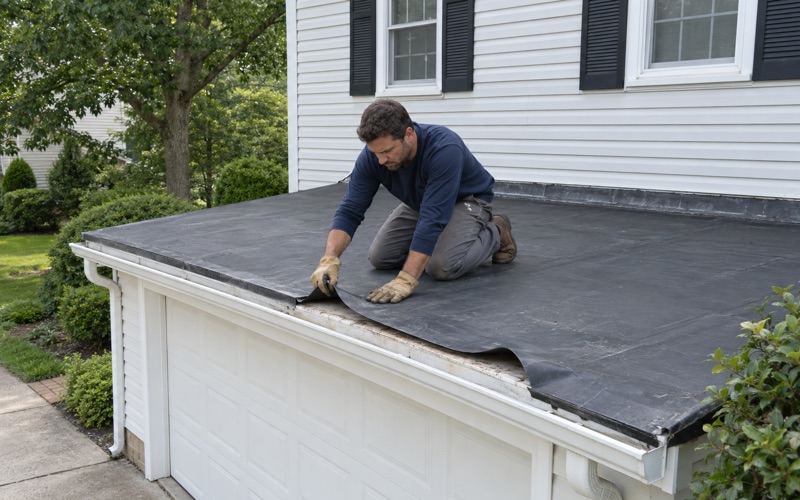
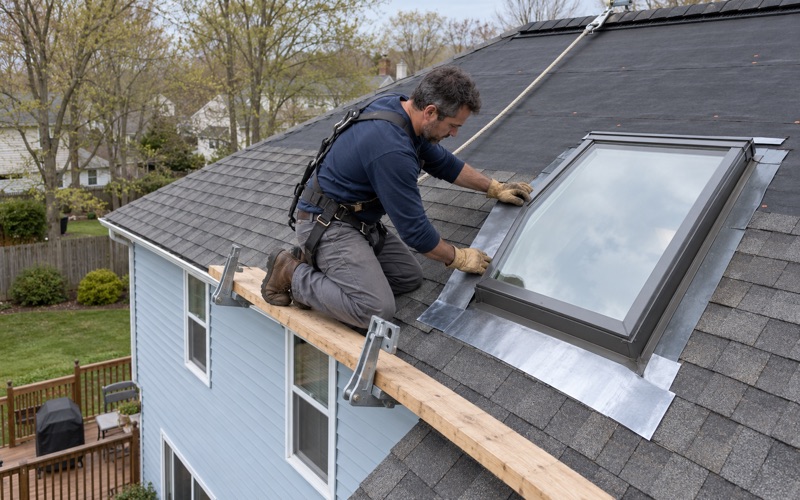
When replacement is the right call, our written scope breaks tear-off, decking, underlayment, flashing, ventilation and gutters into separate lines, so you can set our estimate beside another one item by item. The container belongs to that tear-off line, and the sections below explain the borough rules that shape when it arrives, where it stands and how long it can stay.
Driveway or Street: Where South River’s Roll-Off Rule Starts
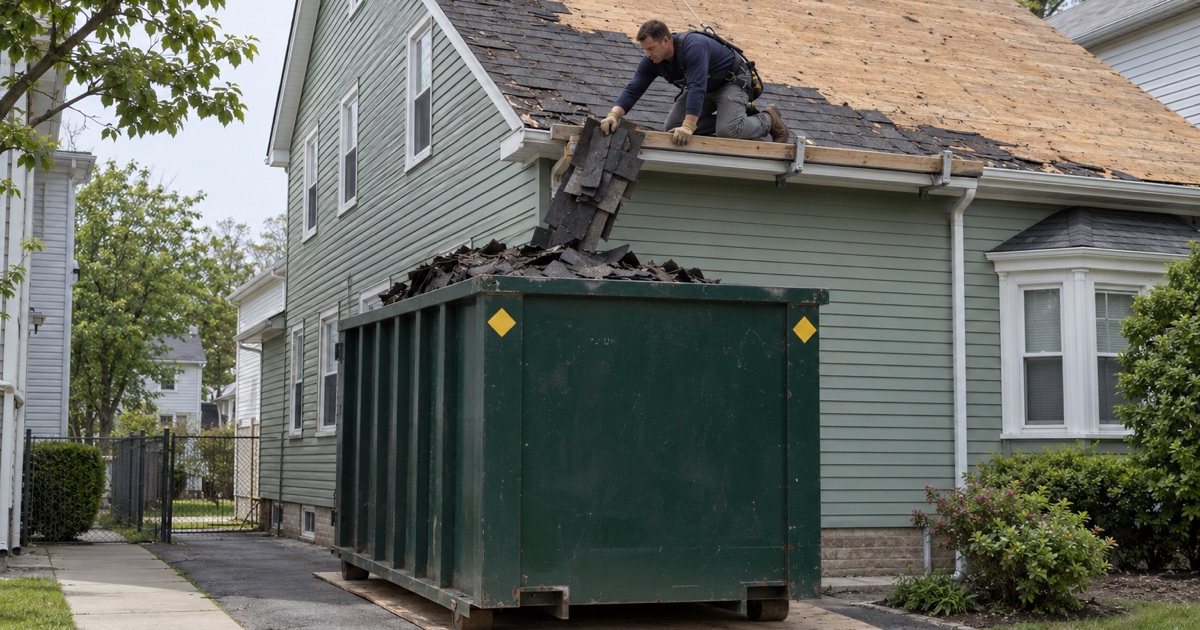
South River’s rules on roll-off containers sit in Chapter 263 of the borough code, adopted in 2006 as Ordinance 2006-3. The borough’s own application packet, revised January 29, 2024, prints that chapter alongside a plain-language summary. Between the two, the first question is simple: will the container sit entirely on your property, or will any part of it reach the street?
A container fully inside the driveway
The application packet is direct on this point. A dumpster or storage container placed in the homeowner’s driveway does not require a dumpster permit. In a borough of 16,118 people at the 2020 census, where 74.7% of housing units are one-unit detached houses, that makes the driveway the first place we look. Every lot is different, so we check the actual space during the estimate instead of guessing.
When any part of it protrudes
The same packet adds a line that catches people: if the unit protrudes from the driveway, you need a permit. A container that sticks out past the end of the driveway is a permit question, not a driveway one. The borough also states that containers placed on the street without a permit are subject to daily citations, so a few feet of overhang is worth settling before the hauler is booked.
Chief of Police approval and the Borough Clerk’s permit
Section 263-1 bars anyone other than the borough’s own agents from leaving a roll-off along any public road, street, right-of-way or public property without a written permit. That permit is approved by the Chief of Police or his designee and issued by the Borough Clerk once the fee is paid. Under Section 263-2, the police certify that the placement will not create an unreasonable hazard or risk.
The borough says applications are reviewed and approved by the Police Department for safety and take 2 weeks to process. For a roof, that two-week window is the real lead time. We set the tear-off date with you knowing whether the container will need street placement, so the permit question is answered before the schedule is, not on the morning the crew arrives. The South River Police Department enforces the chapter.
Looking for roofing closer to Aberdeen? See Roofing Services in Aberdeen.
Thirty Days, One Renewal, Sixty Days at Most
Section 263-3 limits how long a street container may stay. A permit is valid for not more than 30 days and can be renewed once for another 30, and the code says plainly that no permit shall extend beyond 60 days. For a house re-roof that is usually room enough, but it is a ceiling, and the count runs from the permit rather than from the day the shingles start coming off.
Fitting the tear-off inside the window
The days that stretch a job are rarely the shingle days. They come from rain holds and from what turns up under the old roof. When the tear-off exposes damaged decking, we photograph it and show you before any sheet is replaced, at the per-sheet price already set in the contract. That keeps the decision quick and keeps the container from sitting idle while a surprise gets sorted out.
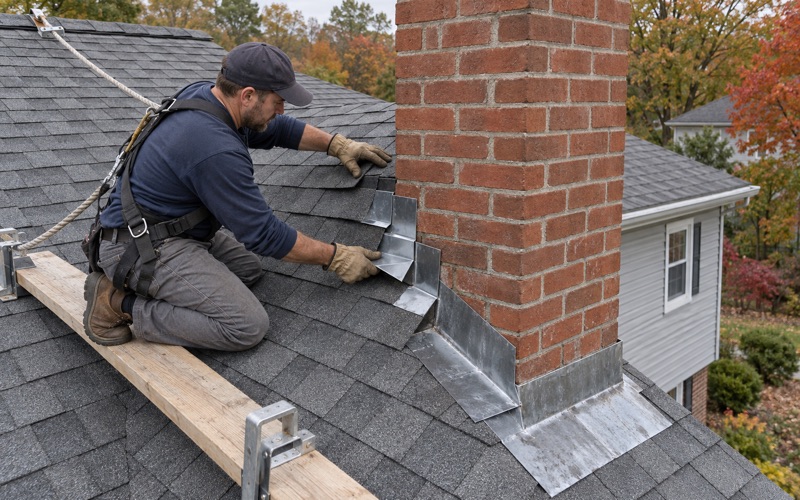
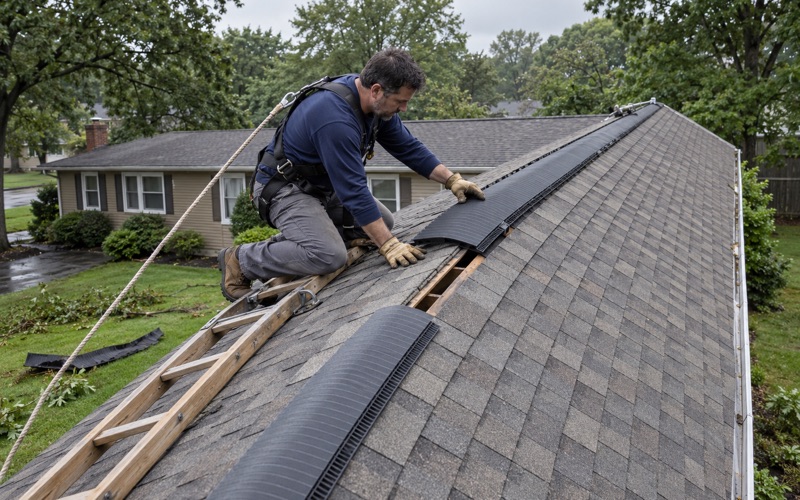
Flashing is part of the same schedule. We replace step, counter and chimney flashing with the roof rather than reusing old metal under new material, and the old pieces go into the same container as the shingles. Attic ventilation is checked on every replacement as well, because a roof that cannot breathe ages from underneath. Planning those items up front is what lets the container leave on the date written on the form.
What the borough form asks about the container
The application asks for the drop date and the tentative removal date, the property owner, the container company, the container’s serial number and its capacity in yards, plus its length, width and height. It also asks for a Federal Tax Identification Number, and a W-9 is required. Much of that information comes from the hauler, so booking the container and preparing the application go best side by side.
Each further 30 days needs a new permit and a $25 processing fee, according to the borough form. We go over the dates with you before anything is booked, so the drop date on the application matches the day the crew actually needs the container, and the removal date leaves room for weather without pressing against the 60-day limit.
Off the Sidewalk and Marked at Both Ends
A street container in South River also has to stay out of the way of people on foot. Section 263-2C says no roll-off dumpster or roll-off container shall be allowed in the sidewalk area or create a blockage of pedestrian traffic. On our jobs we treat that as a rule about the whole work zone in front of the house, not only about where the box itself is set down.
Keeping the walk clear
We set up so the sidewalk stays open while the work is underway. Debris from the tear-off goes from the roof into the container rather than piling on the walk, and the driveway, yard and gutters are cleaned at the end of every work day. That cleanup includes a magnet sweep for roofing nails, which matters most where neighbors and children pass the front of the house.
The roof edge above the walk is also where safety setup is most visible from the street. Residential roofing falls under OSHA’s fall protection rule at 6 feet, 29 CFR 1926.501(b)(13), and the area below a working edge is no place for a parked container or a stack of bundles. Keeping both off the sidewalk keeps that strip clear while people are working overhead.
Reflective panels for night visibility
Section 263-4 requires yellow reflective diamond-shaped panels at least 18 inches by 18 inches at both ends of a street container, facing oncoming traffic. The panels mount at least three feet above the roadway, measured from the bottom of the panel. We ask the hauler to confirm that the box arriving for a street placement carries them, because a container without them does not meet the borough’s rule.
The panels matter because a container on a residential street is a solid object in the travel lane after dark. That is part of why the police review placement before a permit is issued. When we plan a street drop, we talk through which side of the house it goes on and how it faces traffic, so the placement described on the application is the one that actually arrives.
The $200 Escrow and the Public Works Inspection
The money side of a street container is small but has a long tail. The borough form lists a $50 application fee covering the first 30 days and a $200 escrow, described as a guarantee against damage to the street. If the street is undamaged, the escrow is refunded in full; if the container damages it, the escrow is used. Those are the figures printed on the form revised in January 2024.
Inspection after the container leaves
Under Section 263-3, the Director of Public Works inspects the road after removal, and the code sets the refund within 30 days of that inspection. The application describes the practical steps: the applicant emails the borough once the container is gone, the Department of Public Works inspects the street, and the refund can take 2 to 4 weeks from there.
That timeline means the escrow outlasts the roof job. Whoever filed the application should note the removal date and send that email promptly, because the inspection follows the borough hearing that the container is gone. We give you the actual pickup date as soon as the hauler confirms it, so the email can go out the same day.
Keeping the paperwork straight
Our contracts follow New Jersey’s home improvement rules, including the three-day cancellation notice, and the container appears inside the tear-off line of the written scope rather than as a vague allowance. If storm damage started the job, we photograph and write it up for your own claim, and we will meet the insurance adjuster on site when asked.
The borough’s container rules come from its own code and its own form, and both name the offices that sign off: the Chief of Police on placement, the Borough Clerk on the permit, Public Works on the street. Whether your roof needs a repair or a full replacement, we plan the work so those steps fit the schedule instead of interrupting it. Call Old Bridge Roofing to start with a look at the roof and the attic.
- 20+ Years in Business
- Attic Checked on Every Leak
- Itemized Written Scopes