Old Bridge Roofing provides roofing in Springfield Township with more than 20 years in the trade behind every estimate, and this page is written with one kind of owner in mind: the one who may be selling within the next year or two. That changes the questions worth asking. Before a single shingle is priced, it helps to know whether the job will leave paperwork that a closing depends on.
Our approach starts with a straight answer on repair versus replacement, and only then a written scope that splits tear-off, decking, underlayment, flashing, ventilation and gutters into separate lines. Contracts follow New Jersey’s home improvement rules, three-day cancellation notice included, which matters when a seller is weighing several bids against a listing date.
The sections below cover how a sale is cleared in this township, which roof jobs leave a permit on the record, why attached homes are different, what rooftop solar adds to the checklist, and how to time repairs around a closing date.
Selling a Springfield House: Permits Are Checked Before the Fire Certificate
In Springfield, the sale of a house runs through the Springfield Fire Department, which issues the smoke detector, carbon monoxide detector and secondary power source certification a seller needs. Its 2025 Selling Your Home form puts one step ahead of that application: a Permit Closure Verification, requested through the Building Department.
This applies to Springfield Township in Union County, the 5.17-square-mile township at the foot of the Watchung Mountains that takes in Baltusrol, Branch Mills and Milltown, with Interstate 78 and Route 22 crossing it. Another New Jersey township shares the Springfield name and has a different resale ordinance, so a seller here should work from this township’s Fire Department form at 200 Mountain Avenue.
How the Permit Closure Verification Works
Building Department staff research the property and email its permit status to the seller, with copies to the Fire Department and the smoke certification scheduling clerk. Only after confirmation that every permit on the property is closed does the seller file for the alarm certification. The official-use block on the form reads simply open permits or no open permits.
The office sits in the Engineering Annex Building at 20 North Trivett Avenue, open Monday through Friday from 8:00 a.m. to 4:00 p.m. The township’s own page says a project should not be considered complete until all required inspections have been performed, and it puts the duty to request those inspections on property owners and contractors alike.
What the Certificate Costs and When It Lapses
The fee rises as closing gets closer. The form sets it at $100 if the application arrives more than ten business days before closing, $120 at fewer than ten but more than four, and $175 at four business days or fewer. If the change of occupancy does not happen within six months, a new application is required.
It is worth being clear about what this process is not. The form checks permits and alarms; it does not send anyone onto the roof. That is exactly why a stray open permit from an old roof job matters more here than the age of the shingles: one can stall the certificate, the other is for the buyer’s inspector to weigh.
Looking for roofing closer to New Providence? See Roofing Services in New Providence.
Which Roof Jobs Leave a Permit Behind
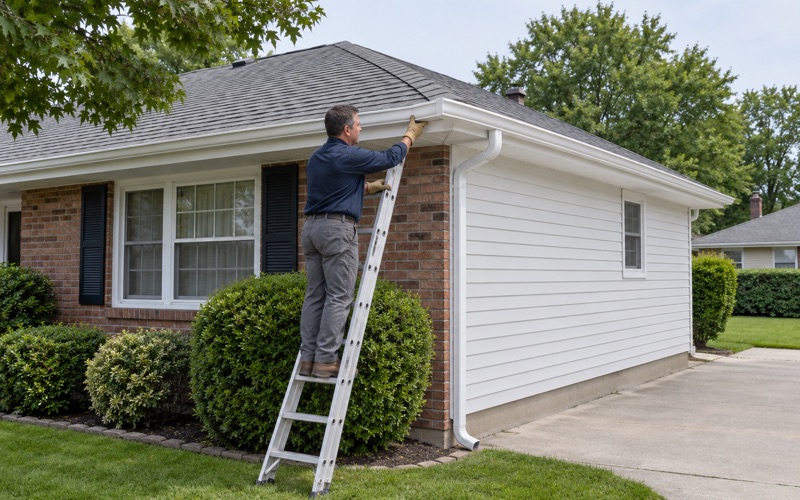
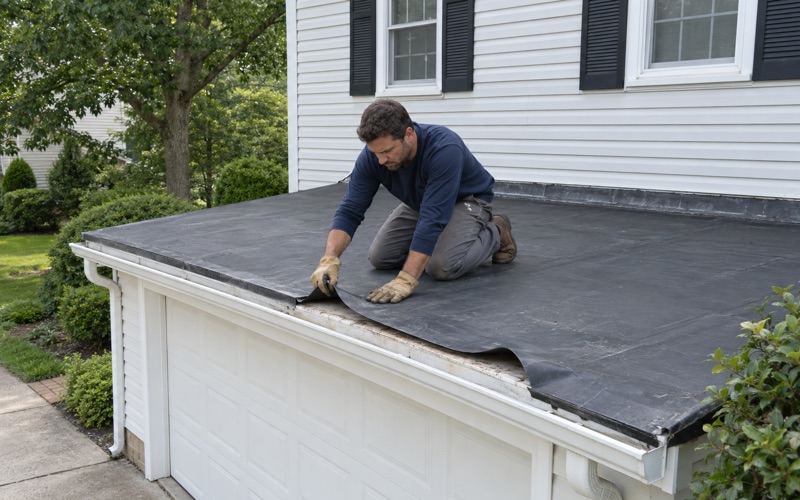
New Jersey treats repair or replacement of the roof covering on a detached one- or two-family house as ordinary maintenance under N.J.A.C. 5:23-2.7, with no permit needed. For a detached house, then, a straight re-roof leaves nothing on file to close. The form itself does not name roofs, so this reading is ours, drawn from the form and the code.
Structural Work Changes the Picture
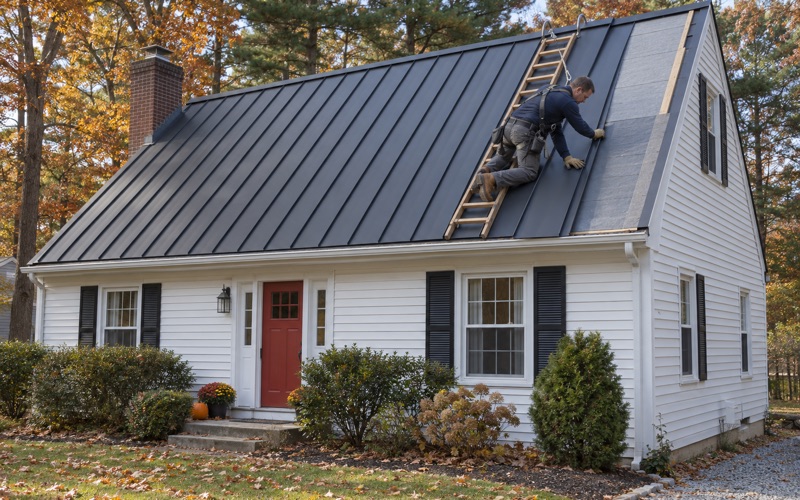
Not every roof job stays inside that rule. Replacing rafters or sheathing as structural work is permit work, and a permit opened for it has to show as closed before a sale certificate is issued. The rehabilitation subcode also says when old layers must come off: a roof already carrying two or more layers is torn off rather than covered again.
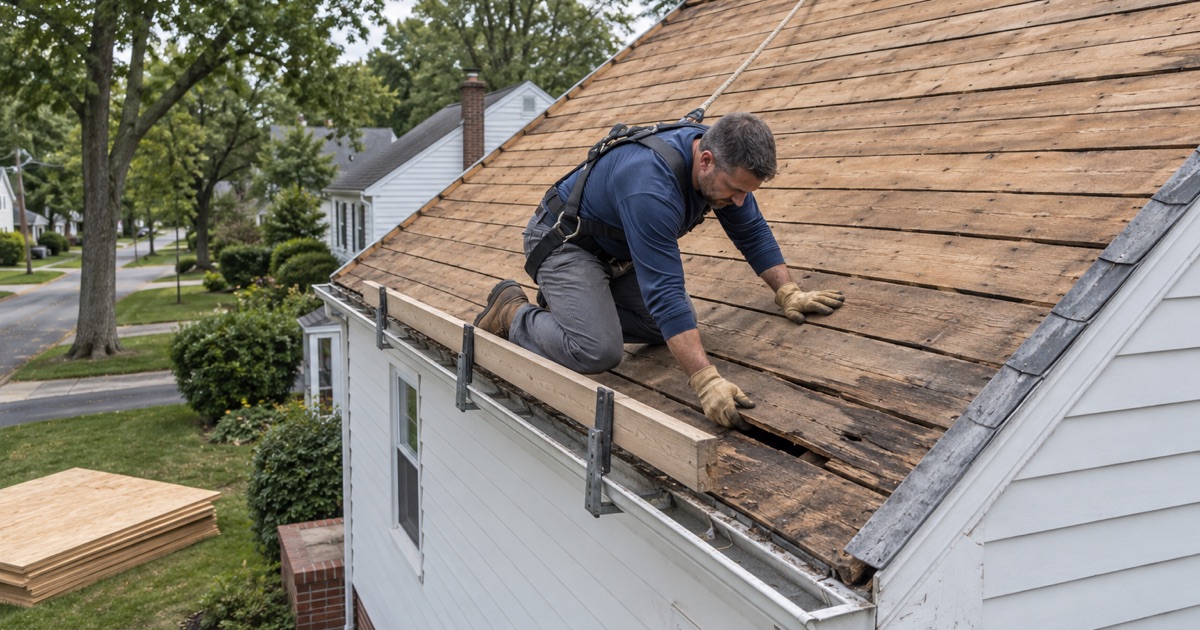
Decking is where surprises usually surface. If boards prove rotted once the old roof is off, we photograph them and show the owner before any sheet is replaced, at the per-sheet price already set in the contract. A seller then knows what changed, what it cost, and whether the scope moved toward structural work that would need its own permit.
Townhouses and Condominiums: Re-Roofing Is Permit Work
The ordinary-maintenance rule covers detached houses only. Attached dwellings fall outside it, which matters here because Springfield counts 474 attached units and 2,028 units in buildings of three or more, out of 7,277 housing units in the 2024 five-year Census estimates. A re-roof on one of those is permit work, and that permit has to read closed when the unit sells.
Ownership adds a second question. In townhouse and condominium communities, we check the association’s documents to see who actually holds the roof before writing any estimate, since the association may own it, the owner may, or the answer may differ by building. A seller who learns that early knows who to ask about any roof permit before the Permit Closure Verification comes back.
Sellers live in some of those units, too. Census figures show owners living in 237 attached units and 217 units in buildings of three or more, each one outside the detached-house rule, so a roof replacement on one of those units is something the permit search can turn up.
Solar Panels on the Roof and the Multiple-Power-Source Label
The same 2025 form carries a requirement that is easy to miss. Under P.L. 2025, c.19, a one- or two-household residential structure with a secondary power source must have a label installed within 18 inches of the main electrical panel and the electrical meter. The township’s form defines secondary power to include permanently installed generators, solar panels and battery storage systems.
What the Label Has to Say
The wording should read along the lines of CAUTION: MULTIPLE SOURCES OF POWER, and the form is explicit that the label may not be handwritten. A house with rooftop solar therefore needs a printed label at the panel and meter before the sale certificate is issued. That is electrical work, not roofing, but it belongs on the same pre-listing list.
The form also cites N.J.A.C. 5:70-4.19, the rule calling for ten-year sealed smoke alarms effective January 1, 2019. None of that is roofing, but lining up roof work, alarm upgrades and the solar label together lets a seller file once, early.
Re-Roofing Under Panels Before a Sale
When a roof under solar needs replacing before a listing, we build the panel removal and reinstall into the schedule from the start rather than finding out on the day the crew arrives. Planning it that way keeps the array off the roof for as short a stretch as the job allows, and it keeps the closing calendar honest about how long the work will take.
Panel mounts also go through the roof, so they are a common place for water to find a path. On any leak call we look in the attic as well as on the roof, tracing the water to where it actually enters before anything is priced. Around solar standoffs, that distinction decides whether the fix is flashing, a mount reseal or something deeper.
Timing a Roof Repair Before a Springfield Closing
The fee schedule rewards sellers who start early, and roof work is no different. A repair or replacement that finishes weeks before listing leaves time for any required inspections to be requested and passed, for the Permit Closure Verification to come back clean, and for the alarm certification to be filed at the lowest fee rather than the $175 rush rate.
Check the Permit Record Before Calling a Roofer
Property owners may ask the Building Department to verify the status of construction permits tied to their property, and the department’s number is 973-912-2220. Doing that before a listing, rather than after an offer, shows whether an earlier roof job on an attached unit or a structural repair on a house was ever closed out.
If something is still open, it has to be resolved before the alarm certification can move, so it belongs at the top of the list. On permit work we do, we request the required inspections as the job proceeds and do not call it finished until they are performed.
Pre-Listing Roof Repairs Worth Doing
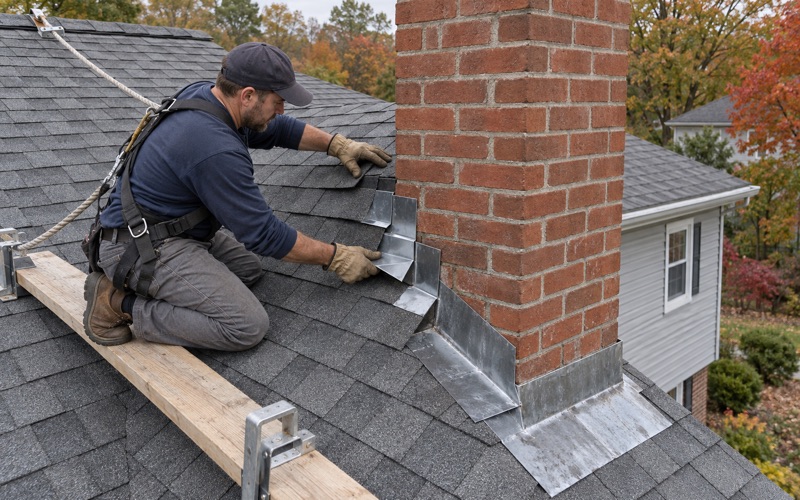
Pre-sale roof work is often modest: a lifted shingle run, a cracked pipe boot, worn step flashing along a sidewall, or a missing kick-out flashing that has been staining siding. When flashing is part of the job, we replace step, counter and chimney flashing rather than reusing old metal under new material, which keeps a fresh repair from failing at its weakest joint.
Even after a repair, a buyer’s inspector may still recommend replacement. To get ahead of that, we put our findings into a written roof condition report the seller can hand over, listing what we saw, what we fixed and what remains. That gives both sides one document to work from instead of two opinions.
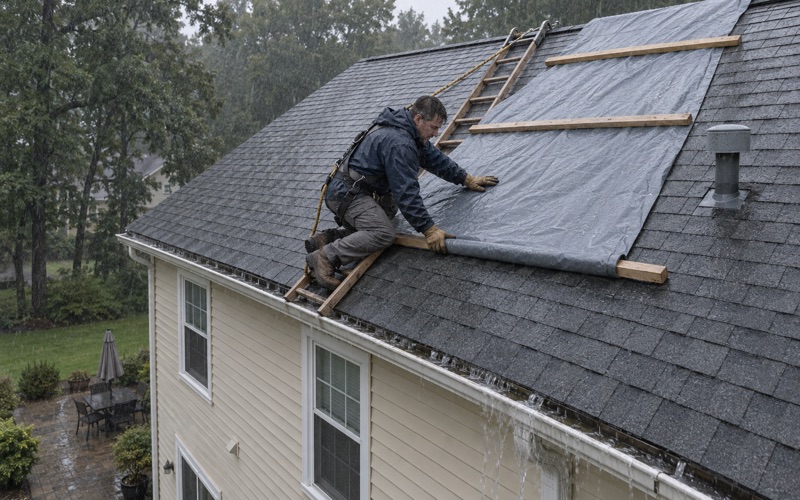
If wind damage shows up while a house is on the market, we photograph it and write it up for the owner’s own claim, and we will meet the insurance adjuster on site when asked. Springfield sits in National Weather Service forecast zone NJZ107, covered by the Upton, New York, office, so that office’s alerts are the ones to watch while a roof is open.
Ventilation, Gutters and Cleanup on a Tight Schedule
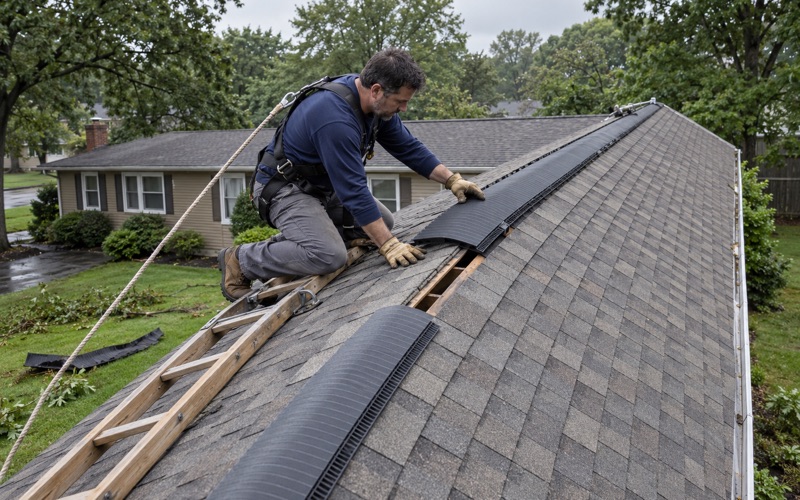
If replacement is the right call, we check attic ventilation on every job, because a roof that cannot breathe ages from underneath and an inspector who sees a hot, damp attic will say so. Gutters and leaders are sized and pitched along with the roof, so runoff leaves the house rather than collecting against the foundation.
A house that is about to be shown cannot have nails in the driveway. At the end of each work day, the crew cleans the driveway, yard and gutters and runs a magnet sweep for roofing nails, so the property is ready for a showing even while the job is still underway.
- 20+ Years in Business
- Attic Checked on Every Leak
- Itemized Written Scopes