
Old Bridge Roofing handles storm damage roof repair in Old Bridge, NJ, serving surrounding cities including South River, Aberdeen, South Amboy, Holmdel and Highland Park, and our more than 20 years include plenty of mornings after nor’easters, thunderstorms and tropical systems. Storm damage is not always obvious from the ground. We inspect the roof and attic, document what the storm did, and repair it so the next storm does not finish the job.
Every storm call starts with photos. Damage is photographed and written up for your own insurance claim before anything is repaired or covered, and the crew will meet your adjuster on site when you ask. Good documentation is often the difference between a smooth claim and a frustrating one.
We are also honest about what is storm damage and what is wear. A clear, accurate report helps your claim more than an inflated one, and it keeps the next one from being questioned.
Kinds of Storm Damage We Repair
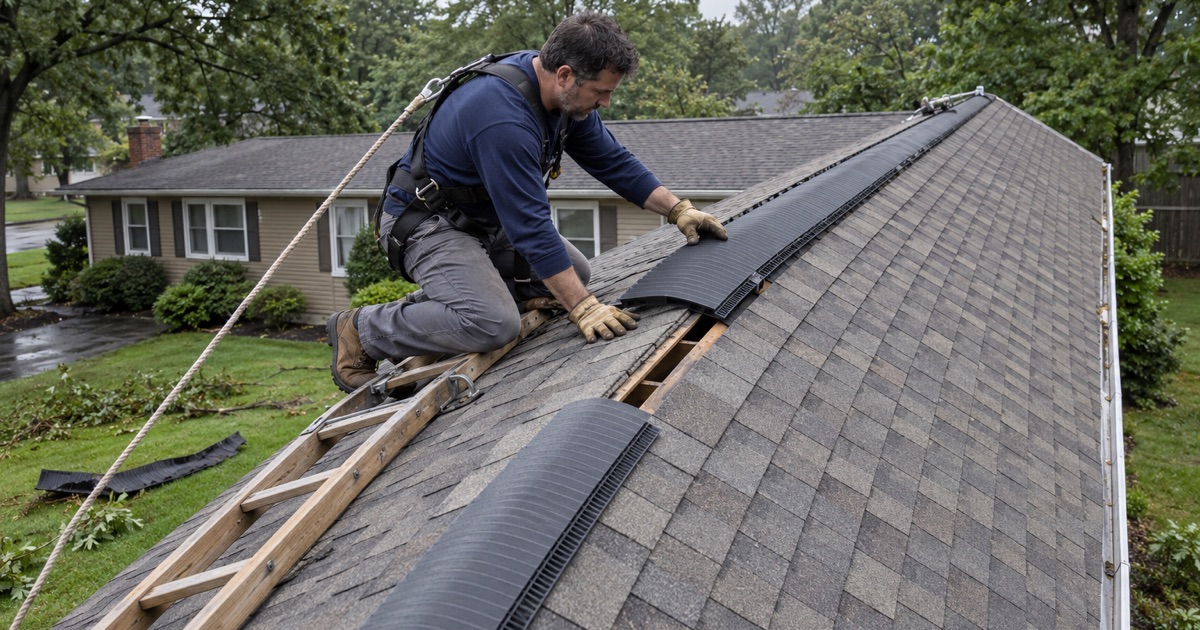
Wind-Lifted and Creased Shingles
High winds lift shingles, break their adhesive seal and crease them along the nail line, even when they do not blow off. A creased shingle often lies back down and looks fine from the street. It will not seal again, and the next wind takes it.
We check every slope, especially those facing the storm, and lift-test shingles to find broken seals. Missing and creased shingles are photographed and replaced. Wind-driven rain that came in during the storm is traced in the attic.
Hail Damage to Shingles
Hail can bruise shingles, knocking granules loose and cracking the mat underneath. The damage often looks like dark spots where granules are missing, and it can be hard to see without getting on the roof. Gutters, vents and flashing may also show dents.
We look for consistent patterns across slopes and on soft metals, which help separate hail from ordinary wear. Bruised areas are marked and photographed. Impact-rated shingles carrying UL 2218 Class 4 are worth considering when a hail-damaged roof is replaced.
Fallen Trees and Limbs
A falling tree or large limb can puncture the decking, break rafters and crush gutters in one blow. The weight on the roof needs to be removed safely, usually by a tree service. Until then, the damaged area should be kept as dry as possible.
Once the tree is off, we assess the decking and framing. Structural repairs such as broken rafters are outside New Jersey’s ordinary-maintenance rule and need a permit. We document everything before repairs begin.
Storm Damage Around Old Bridge
Laurence Harbor and the Bayfront
Laurence Harbor sits on Raritan Bay, and its bayfront houses take wind that inland homes do not. When Sandy struck in October 2012, NJ.com reported that the Laurence Harbor section of Old Bridge was battered, with extensive damage to homes along the bay. The state’s Blue Acres program later bought Sandy-flooded homes in the township.
On bayfront houses, we plan staging and fastening for the wind off the bay, limiting how much roof is open at once. Edge details and starter courses get extra attention. Repairs here have to be built for the exposure.
Wind Damage Versus Flood Damage
Standard homeowners policies cover wind damage to a roof but exclude flood. After a coastal storm, a house can have both, and they are handled under different policies. Keeping the two clearly separated in your documentation helps both claims.
We document roof and wind damage specifically, with photos and a written report. Flood damage to the lower parts of a house is a separate matter for flood insurance. Knowing which is which before you talk to adjusters saves time.
Substantial Damage in Flood Zones
In FEMA flood zones, including the coastal VE and AE zones along parts of the bay, a house that is substantially damaged may have to be brought into compliance with floodplain rules. FEMA’s substantial damage rule is generally triggered when repair costs reach 50 percent of the building’s market value. Roof repairs count toward that total along with other damage.
We provide itemized repair costs that can be used in that assessment. Whether a house is in a flood zone is an address lookup, not a guess. The township’s floodplain review will ask for the numbers.
Insurance and Storm Claims in New Jersey
Documenting the Damage and Meeting the Adjuster
We photograph the roof from wide angles and close up, note the date, and write up what we found. That report goes to you for your claim. When the adjuster visits, we can be there to point out what we documented.
Under the Public Adjusters’ Licensing Act, N.J.S.A. 17:22B, only a licensed public adjuster may be paid to negotiate a claim for you. We do not negotiate. Our job is to make the condition of the roof clear and accurate.
When the Hurricane Deductible Applies
New Jersey’s uniform policy language, described in DOBI Bulletin 11-16, allows a hurricane deductible only for a hurricane named by the National Weather Service with hurricane-force sustained winds measured in New Jersey. That is a narrow trigger. Most thunderstorms and nor’easters fall under your regular deductible.
The rule has mattered before. After Irene, no hurricane deductible could be applied in New Jersey, and Executive Order 107 barred hurricane deductibles for Sandy because it reached the state as a post-tropical storm. If an insurer cites a hurricane deductible, it is worth checking against the rule.
Actual Cash Value and Replacement Cost
Many policies pay actual cash value first, which subtracts depreciation, and pay the remaining replacement cost once the work is done. Some policies on older roofs pay actual cash value only. The settlement letter explains which applies.
Our itemized scope and completion photos help you document finished work for any withheld amount. Keep receipts for emergency repairs as well. The New Jersey Department of Banking and Insurance publishes storm claims guidance that walks through these steps.
Repairing Storm Damage the Right Way
Matched Materials and Proper Sealing
Storm repairs should blend into the roof and hold up to the next storm. We match shingle style and color as closely as current production allows, nail to the manufacturer’s pattern and hand-seal where needed. Flashing bent by wind or impact is replaced, not hammered flat.
When the surrounding shingles are too brittle to work with, we say so before starting. Forcing them can turn a repair into wider damage. In that case, a section or full replacement may be the honest recommendation.
Upgrading When the Roof Is Replaced
If storm damage means the whole roof needs replacing, it is a chance to upgrade. Shingles carrying ASTM D3161 Class F or ASTM D7158 Class H wind ratings and impact-rated lines are worth considering. New flashing, ventilation and ice barrier at the eaves come with every replacement.
The estimate is itemized, so you can see what the insurer’s scope covers and what any upgrades add. Storm damage is separated from wear in our report. You decide how to proceed with the full picture.
- 20+ Years in Business
- Attic Checked on Every Leak
- Itemized Written Scopes