Old Bridge Roofing offers roofing in Tinton Falls backed by more than 20 years of repair and replacement work, and every visit starts with a question rather than a price: can this roof be fixed? You get a straight answer on repair before replacement is ever on the table. When the answer is replacement, we say why, in writing.
Leaks get traced before they get priced. We check the attic as well as the shingles, because water often enters several feet from where the stain shows on a ceiling. A drip over a bedroom can start at a pipe boot, a valley or a run of step flashing that let go along a sidewall, and the repair depends on which one it is.
Our written scopes break a job into tear-off, decking, underlayment, flashing, ventilation and gutters as separate lines. That lets you set our estimate beside anyone else’s and compare the work item by item instead of guessing what a single total covers.
Fort Monmouth’s Tinton Falls Side and the Charles Wood Area
Tinton Falls is a borough in Monmouth County, and part of the former Fort Monmouth lies inside its borders. That Tinton Falls side includes the Charles Wood Area, and the Fort Monmouth Economic Revitalization Authority, or FMERA, acquired the western part of it in 2013 as the old Army land moved toward civilian reuse.
What that reuse means for roofing is simple to state and easy to underestimate. Land that once answered to the Army now has private owners, and each building on it, old or new, has an owner who has to decide how its roof is maintained, repaired and eventually replaced.
Two very different kinds of roof on one old fort
The redevelopment in Tinton Falls has put two kinds of roofing job side by side. One is a large office building on a former Army parcel, now on its way to new ownership and new tenants. The other is a neighborhood of townhomes and single-family houses getting their first roofs. Both sit on the old fort, and almost nothing about the work is the same.
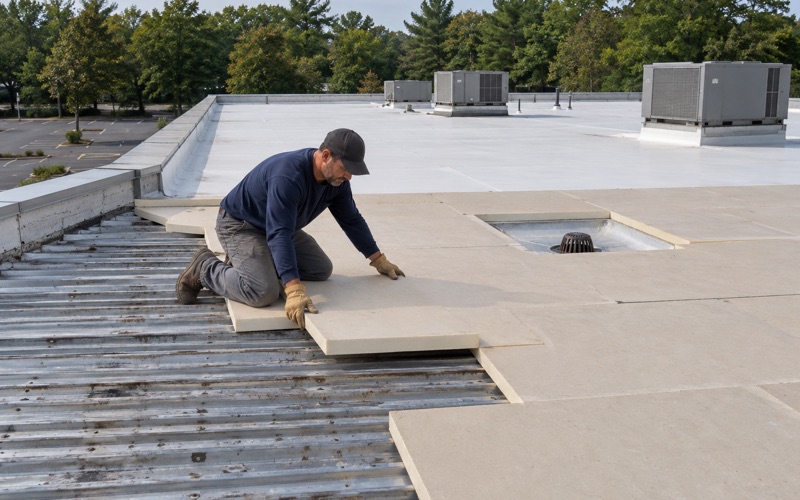
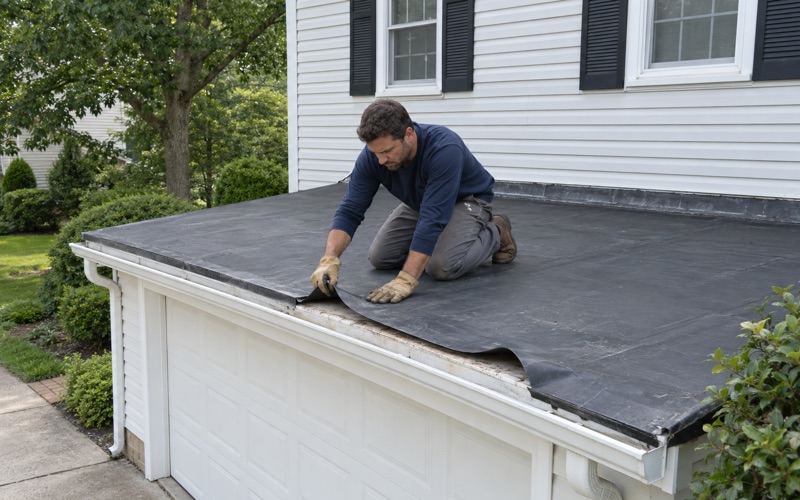
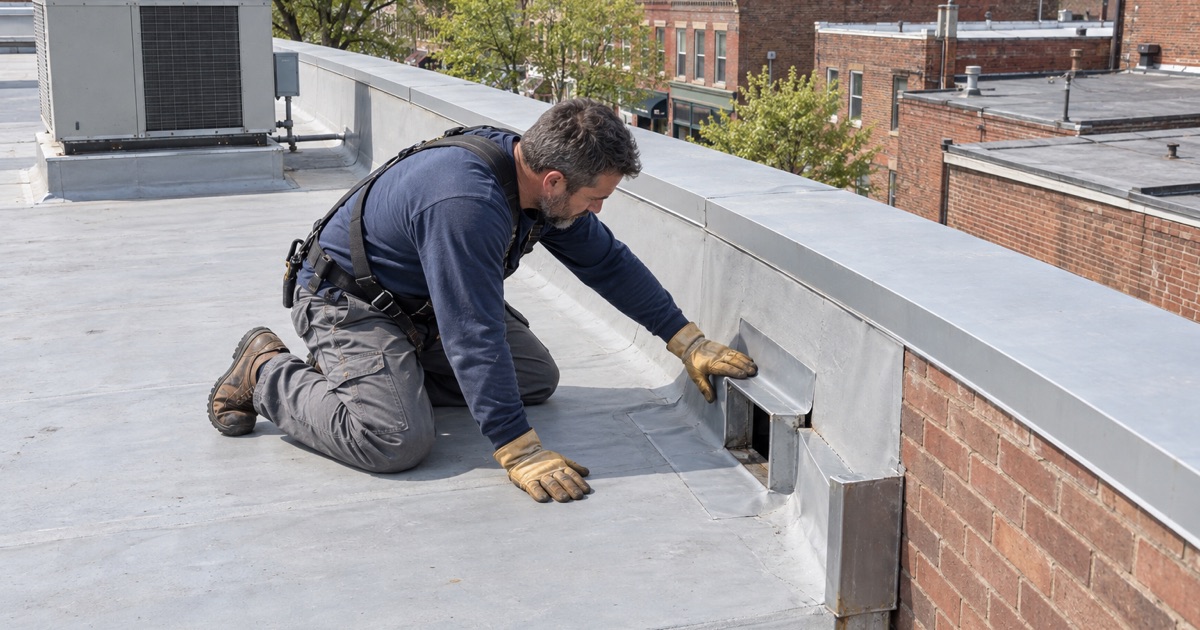
A low-slope commercial roof is usually a membrane system such as TPO, PVC, EPDM or modified bitumen, judged by its seams, drains and edge details. A townhome roof is usually architectural shingles over underlayment, judged by its flashing, ventilation and the line where one owner’s roof meets the next. We plan each one on its own terms.
Townhomes are not new to the borough, either. Census estimates count 2,262 one-unit attached homes in Tinton Falls, about a quarter of its 9,124 housing units, beside 4,057 detached houses, so attached roofs and detached roofs both make up a big share of the housing here.
Why the history of the land still matters
Former base land changes hands in large parcels, and buildings on it can pass from one owner to another more than once. A roof’s history does not always travel with the deed. When we are called to a building or home on the Charles Wood Area, we start from what is on the roof and in the attic today, not from what a past owner assumed.
Looking for roofing closer to Millstone Township? See Roofing in Millstone Township.
From Commvault Headquarters to Bell Works Fort Monmouth
One of the clearest examples of reuse on the Tinton Falls side of the fort is the former Commvault headquarters at 1 Commvault Way. Commvault bought the 55-acre former Army parcel known as Parcel E in 2013, and its main office building, about 276,900 square feet, opened there in 2014.
As of January 2025, Inspired by Somerset Development was reported to be buying the property to turn it into Bell Works Fort Monmouth, and Jersey Mike’s had leased about 70,000 square feet there for its headquarters. Those reports described a purchase in progress. We have not seen confirmation that it closed, so we describe it here as planned, not finished.
Reuse matters to a roof as much as to a building. A roof over an occupied building gets watched, reported and maintained; a roof over empty space can leak for months before anyone notices. New tenants, in roofing terms, mean more eyes on the ceilings.
A large office roof under new ownership
When a building of that size changes owners, its roof usually gets a hard look. A buyer wants to know what is up there, how old it is and what it may cost over the coming years. We have not inspected the roof at 1 Commvault Way and make no claim about its system or condition; the questions apply to any large office roof.
On a big low-slope roof, the useful questions are practical. Are the seams tight, do the drains and scuppers move water, is there ponding after rain, and has the membrane been patched so often that patches outnumber sound membrane? Rooftop equipment curbs and penetrations deserve their own check, because that is where flashing tends to fail first.
New tenants, new rooftop loads
New tenants in a reused office building often bring new mechanical equipment, new kitchens or new data rooms, and each can mean new penetrations through the roof. Every cut through a membrane is a future leak point unless it is flashed properly at the time. Coordinating that work with the roofer, rather than after the fact, keeps a sound roof sound.
On a commercial roof, the repair-or-replace answer matters even more because the numbers are larger. A membrane with isolated seam failures can often be repaired and kept in service; one with wet insulation across wide areas usually cannot. We tell an owner which case they are in before any replacement price is written.
Patriot’s Square and Anthem Place: New Homes on Army Land
The other half of the Charles Wood story is residential. Lennar has sold townhomes at Patriot’s Square, a town center across from the borough’s municipal complex, and single-family houses at Anthem Place on the Charles Wood parcel. One trade report described Patriot’s Square as 125 three-story and 60 two-story townhomes with 58,000 square feet of commercial space, and Anthem Place as 45 houses.
Other reports give different counts, and completion dates have not been settled, so treat those numbers as a snapshot rather than a final tally. What is clear is that a neighborhood of new roofs is going up on land that held Army buildings, and the first owners are just starting to live under them.
A new roof’s first years
A new roof is not a roof without needs. The first few seasons are when fastening problems, missed flashing details and gutter pitch issues tend to show themselves, often as a small stain or a drip at a window head rather than an obvious failure. A new owner who notices something early has the most options.
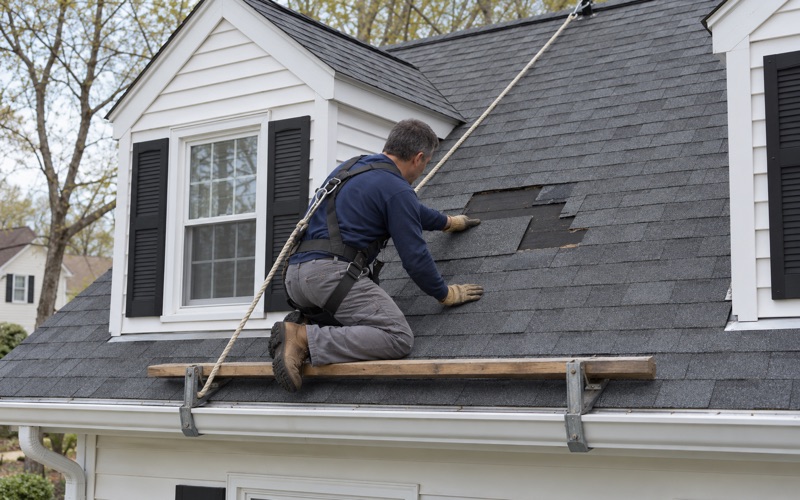
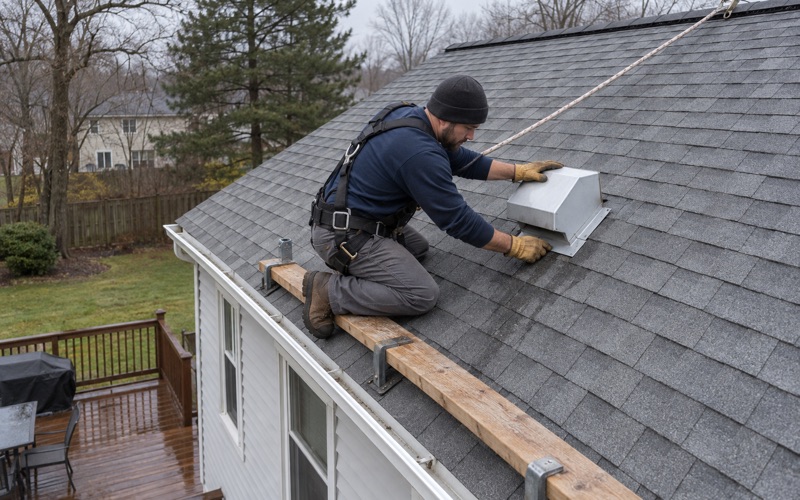
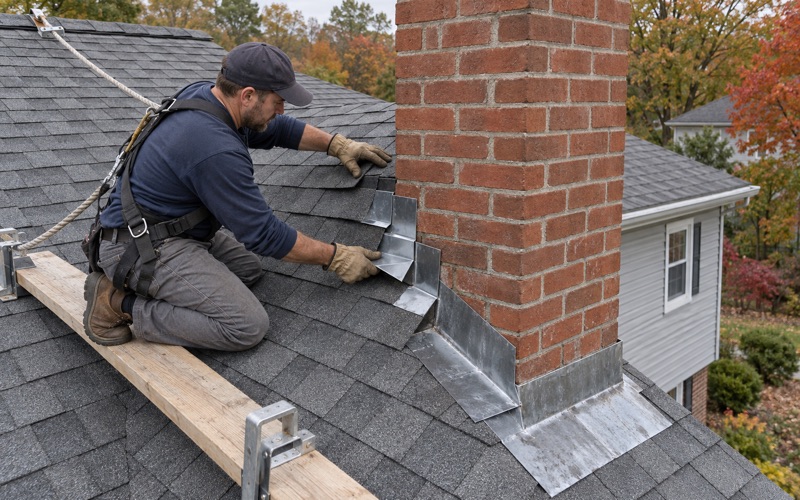
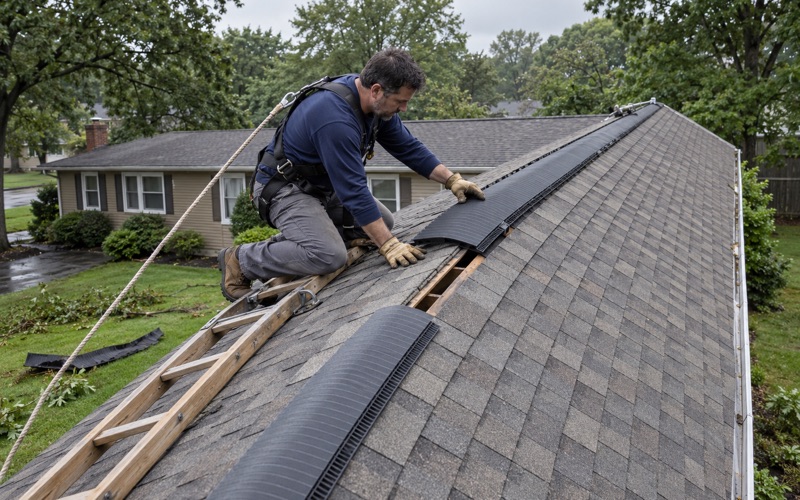
When we look at a newer home, we check the details that are easiest to get wrong on a busy job site: step and counter flashing along sidewalls, kick-out flashing where a roof edge meets a wall, pipe boots, drip edge at the eaves and rakes, and whether the ridge vent has the soffit intake it needs to actually move air. We report what we find without assuming who built it or how.
Townhome rows and shared roof lines
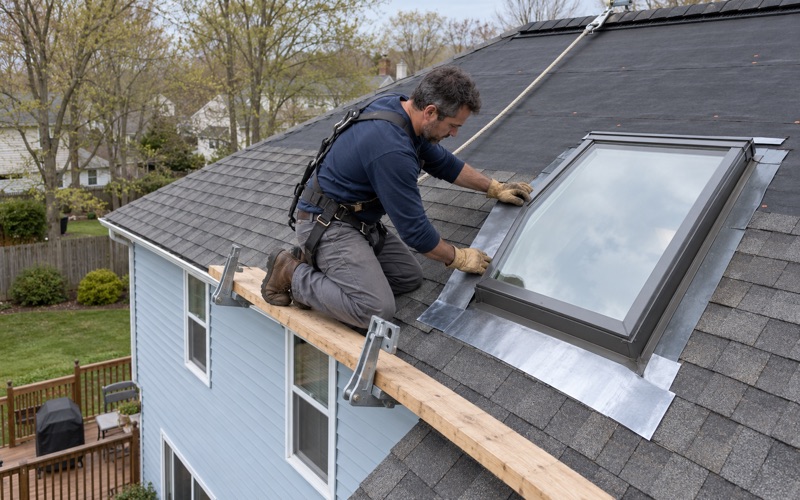
A three-story townhome brings its own challenges. Staging and fall protection are planned for the height, with OSHA’s six-foot fall protection rule for residential roofing as the baseline, and the work has to stop cleanly at the line where a neighbor’s roof begins. A repair on one unit should never leave an open seam on the next.
In a townhome community, who holds the roof is not always the person who lives under it. Before we write an estimate at a place like Patriot’s Square, we check the community’s documents to confirm whether the owner or an association is responsible, so the right party is making the decision.
Roof Questions on a Redeveloped Base
Commercial and residential owners on the old fort ask different questions, but both come down to the same thing: what is wrong, what will fixing it involve, and what will it cost. Our answers start in the same place for both, with the roof surface and whatever sits beneath it.
For owners of homes and townhomes
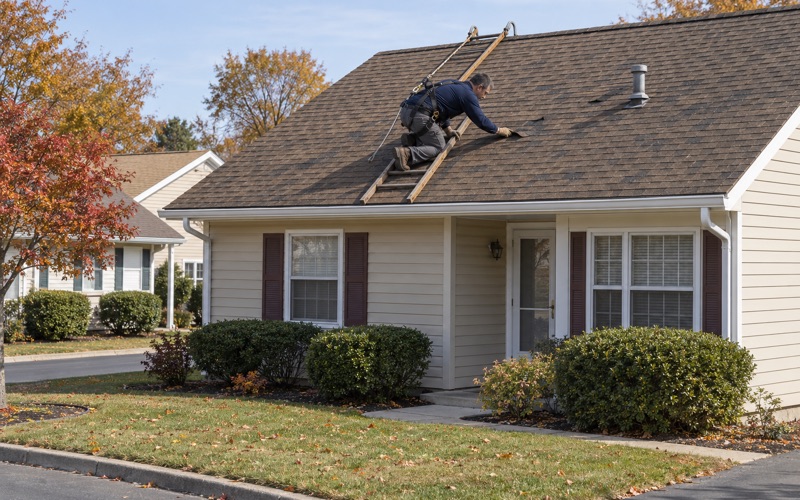
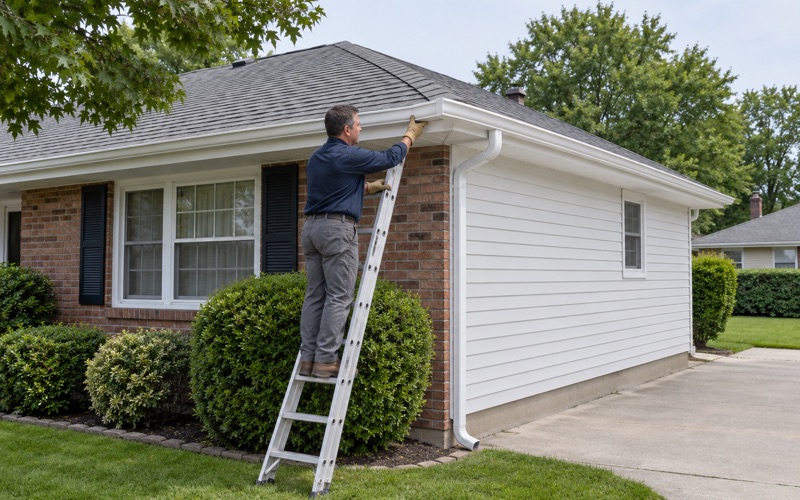
Not every problem calls for a big job. A lifted shingle, a cracked pipe boot or a loose run of drip edge is a repair, and we price it as one. Replacement talk is saved for roofs that have truly reached that point.
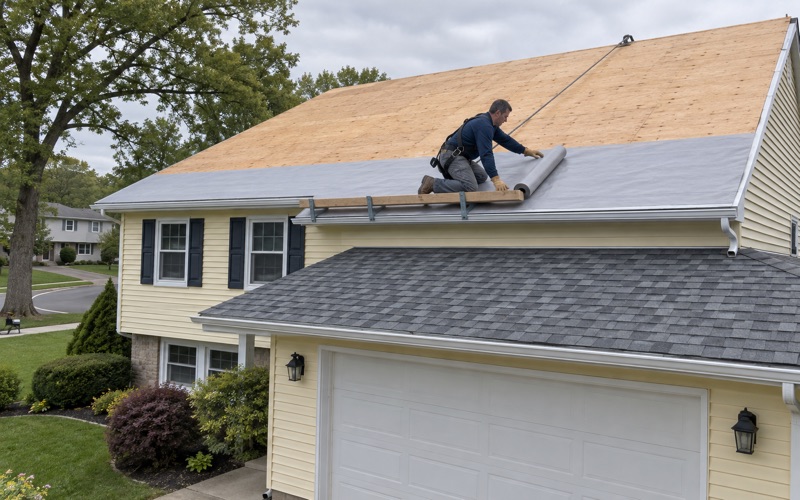
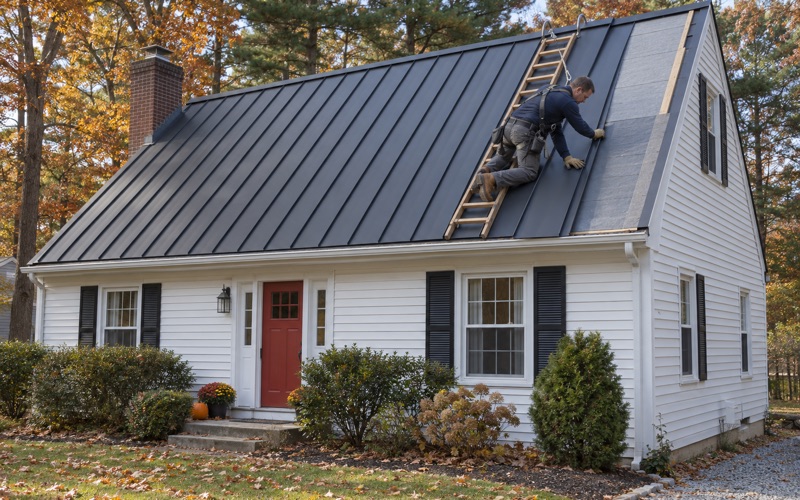
When a replacement is the right call, flashing comes off with the old roof. Step, counter and chimney flashing are replaced rather than reused under new shingles, and attic ventilation is checked on every job, because a roof that cannot breathe ages from underneath no matter how good the shingle is.
If damaged decking turns up once the old layers are off, we photograph it and show you before replacing it, at a per-sheet price already set in the contract. Gutters and leaders are sized and pitched along with the roof so water is carried away from the foundation, and the yard and driveway get a magnet sweep for nails at the end of each day.
For commercial owners and property managers
For a property manager, the most useful thing we can hand over is a scope that separates what must be done now from what can wait. Membrane repairs, flashing at curbs and walls, edge metal and drains are listed as separate items with separate prices, so a building budget can be planned around the roof rather than surprised by it.
Storms, sales and paperwork
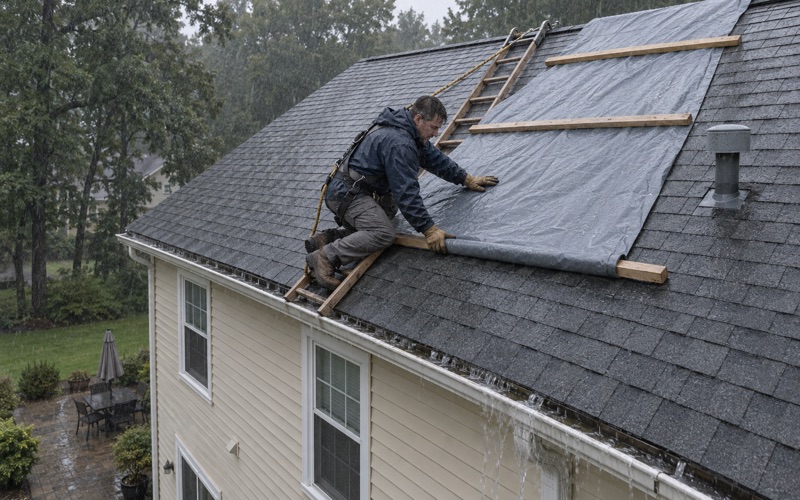
Storm damage on any roof, flat or pitched, is photographed and written up for the owner’s own insurance claim, and we will meet the adjuster on site when asked. For a property headed to sale, we can provide a written roof condition report the seller can hand to the buyer’s inspector, which matters on land where buildings are still changing hands.
Every home improvement contract we write follows New Jersey’s rules, including the three-business-day cancellation notice. Whether you own a townhome near the municipal complex or manage space in a building waiting on new tenants, call us and we will start with what the roof needs, not with what we would like to sell.
- 20+ Years in Business
- Attic Checked on Every Leak
- Itemized Written Scopes