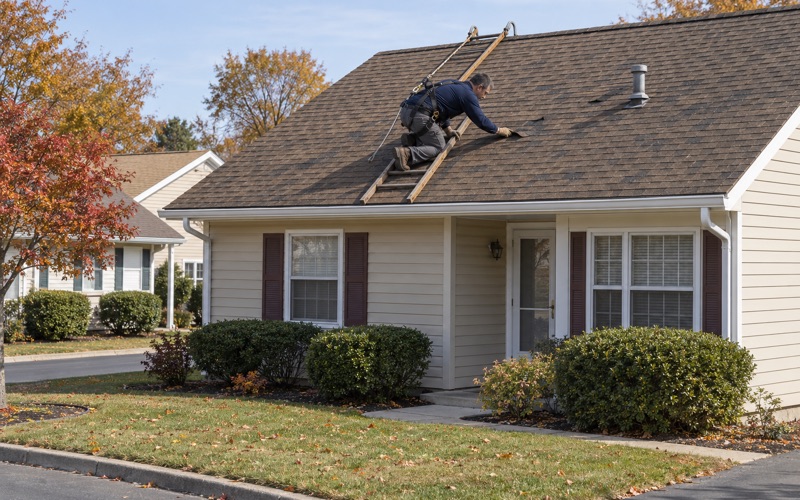
Old Bridge Roofing offers roofing in Warren backed by more than 20 years in the trade, and on a wooded lot the call often starts with a limb on the shingles or a dead tree leaning toward the ridge. We repair storm and tree damage, replace worn roofs, and rebuild the flashing, gutters and ventilation that keep water moving off the house.
Every leak call here gets two inspections, one on the roof and one in the attic, because water that enters at a cracked shingle under a branch scar can surface several rafters away. We trace it to the point of entry first, then tell you plainly whether a repair will hold before anyone mentions replacement.
One thing makes roof work here different from most towns we serve: the tree and the roof answer to separate rules. Our job is the roof. The tree belongs to you, your tree service and the township, and the sections below explain how the two fit together so neither one stalls the other.
Roof Repair After a Tree Strike in Warren
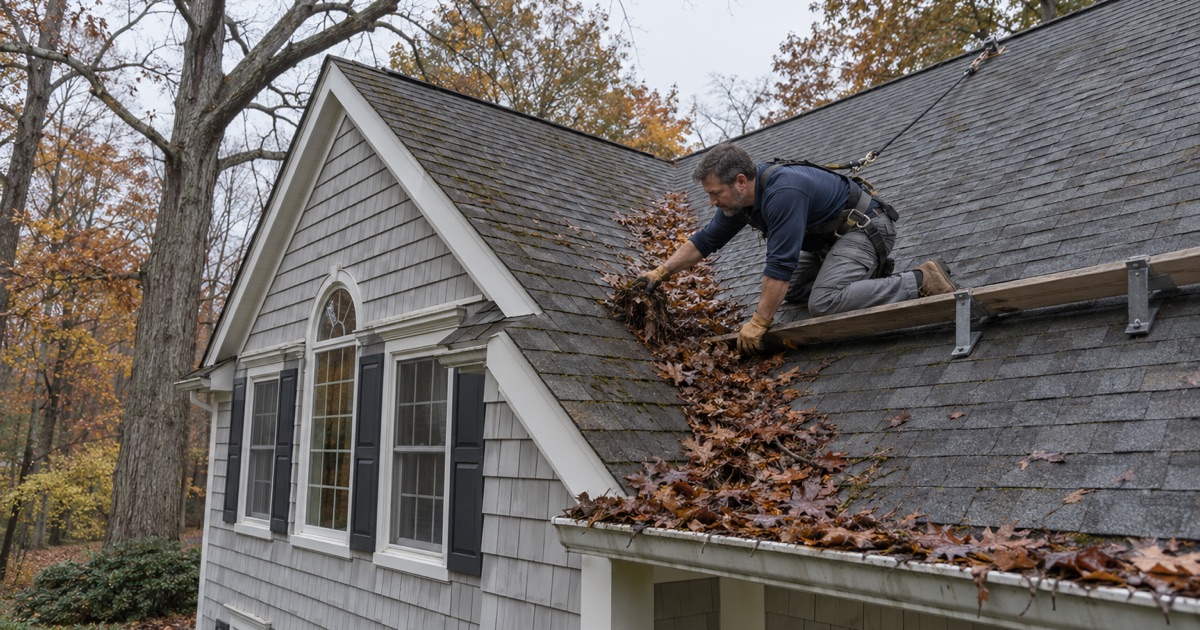
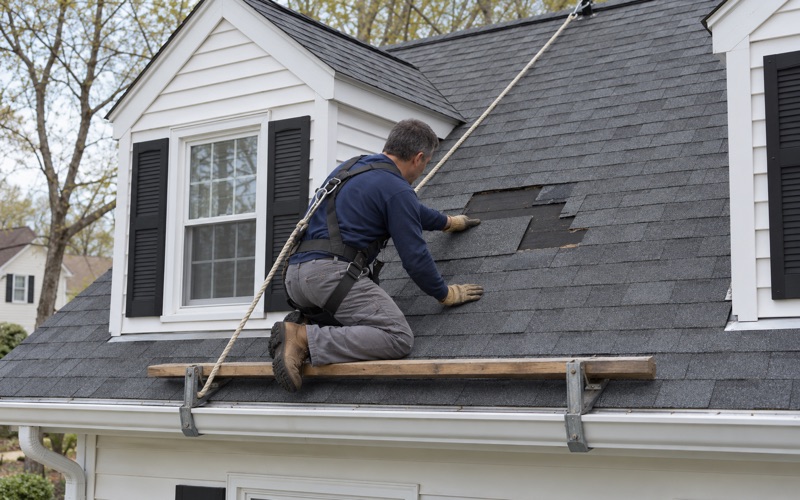
A fallen limb does damage in layers. The visible part is torn or missing shingles, but the impact can crack decking, split a rafter tail, flatten a gutter and push water under the course above the hole. We look at all of it before we write a number.
Making the Roof Safe the Same Day
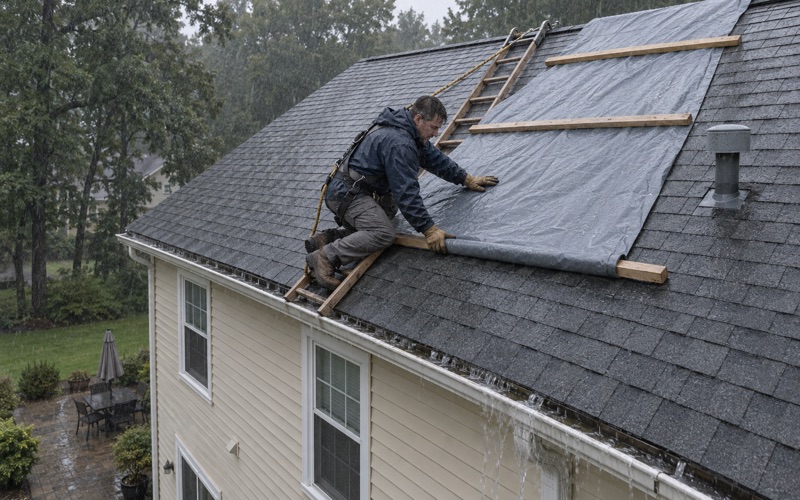
Once the limb is off the roof, we can tarp the opening and seal around the punctures so the next rain stays outside. If the limb is still resting on the roof, it stays where it is until your tree service has removed it. Cutting a loaded branch on a pitched roof is tree work, and we leave it to the people who do it.
Decking and Framing Under the Impact
A heavy strike often breaks plywood that looks fine from the yard. When we open the area, any damaged sheets are photographed and shown to you before we replace them, at the per-sheet price already written into the contract. A cracked rafter or truss is a different repair, and we tell you so rather than burying it under new shingles.
Repair or Replace After the Strike
A single puncture on a sound roof is usually a patch with matched architectural shingles and new underlayment beneath. When the strike lands on a roof that was already near the end of its life, or tears across several slopes, we say plainly that replacement is the better spend and show you why from the attic side as well as the top.
Gutters Flattened by the Limb
Limbs that slide off a roof can take the gutter with them. We replace bent runs with seamless aluminum gutters and leaders, sized and pitched with the roof so water leaves the house instead of pooling at the foundation. If the fascia behind it is split, we show you before the new gutter goes up, because hanging good aluminum on rotted wood only moves the problem.
Looking for roofing closer to Somerville? See Somerville Roofing.
Why a Dead Tree Over Your Roof Still Needs a Warren Tree Permit
In Warren Township, a tree that threatens the roof is still a tree under the township ordinance. The township’s own reminder to residents is direct: get a tree permit before cutting any trees, dead or alive. Chapter XVII says trees in the township shall not be cut, damaged, injured or removed, except for reasonable pruning, until a permit is obtained.
What Ordinance 14-06 Changed
It is easy to assume a dead or hazard tree can come down without paperwork. Before 2014, the ordinance did carry that exception. Ordinance 14-06, adopted March 13, 2014, deleted the section 17-4 exception for trees that were dead, dying, diseased, damaged or growing at an angle that made them a hazard to structures or human life.
The exceptions that remain are narrow: nursery and tree-farm stock, cemeteries, trees removed by a municipal, county or state authority, pond work under soil-conservation supervision, farm clearing, utility rights-of-way and sight easements. A dead tree leaning over a house on a residential lot is not on that list.
A 2020 Proposal, Not an Adopted Change
In September 2020 the Warren Township Environmental Commission discussed whether hazardous trees should be exempt, and members noted local tree companies were busy after recent storms. The minutes record a narrower proposal about ailanthus going to the Township Committee, not an adopted change. The township’s current notice still says dead or alive, so we plan around that.
What the Permit Allows
According to the township FAQ, a tree permit allows 1 tree per quarter acre a year, up to 4 trees per acre a year, and the fee is $25. The application needs a survey showing the location, size and genus of each tree. Permits come from the Zoning Department, and trees in the public right-of-way go to Public Works instead.
Reasonable pruning is carved out of the cutting rule itself. Trimming back branches that scrape the shingles or hang over the chimney may fall under it, but where pruning ends and removal begins is a question for the Zoning Department, not for us. When in doubt, call before anyone climbs.
Re-Roofing Under Warren’s Trees: Two Rules and a Leaf Load
Most housing here is detached: the 2024 American Community Survey counts 4,857 detached houses among Warren’s 5,560 homes, about 87.4 percent. On a detached one- or two-family house, replacing the roof covering is ordinary maintenance under N.J.A.C. 5:23-2.7, so the shingles themselves need no construction permit. Removing the tree that leans over them is a separate zoning matter.
Sequencing the Tree Work and the Roof
If a dead tree needs to come down before a tear-off, the permit and the removal are yours and your tree service’s to arrange, and the schedule should follow that order. We set the roof start after the tree is down, so a crew is never staging ladders and dumpsters under a trunk that is waiting on paperwork.
Housing here spans decades: the ACS counts 1,089 homes built in the 1980s, 785 in the 1960s and 250 from 1939 or earlier. On an older house we check how many layers are already on the deck, since the rehabilitation subcode calls for a tear-off over two or more, and painted trim on homes built before 1978 is handled under the EPA lead-safe rule.
The township notice also warns that tree removal can affect drainage and soil erosion, and may bring in NJDEP or the Somerset Union Soil Conservation District. That matters to us too, because roof water has to land somewhere, and on a newly cleared slope we look at where the leaders discharge before the new gutters go up.
Valleys and Shingles Under Leaf Cover
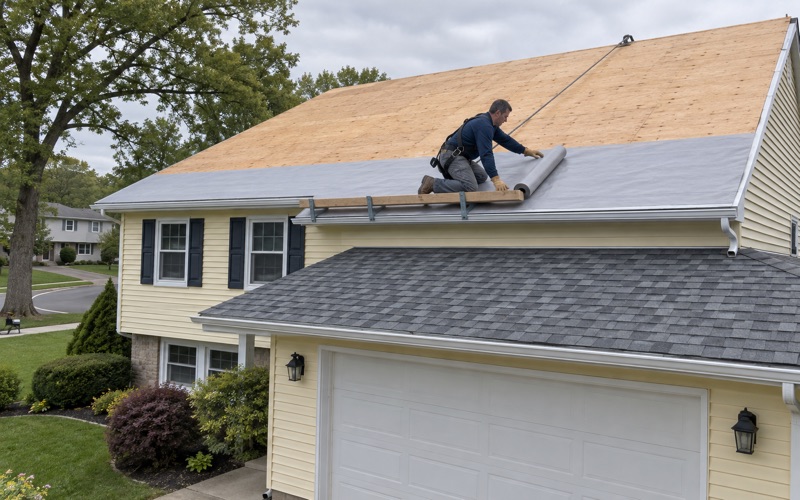
A roof under a heavy canopy collects leaves in its valleys, behind chimneys and along the eaves. Wet debris holds water against the shingles, and in winter a clogged gutter lets ice back up under the first courses. On a replacement we run ASTM D1970 ice and water barrier through the valleys and at the eaves, with drip edge at eaves and rakes.
Flashing and Ventilation Under Shade
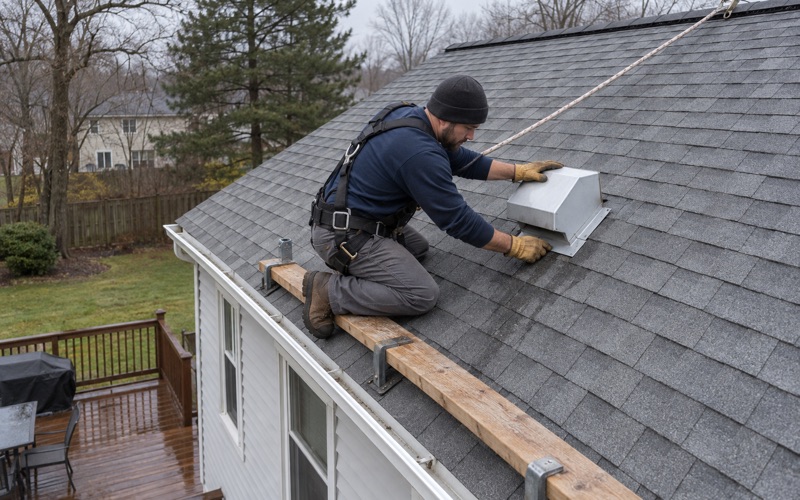
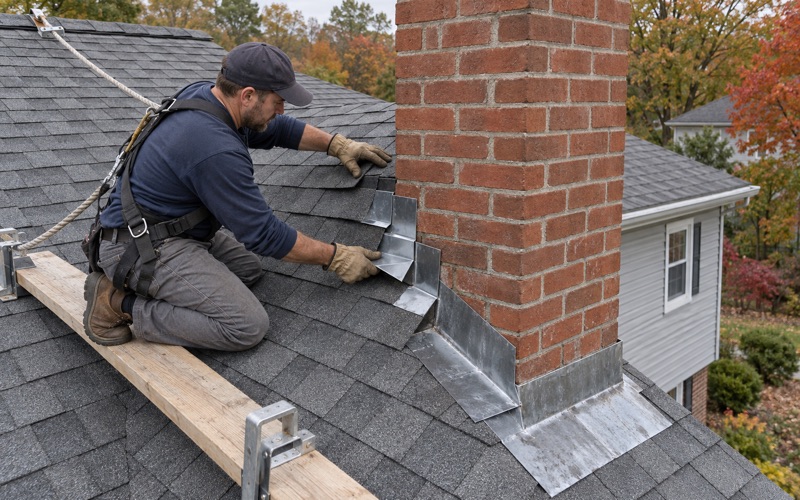
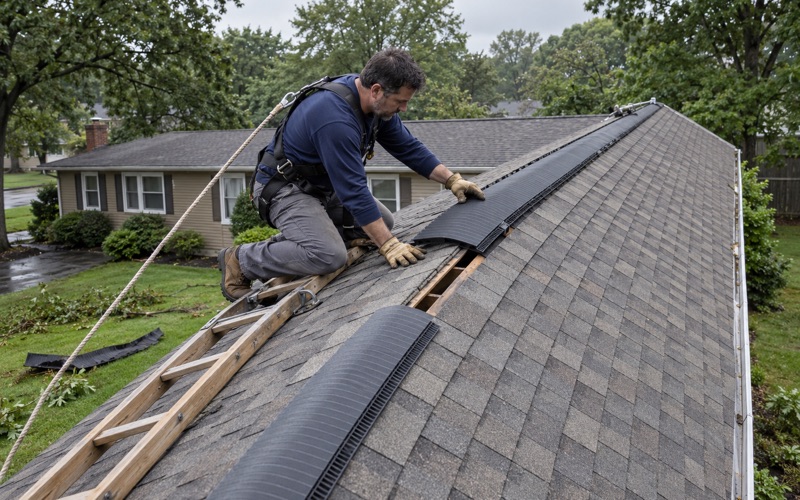
Shade keeps a roof surface damp longer after rain, so a shaded slope is slower to shed what lands on it. Inside, we check ridge vent and soffit intake on every replacement, because a roof that cannot breathe ages from underneath. Step, counter and chimney flashing comes off with the old roof and is replaced new rather than reused under fresh shingles.
Storm Damage Claims on Wooded Watchung Lots
The Second Watchung ridge runs east to west through Warren Township, with the northern half sloping toward the Passaic and Dead rivers and the southern half spanning the Washington Valley. For forecasts, a point in the township falls in National Weather Service zone NJZ010, issued by the Mount Holly office.
On a wooded lot, wind and falling branches are the two loads a new roof has to answer. When we replace a roof here we can install shingles rated to ASTM D3161 Class F or ASTM D7158 Class H for wind, and UL 2218 Class 4 impact-rated products are an option where limbs are a recurring worry.
Documenting the Damage for Your Claim
After a limb comes down, we photograph the roof, the gutters and the attic side of any puncture, and write up what we found for your own claim with your insurer. If you ask, a member of our crew will meet the adjuster on site and walk the damage with them, so the report and the roof tell the same story.
The claim is yours, and we do not act as your adjuster. New Jersey regulates public adjusters separately under the Public Adjusters’ Licensing Act, and the Department of Banking and Insurance publishes storm claims guidance worth reading before you file. Our part is accurate documentation of the roof.
Where the Tree Permit Fits a Claim
Taking down what is left of a storm-damaged tree is still a removal under Warren’s ordinance, as the permit section above explains. Check with the Zoning Department before the cutting starts, and keep the permit with your claim papers alongside our photographs and written scope.
A Scope You Can Compare
Every estimate we write lists tear-off, decking, underlayment, flashing, ventilation and gutters as separate lines, so an insurer’s figure or a second roofer’s bid can be checked against it item by item. Our contracts follow New Jersey’s home improvement rules, including the three-day cancellation notice, and the yard and driveway get a magnet sweep for nails at the end of each work day.
Before You List the House
If you are selling and a past strike left a patched area, we can write a roof condition report you hand to the buyer’s inspector. It states what was repaired, what the decking and flashing look like now, and how much life the covering has left, which answers questions before they turn into a renegotiation.
- 20+ Years in Business
- Attic Checked on Every Leak
- Itemized Written Scopes